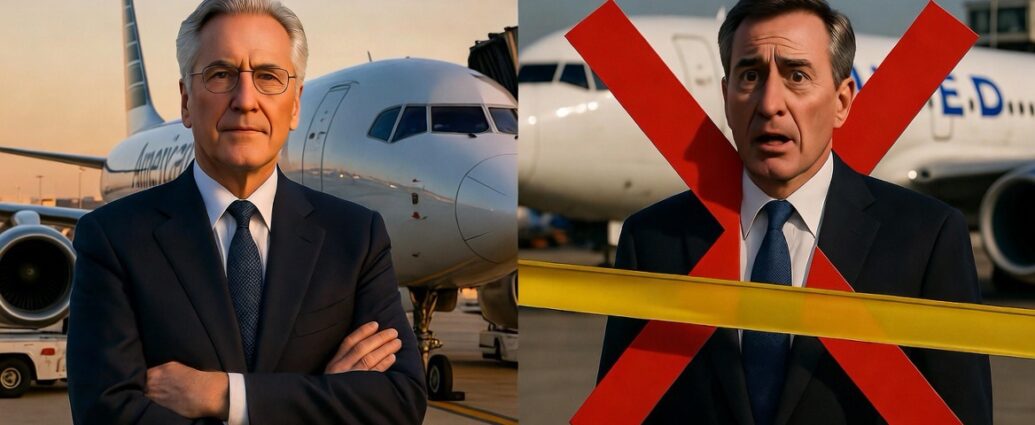
The most definitive rejection yet of a potential airline mega-merger came this week, as American Airlines CEO Robert Isom publicly dismissed any combination with United Airlines, calling the proposal “a non-starter” and fundamentally anti-competitive.
Speaking to CNBC’s Phil LeBeau, Robert Isom of American Airlines (NASDAQ: AAL) made his position unmistakably clear. “The idea of the two largest airlines in the world getting together — there is no way to view that as anything but anti-competitive,” he said, emphasizing that such a deal would ultimately harm consumers, employees, and the broader industry.
The proposal, initially floated by United Airlines CEO Scott Kirby, had sparked speculation earlier this year that a transformational consolidation could reshape the global aviation landscape. According to data from OAG, a combined airline would control approximately 40% of U.S. domestic capacity — an unprecedented level of market concentration.
Legal experts quickly cast doubt on the feasibility of the deal. George Hay of Cornell University described the proposal as “the biggest [antitrust case] of all time,” noting that it would face overwhelming regulatory resistance under current U.S. competition laws.
Political opposition has also been swift. President Donald Trump, speaking on CNBC’s Squawk Box, stated plainly, “I don’t like having them merge,” reinforcing expectations that federal regulators would block any such transaction.
Operational hurdles further complicate the picture. Analyst Tom Fitzgerald of TD Cowen estimated that hundreds of overlapping routes would need to be divested, while capacity limits imposed by the Federal Aviation Administration (FAA) at major hubs such as Chicago O’Hare would constrain expansion opportunities.
Despite rejecting a merger with United, Robert Isom indicated that American Airlines remains open to more targeted strategic opportunities. He pointed to the company’s history of partnerships, including its relationship with Alaska Airlines, as potential avenues for growth.
The timing of the merger discussion reflects broader pressures across the aviation sector. Jet fuel prices have surged amid the Iran conflict, with data from Platts showing significant increases, while carriers worldwide are grappling with rising costs and shifting demand patterns.
European airlines are already feeling the strain. Lufthansa has cut tens of thousands of flights as fuel costs surge, underscoring the global impact of the current energy environment.
For American Airlines, the strategy remains focused on independence — strengthening its financial position, expanding premium offerings, and maintaining its competitive standing across key markets.
The broader message from Robert Isom is clear: while consolidation may continue in more limited forms, mega-mergers that fundamentally reshape the competitive landscape face nearly insurmountable barriers.
JBizNews Desk