Americans continue spending on restaurants, but where they choose to eat is changing as higher-income households keep dining out while lower-income consumers become more cautious.
According to the latest Bank of America Institute Consumer Checkpoint report, restaurant spending remains one of the strongest categories of discretionary consumer spending, alongside travel. However, the data also shows a widening gap between higher- and lower-income households that is reshaping the restaurant industry.
Researchers found that wealthier consumers continue increasing restaurant spending, while spending growth among lower-income households has slowed considerably.
That divide is becoming increasingly visible across the restaurant business.
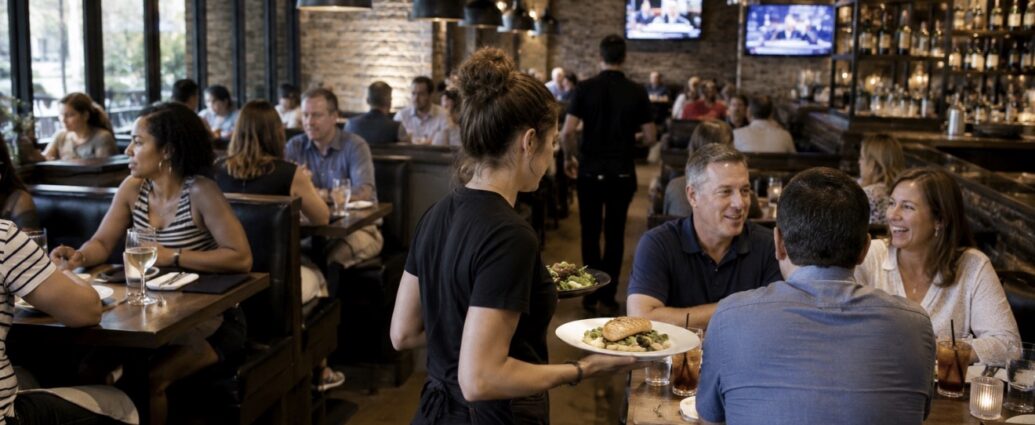
Many quick-service and value-oriented chains have experienced softer customer traffic, while casual dining and full-service restaurants have benefited from customers willing to spend more for dining experiences.
At the same time, restaurants continue facing rising operating costs.
According to the U.S. Bureau of Labor Statistics, prices for food consumed away from home increased 3.5% over the past year, outpacing grocery inflation.
Restaurants continue dealing with higher labor costs, insurance expenses, rent and elevated food prices, including record wholesale beef prices.
Several restaurant operators have responded by closing weaker locations.
Papa John’s announced plans to close more than 200 restaurants, while franchise operators for Carl’s Jr. have reduced store counts in parts of California amid financial pressures.
Other well-known chains have also undergone restructuring as operators adjust to changing consumer behavior and higher operating costs.
Despite those challenges, overall restaurant spending remains relatively resilient.
The National Restaurant Association projects U.S. restaurant industry sales will approach $1.5 trillion, supported by continued consumer demand and major events expected to boost travel and dining activity.
Analysts also expect the 2026 FIFA World Cup to increase restaurant traffic in host cities as millions of visitors travel throughout the United States.
Industry experts say successful restaurant companies are increasingly focusing on value promotions, menu innovation and improving the customer experience rather than relying solely on discount pricing.
Consumers who continue dining out are placing greater emphasis on quality and overall value for their money.
The report also highlights broader economic trends.
Restaurant spending often serves as an important measure of consumer confidence because dining out is typically among the first discretionary expenses households reduce during periods of financial stress.
While overall restaurant spending remains healthy, the widening gap between income groups suggests economic conditions are affecting consumers differently.
Higher-income households continue supporting much of the industry’s recent growth, while many lower-income consumers have become more selective about how frequently they eat away from home.
For restaurant operators, the challenge is balancing higher operating costs with consumers’ growing focus on value.
Those able to offer compelling menus, strong service and competitive pricing are expected to remain best positioned as consumer spending patterns continue evolving.
For investors, the data suggests