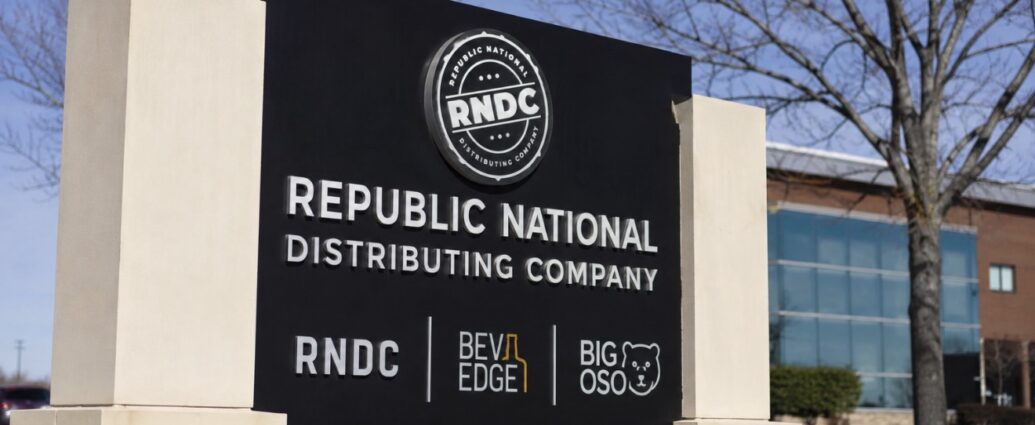
Republic National Distributing Company, once the second-largest wine and spirits distributor in the United States, filed for Chapter 11 bankruptcy protection on July 26 and said it plans to sell available assets while winding down its remaining operations — a collapse that could disrupt alcohol brands, retailers, restaurants and workers across multiple states.
The company, widely known as RNDC, serves as the critical middle layer connecting liquor and wine producers with stores, bars, hotels and restaurants. Its bankruptcy does not mean the brands it distributes are bankrupt, but it could force suppliers to find new distributors, renegotiate agreements and manage interruptions in how products reach customers.
RNDC confirmed that it entered Chapter 11 voluntarily to pursue potential court-supervised sales and conduct an orderly wind-down. National Distributing Company Inc., which operates separately, was not included in the bankruptcy filing.
Court documents show RNDC and 17 affiliated businesses entered bankruptcy in the Southern District of Texas. Reports based on the filings indicate the debtors face hundreds of millions of dollars in obligations and more than 100,000 potential creditors, demonstrating how widely the failure could spread through the alcohol supply chain.
This is not simply another liquor company struggling to sell bottles. It is a breakdown inside the distribution system that determines which bottles reach American shelves.
Alcohol distribution in the United States generally operates through a three-tier system. Producers sell to licensed distributors, which then sell to retailers and hospitality businesses. A distributor with RNDC’s scale handled warehousing, transportation, regulatory compliance, sales representation and collection of payments for thousands of products.
When such a distributor fails, large global brands may have the resources to quickly move their portfolios elsewhere. Smaller wineries, craft distilleries and emerging labels face a more serious threat because they can lose market access entirely if another distributor does not consider their volume large enough to justify taking them on.
Retailers and restaurants could also encounter delayed deliveries, reduced selections or changes in pricing as suppliers shift inventory and negotiate replacement agreements. Consumers may not immediately see empty shelves nationwide, but certain products could become harder to obtain in markets where RNDC remained an important distributor.
RNDC’s bankruptcy follows a prolonged retreat rather than a sudden collapse. The company previously exited major western markets, including California, after losing supplier relationships and confronting higher operating costs. Its California withdrawal affected thousands of beverage brands and forced producers to search for new routes into one of the country’s largest alcohol markets.
Several major suppliers had already moved business away from RNDC, weakening the volume needed to support its warehouses, delivery networks and workforce. Industry reports estimated that hundreds of suppliers ended or shifted their relationships with the distributor as its position deteriorated.
Management attempted to stabilize the operation earlier this year. In January, RNDC announced that it had secured additional financing from its lenders and said the funding would support operations while it realigned its organization, capabilities and product portfolio. Six months later, the company entered bankruptcy, showing that the financing was not enough to reverse the underlying decline.
Broader consumer changes have added pressure. Americans have become more selective about discretionary purchases as living costs remain elevated, while younger consumers are drinking less alcohol or turning toward alternative beverages. Wine and spirits companies have also struggled with excess inventory accumulated after the pandemic-era demand surge faded.
That slowdown becomes especially dangerous for distributors, which operate expensive warehouses and delivery fleets while depending on enormous sales volume and reliable supplier relationships. Once major brands leave, fixed costs remain while revenue falls, creating a cycle that can rapidly drain liquidity.
The bankruptcy will now determine who acquires RNDC’s remaining markets and assets, how much suppliers and other unsecured creditors recover, and whether competing distributors can absorb the volume without creating further disruption.
Consolidation may help preserve distribution capacity, but it could also leave producers with fewer companies controlling access to stores and restaurants. That would give the surviving distributors more negotiating power, particularly over smaller brands that cannot offer the scale of multinational liquor companies.
For the wider business world, RNDC’s collapse is a warning that financial stress is no longer confined to small wineries, craft breweries or individual liquor brands. It has reached one of the largest companies responsible for moving alcohol through the American economy.
The bottles may still exist. The larger question is who will deliver them — and at what cost.
JBizNews Desk | Grand Prairie, Texas
© JBizNews.com All Rights Reserved. Reproduction or distribution without written permission is prohibited.