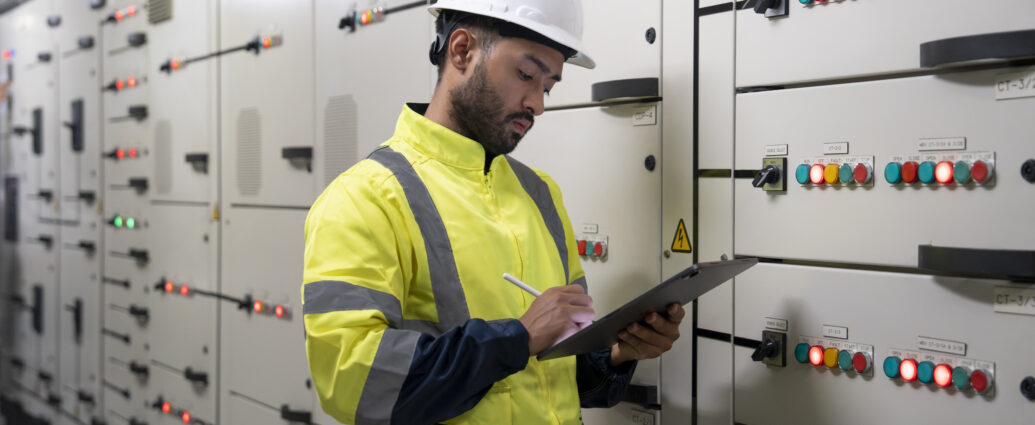
The workers who keep America’s buildings running are disappearing—and the U.S. isn’t replacing them fast enough to keep the lights on, the servers cool, or the labs sterile.
By 2030, an estimated 2.1 million skilled trades jobs in the U.S. could go unfilled, with potential economic losses reaching $1 trillion annually, according to U.S. Department of Education estimates cited in a new report from JLL shared exclusively with Fortune.
The commercial real estate giant calls the electricians, HVAC technicians, plumbers, pipefitters, and maintenance workers who maintain the country’s built environment a “silent army”—a workforce that is aging out of the industry faster than it can be replaced.
“The silent army, as we normally call them, because they are hidden, invariably, behind the scenes, has been getting harder and harder not only to find, but retain in the industry,” Paul Morgan, JLL’s global COO of real estate management services, told Fortune. Plus, “you’ve got this impending retirement wave that has really been driving the industry a long period of time, and a lack of new entrants.”
Morgan is referring to the fact that millions of tradespeople in the U.S. are nearing or at retirement age. More than 1 in 5 construction workers are currently older than 55, according to Associated Builders and Contractors; as of May 2023, about 39% of electricians were 45 years old or older, a Consumer Affairs report shows; and there’s a 5:2 retirement-to-replacement ratio in manufacturing, construction, and other skilled trades, an Education Department report shows.
The supply-demand imbalance has hit crisis territory. Last year alone, nearly 600,000 jobs were posted for major skilled trades positions in the U.S., while only about 150,000 new workers entered the labor pool through apprenticeship programs, according to JLL.
The problem is particularly acute in facilities management. Some 39% of U.S. facilities managers are above the age of 55 and nearing retirement, compared with 28% across all occupations, according to another report from JLL in 2025. Meanwhile, electrician positions are projected to grow 9.5% through 2034—more than triple the 3.1% average for all occupations—while HVAC technician roles are expected to grow 8.1% over the same period, per JLL.
A hidden workforce behind the AI boom
The shortage has caught the attention of some of the country’s most prominent executives, who argue that the U.S. cannot build the infrastructure for AI it’s betting its economic future on without the people to wire, cool, and maintain it.
Ford CEO Jim Farley has consistently warned about the gap, arguing America’s AI ambitions are running headfirst into a labor wall.
“I think the intent is there, but there’s nothing to backfill the ambition,” Farley told Axios last fall. “How can we reshore all this stuff if we don’t have people to work there?”
Hadrian CEO Chris Power, whose company automates defense manufacturing, has gone further, predicting a wage shock in the trades.
“All the white-collar jobs are going to get automated,” Power said in a recent interview with tech publication Sourcery at the Hill and Valley Forum. “I think we’re going to see massive hyperinflation in blue-collar salaries.” Power added that even with robotic welding on his own factory floor, he still can’t hire enough welders to meet demand from the U.S. Navy.
“Everyone, go tell your kids to quit college and university and go get a welding certification,” Power added. “The country needs you.”
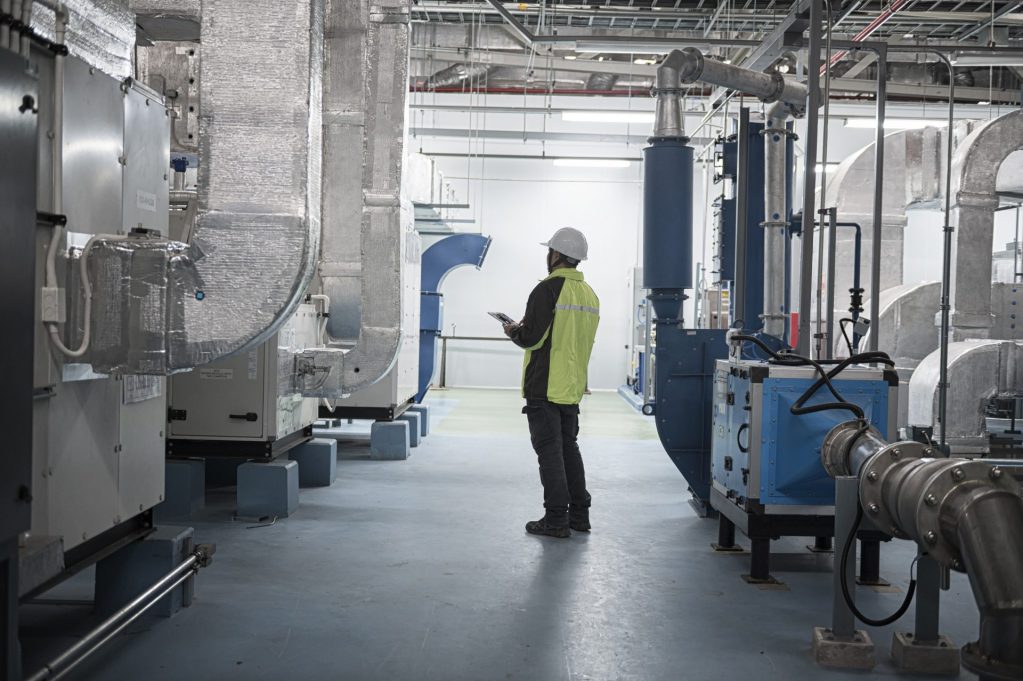
Morgan argues the skilled trades are foundational to nearly every high-growth sector of the economy—a story he says the industry has failed to tell. But one problem is the lingering perception that blue-collar work isn’t as elite or prestigious as white-collar work.
And that’s a perception that needs to change, Morgan said, because, really, skilled tradespeople are the ones who will literally be powering AI’s future.
“As powerful as AI will become, AI can’t climb a ladder to change the batteries in your smoke detector,” Lowe’s CEO Marvin Ellison told Fortune earlier this month. “It can’t change your furnace filter; it can’t clean your dryer vent; it can’t repair a hole on your roof.”
Morgan also questioned: “Why wouldn’t somebody want to be an HVAC tech or an electrician or refrigeration specialist in the data center industry?”
“You can’t have AI without data centers supporting them,” he added.
The trades are not what they used to be
As 53% of U.S. commercial building stock was built before 1990, it’s just about time for those structures to be modernized, right as the workforce is running out, according to JLL.
But the jobs necessary to build and power data centers and other commercial spaces aren’t what one would think of as a traditional blue-collar or trades job.
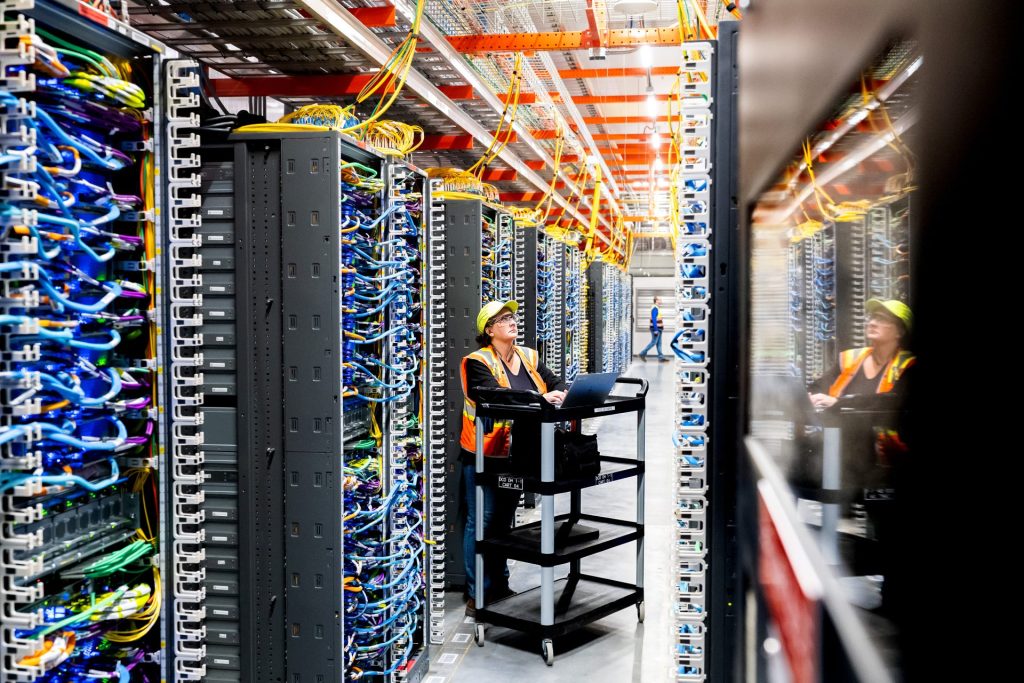
Today’s skilled trades, Morgan said, bear little resemblance to the jobs of a generation ago. The electrician wiring a data center is building the backbone of the AI boom, where a single error can cost millions in downtime. The pipefitter at a pharmaceutical plant is installing the ultra-pure water systems that drugmakers need to make medicine safe.
“It’s about the hidden army behind the buildings that enables us to develop” the next biggest advancements in tech, pharmaceuticals, and more, Morgan said. They’re the “ones enabling AI to accelerate and develop.”
A generational shift—but not enough of one
There are signs that attitudes toward skilled trades jobs are changing. The share of teenagers considering vocational or trade school has more than doubled, from 12% in 2018 to 30% in 2024, according to JLL. Community college enrollment has also risen 12% during the past five years, with construction trades, engineering technologies, and mechanical and repair technologies among the fastest-growing majors from 2024 to 2025.
Gen Z, in particular, appears to be reconsidering the four-year degree. Nearly 1 in 4 Gen Zers have seriously considered or are actively pursuing a career in the trades, and 75% associate desk jobs with burnout and instability, recent survey data from SupplyHouse shows.
“Maybe the economics of people doing a four-year degree, being saddled with all this debt, has now started to realize actually there are different paths to earn a good salary and have a good quality of life without saddling myself with a significant amount of debt,” Morgan said.
And there’s reason to believe some skilled trades jobs or blue-collar work can be just as lucrative as some historically prestigious white-collar jobs. Many of the highest-paid, most in-demand trade jobs make well over six figures, according to a recent SoFi report.
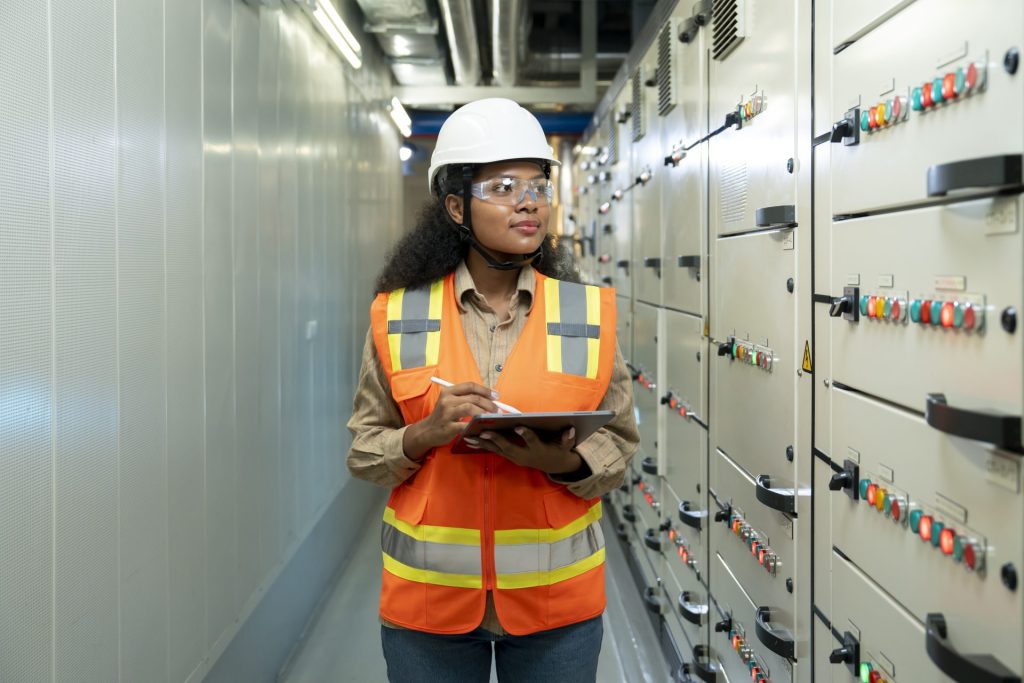
But even that surge in interest isn’t enough to close the gap, Morgan said, and the shortage is poised to hit globally, from the U.K. and Australia to Saudi Arabia.
“We’ve got to find different pools of talent that may either be affected in different ways, that we could attract into our industry and fill part of that gap,” he said, pointing to workers in facility management coordinators whose roles are being reshaped by AI.
Corporate America opens its wallet
Employers are taking the issue head-on. BlackRock announced a $100 million Future Builders initiative earlier this year, and Lowe’s Foundation committed $250 million over the next decade to train 250,000 skilled trades workers in plumbing, carpentry, and electrical work.
Google also invested $15 million in partnership with the Electrical Training Alliance, and Caterpillar and Stanley Black & Decker are running their own pipeline programs. State-level commitments in California, Maryland, and Massachusetts, along with federal apprenticeship grants, are also flowing into trades training, per JLL.
JLL itself recently piloted a 26-week skilled trades internship within its industrial division, partnering with trade schools across multiple U.S. markets—and 90% of eligible graduates received a full-time offer from the company, Morgan said.
The company’s approach has a three-part “build, grow, retain” strategy: build talent pipelines through school partnerships, grow capabilities with continuous upskilling on smart-building systems, and retain workers through structured career pathways, performance-based pay, and flexible scheduling.
AI and robotics, Morgan said, will eventually help by automating some of the “dull, dirty and dangerous” work, though humanoid robots capable of, say, changing a belt in a plant room are still a long way off. And that’s why skilled tradespeople are an absolute necessity.
“It all comes down to perception that we’re actually the enablers of the industries at large, we’re the enablers of the economy,” Morgan said. “Because without buildings, you don’t really necessarily have an economy, and without an economy, then obviously [we’d be] doing something different.”
“We have to change the story,” he continued. “This is a really compelling industry to be part of. These roles are foundational to how the world works.”
This story was originally featured on Fortune.com





This post was originally published here