
For much of its modern history, Canada has enjoyed a strategic privilege few countries possess.
Geography provided distance from the world’s most volatile regions, while powerful alliances and North American stability allowed Ottawa to view many international crises principally as matters of foreign policy.
That distinction is becoming obsolete.
Emerging threats do not necessarily cross Canadian borders in recognizable military form; they travel through cyberspace, financial networks, intelligence relationships, criminal intermediaries, political influence, and transnational repression.
The central national-security question is therefore no longer simply how Canada responds to instability abroad, but how it defends its sovereignty when authoritarian states project power into Canadian society itself.
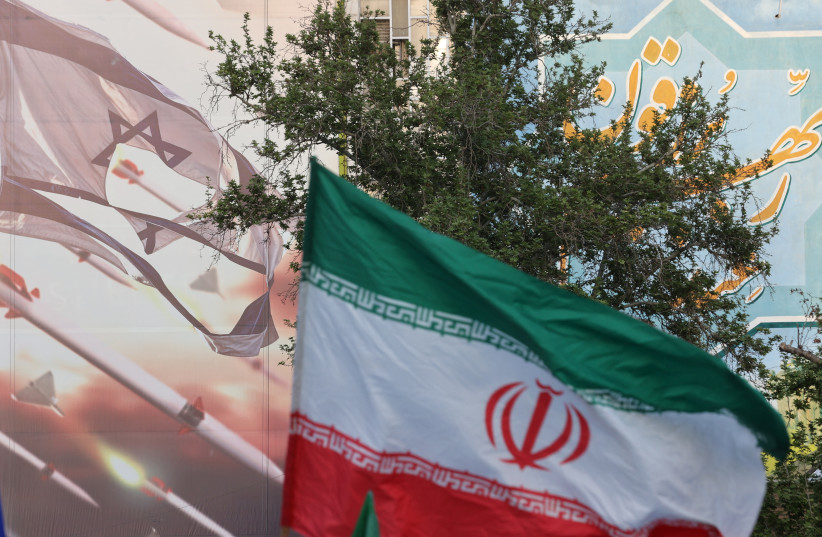
The Islamic Republic of Iran provides a revealing case study of this transformation. Tehran has traditionally been viewed in Ottawa through the lenses of nuclear proliferation, terrorism, sanctions, and Middle Eastern instability.
Those concerns remain substantial, but they are no longer sufficient.
The Center for Strategic and International Studies (CSIS) has identified Iran as a relatively sophisticated actor in foreign interference, employing intelligence services, proxies, and intermediaries to pursue opponents abroad.
It also warns that such activities and transnational repression may intensify as the regime perceives growing threats to its survival.
The implication extends beyond Iran: the boundary between foreign affairs and domestic security is disappearing.
Transnational repression should therefore be understood not merely as a human-rights problem but as an intrusion upon sovereignty.
When an authoritarian government attempts to determine what a dissident may say in Toronto, whom an activist may meet in Vancouver, or what a journalist may publish in Montreal, it is extending its authority into Canadian territory.
The victim may be Iranian, Chinese, or Russian, but the principle violated is Canadian. A state that tolerates such coercion permits a foreign government to establish an invisible sphere of authority within its borders.
Iran is particularly important because asymmetric power has shaped the Islamic Republic’s strategic culture for decades.
Aware of its conventional weakness against the Western alliance, Tehran has converted vulnerability into leverage through proxies, covert operations, cyber capabilities, intelligence networks, and non-state actors.
Its sophistication lies not in any single instrument but in combining them under layers of deniability.
Ottawa needs to pay attention: Networks that appear unconnected may very well be
Western governments, by contrast, often separate these threats into bureaucratic categories: cyberattacks, criminal investigations, sanctions violations, intimidation, and foreign interference.
What appears institutionally fragmented in Ottawa may be strategically integrated in Tehran.
Therefore, Canada needs what might be called network-based national security: the ability to recognize connections among apparently separate events.
When credible foreign interference is detected, investigations should extend beyond the immediate actor to the surrounding architecture – financing, facilitators, digital infrastructure, intelligence contacts, criminal intermediaries, and organizations providing legitimate cover.
Modern counterintelligence succeeds not merely by identifying who operates, but by illuminating the network that makes it possible.
Canada should become an increasingly difficult environment in which hostile states cannot build such networks undetected.
Ottawa has already taken important steps.
Canada designated the Islamic Revolutionary Guard Corps as a terrorist entity in 2024, while CSIS has described credible Iranian threats and Tehran’s willingness to use proxies and individuals connected with transnational organized crime against perceived enemies abroad.
Canada’s Foreign Influence Transparency Registry provides another instrument for exposing arrangements through which foreign principals seek to influence Canadian political and governmental processes.
Together, these measures recognize that foreign power can operate through structures far removed from traditional espionage.
Yet effective counterintelligence requires precision as much as vigilance.
Canada must never confuse Iranian identity with allegiance to the Islamic Republic. Iranian Canadians are often among the regime’s most determined opponents, many having left Iran precisely because they rejected its political system.
Indiscriminate suspicion would therefore be both unjust and strategically counterproductive, alienating the very communities authoritarian governments seek to intimidate.
The essential distinction is not between Canadians and foreigners, but between legitimate civic activity and covert activity conducted at the direction or for the benefit of a hostile state.
This distinction points toward a broader principle of democratic security. An authoritarian state can protect itself by closing society; a democracy must protect itself while remaining open.
Universities, political organizations, and diaspora communities must remain free and accessible. The task of security institutions is not to construct walls around Canadian society, but to identify where openness is being deliberately exploited.
A sophisticated democracy does not cast a wider security net; it develops a more discriminating one.
Ground invasions don’t threaten Canada pe se – cyber ones do
Cyber operations make this challenge particularly urgent. Physical distance once insulated Canada from conflicts thousands of kilometers away; digital infrastructure has radically reduced that advantage.
Iranian-linked cyber actors have targeted Western governmental, technological, and critical infrastructure, while Canadian security reporting has addressed cyber-enabled activity directed toward dissidents.
As such, geography can no longer define the boundaries of national security.
A hostile actor may be geographically distant while remaining operationally present inside the networks upon which Canadian government, commerce, and society depend.
Nor should Canada understand Iran in isolation. CSIS has identified China, Russia, India, Iran, and Pakistan in connection with significant foreign-interference or espionage concerns.
Iran is therefore part of a broader transformation: authoritarian and revisionist states recognize that open democracies possess vulnerabilities precisely because they are open – their institutions are accessible, political participation decentralized, and economic relationships international.
Canada’s response to Iran should contribute to a broader doctrine of democratic resilience capable of confronting different adversaries without sacrificing the constitutional freedoms that distinguish Canada from them.
Such a doctrine requires deeper integration of intelligence, law enforcement, financial intelligence, border security, and cyber defense.
Democracies naturally prefer to respond after wrongdoing becomes visible and evidence meets the standards of prosecution; intelligence operates earlier, recognizing patterns before they mature into operations.
The challenge is to act upon sophisticated warning while maintaining rigorous legal oversight. Security and liberty are not opposing objectives when the threat itself is designed to undermine the conditions under which liberty can safely exist.
Iran offers Canada one final strategic lesson: regimes under pressure do not necessarily become less dangerous abroad.
As conventional options narrow and domestic insecurity grows, asymmetric instruments become more attractive because they are inexpensive, deniable, and disproportionately effective.
A weakened authoritarian state may therefore rely increasingly on intelligence operations, cyber activity, proxies, and coercion abroad.
CSIS’s warning that Iranian foreign interference and transnational repression could increase as threats to the regime intensify should be understood in precisely this strategic context.
Canada is thus confronting a question larger than its policy toward Tehran.
Traditional sovereignty was primarily territorial: governments defended borders, institutions, and populations from external attack.
Sovereignty in the 21st century must protect something more: the independence of political decision-making, the integrity of digital infrastructure, the freedom of diaspora communities, the autonomy of public institutions, and the right of every person on Canadian soil to speak without being subjected to the coercive authority of a foreign state.
Canada’s great challenge is not to choose between openness and security. It is to understand that a democratic society can preserve openness only if it develops the intelligence, institutional confidence, and strategic imagination necessary to defend it.
The threats of the coming decade may rarely resemble invasion in the traditional sense. They may instead appear as networks, influence, intimidation, cyber penetration, and deniable coercion.
Recognizing that transformation is the beginning of an effective national-security doctrine.
Canada does not need to become a fortress. It needs to ensure that its openness remains a democratic strength rather than an authoritarian opportunity.
The writer is a Middle East political analyst. His latest book, Tehran’s Dictator, examines the theocratic era of Ali Khamenei (1989-2026). @EQFard




