
Ancient Egyptian princesses buried with weapons may have been trained to use them while alive, according to a controversial study published in the journal Frontiers in Environmental Archaeology in July.
Researchers examined six mummies found at the Dahshur funerary complex in the 1890s. The mummies, belonging to royal individuals from Egypt’s Middle Kingdom, date to nearly 4,000-years-ago.
“Members of the royal family, especially the women, were active participants in skilled, physically demanding activities such as archery and hunting,” said Lead author Dr. Zeinab Hashesh. “This conclusion is supported by the way their bones developed to sustain heavy muscle use, which corresponds directly to the weapons discovered in their tombs.”
The six, four of whom are believed to be daughters of Pharaoh Amenemhat II, were rediscovered in 2020 in the Egyptian Museum after being lost for decades.
After analyzing the mummies’ muscle attachments, researchers suggested that pronounced areas in their upper limbs indicate “repetitive, high-intensity actions like pulling a bowstring or stabilizing a weapon.”
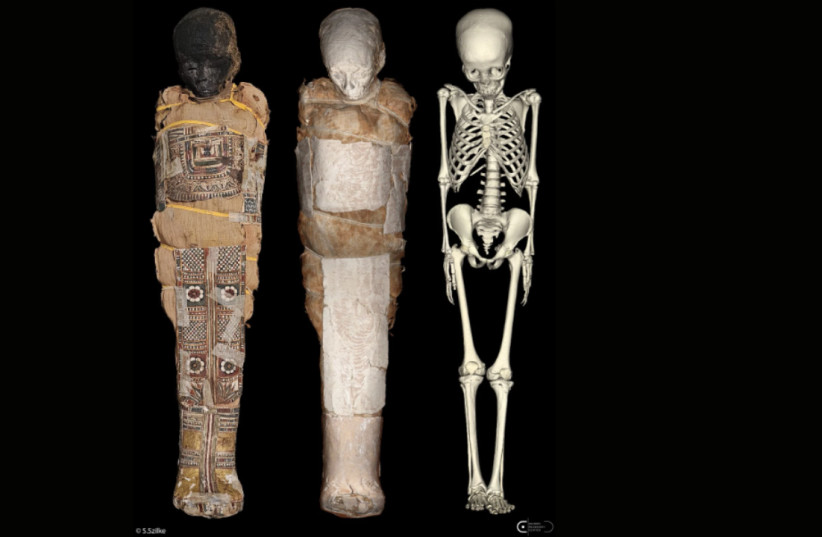
Hashesh added that the conclusion explains the presence of weapons in the princess’s burial chambers, as they are traditionally associated with men.
Princess Ita, Princess Khenmet, Princess Itaweret, and an anonymous woman provisionally identified as Princess Sathathormeryt, were all buried with bows and arrows. Ita’s coffin also held a dagger.
The two other mummies, Princess Noub-Hotep and King Hor, were buried with similar items.
“Princess Ita was a young woman aged between 28 and 34 with strong upper-body muscle attachments, suggesting she habitually used weapons like maces or daggers,” explained Hashesh. “Princess Khenmet was a woman in her late 30s or 40s who showed signs of thinning bones, but had very robust ligament attachments. Princess Itaweret was a young woman aged between 20 and 34 who survived broken ribs and foot fractures; her skeleton shows she was a skilled archer.”
Experts challenge study’s claims
However, bioarchaeologists not involved in the study shared with Live Science that “skeletal changes cannot reliably indicate a specific activity,” adding that “age, body size, genetics and other repetitive movements can produce similar results.”
Sonia Zakrzewski, a bioarchaeologist at the University of Southampton who was not involved in the research, told Live Science in an email that the identities of the skeleton’s relies on 19th-century labels, which means that “we cannot be certain how reliable they really are.”
She added that while the attachment sites on the bones are pronounced, there is no way of proving that it was caused by archery, only that the muscles “appear to have been repeatedly used.”
“We cannot say therefore that these skeletal changes necessarily are associated with the use of weaponry,” Zakrzewski said, especially since the researchers did not also study any “control” groups from the time period.
“It would be very useful to know how much such side differences exist in contemporaneous Egyptians, whether royal or not,” she noted.
No clear reason why princesses buried with arrows
Additionally, she told Live Science that there is no clear reason as to why the princesses were buried with items like arrows.
“Archery is a highly asymmetrical activity,” Scott Haddow, a bioarchaeologist at the University of Turin not involved in the study, explained to Live Science via email. Finding the pronounced sites on both sides of the remains “does not make a particularly strong case for these individuals practicing archery.”
Haddow added that the individuals’ ages could also explain the differences, as “muscle-attachment sites are influenced by aging, as well as by body size and genetics.”
Other experts told Live Science they believe the researchers might be reading into the appearance of the weapons too much.
“Although the presence of funerary artifacts (e.g., arrows, daggers) makes the princesses’ involvement in such activities plausible, the authors provide limited biomechanical or biomedical evidence to substantiate this claim,” French anthropologist Sébastien Villotte told Live Science in an email.
Villotte, who works at the French National Center for Scientific Research, added that “a more robust approach would involve comparing these individuals to non-elite contemporaries from the same region and period.”
“This would help determine whether such degenerative changes (at these locations) were common in the general population (who were unlikely to engage in the same activities) or truly indicative of elite-specific behaviors.”
However, despite the lack of control group and other uncertainties, Zakrzewski told Live Science that the importance of examining the remains should not be disregarded as “it allows us to sort of put flesh on the bones and understand more about their lives.”




