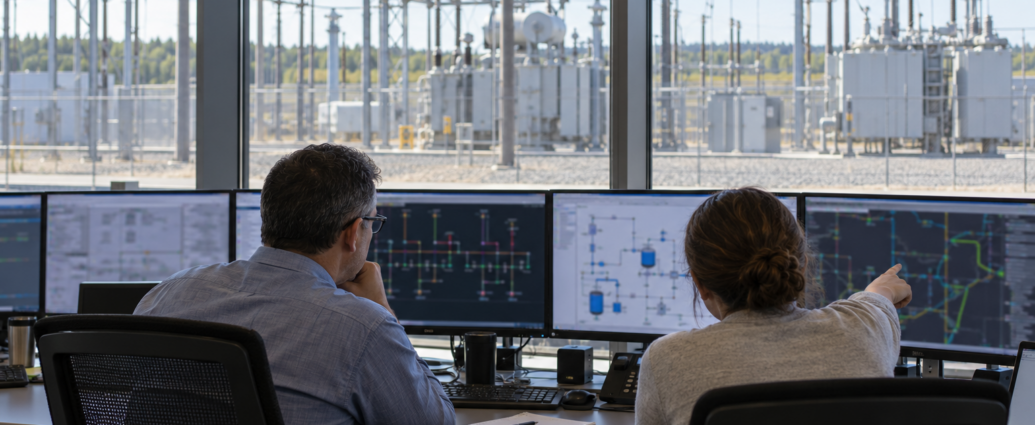
Anthropic is launching a long-term effort to help defend the power grids, water systems and transportation networks that Americans rely on every day from hackers using artificial intelligence. The San Francisco company, which makes the Claude AI models, calls the new effort the Anthropic Cyber Mission, and it starts with two targets: critical infrastructure and the free, shared software code that nearly every app and website depends on.
The company was blunt about why. Anthropic said that powerful AI models can be misused to find and exploit security holes, and that hackers backed by foreign governments have spent years quietly getting inside these systems across many industries so they can disrupt them later. The people defending those systems have decades of experience, the company said, but they’ve been short on resources, and the rise of AI has made that gap worse.
The first piece is the Critical Infrastructure Defense Program. It puts Anthropic’s most advanced Claude models, its own engineers working on site, and its threat research into the hands of the companies that utilities and plant operators already trust to keep their systems safe. The founding partners are Accenture, Booz Allen, CrowdStrike, Deloitte, Dragos, Hitachi, Insane Cyber, Nozomi Networks, Palo Alto Networks, PwC and Rockwell Automation.
Here’s why this kind of equipment is so hard to protect. The machines that run power plants, water utilities and factories are built to last for decades, and they often can’t be shut down for a security fix. That means a known weakness can sit unpatched for years. One wrong change on a running system can take down an entire plant. In some rare cases, Anthropic said, a fix might have to wait decades until it can be applied safely.
The work has already started. Several partners are using Claude right now to fix vulnerabilities and help their customers do the same. Anthropic said it’s beginning with a small group of providers to learn which approaches work best before bringing the program to more partners and more industries.
The partners see the threat as urgent. CrowdStrike’s Chief Business Officer Daniel Bernard said that at critical infrastructure, cyber risk turns into real-world risk, and that attackers using AI to move faster demand defenses that move just as fast.
This builds on earlier government work. In June, Anthropic launched a cyber defense program for state, local, tribal and territorial governments. Since then, the company has offered its models and technical support to more than half of all U.S. states and some of the country’s largest public utilities, helping them scan code, patch faster and respond to attacks.
The second piece targets open-source software, the free code written and shared by volunteers that sits underneath almost every program in use today. Much of it is kept up by tiny teams with little money. Anthropic is launching a free service called OSS Scanner that gives enrolled open-source projects regular security checks from its strongest models. Each report explains the bug, shows how it could be exploited and suggests a fix when one is available.
There’s a tradeoff built in. The reports are generated by AI and sent without a human reviewing them first, so they arrive faster but some will contain mistakes, like rating a bug as more serious than it is. Anthropic expects more than 90% of the flagged issues to be real problems. In plain terms, roughly 9 out of every 10 warnings should point to a genuine weakness. Projects without the staff to handle that volume will keep receiving human-checked reports instead.
Anthropic is also putting money behind the effort. The company has funded groups that maintain widely used open-source code, including the Python Software Foundation, the Apache Software Foundation, and the Alpha-Omega and OpenSSF projects through the Linux Foundation.
The company is upfront that this won’t be quick. Anthropic forecasts that within two years, AI will tilt the balance toward defenders, making it easier to catch bugs before software ships and to build secure systems from scratch. In the near term, though, the cost of attacking has fallen while fixing problems is still slow and depends on people. Through its earlier security work, the company often saw months pass between a weakness being found and being fixed.
For American families, the goal is simple. Anthropic said success means water, power, transportation and communications keep running even when skilled attackers come after them, with fewer ways in and faster recovery when something does get through. Companies that build security tools for critical infrastructure can apply to join the program as it expands over the coming months.
JBizNews Desk | San Francisco
© JBizNews.com All Rights Reserved. Reproduction or distribution without written permission is prohibited.