By JBizNews Desk
May 11, 2026
While much of Silicon Valley is pouring unprecedented sums into artificial intelligence infrastructure, Apple just delivered the strongest March quarter in its history by largely avoiding the AI spending arms race altogether — a strategy increasingly drawing attention from Wall Street as investors question whether massive AI capital expenditures will ultimately pay off.
The company reported fiscal second-quarter revenue of $111.2 billion for the period ended March 28, a 17% increase from a year earlier and the highest March-quarter revenue ever recorded by the iPhone maker. Earnings per share climbed 22% to $2.01, beating analyst expectations and reinforcing investor confidence that Apple’s slower, more disciplined AI strategy may be working.
The results, disclosed through Apple’s official earnings release filed with the Securities and Exchange Commission, were driven primarily by a powerful iPhone upgrade cycle and accelerating growth inside the company’s extraordinarily profitable Services business.
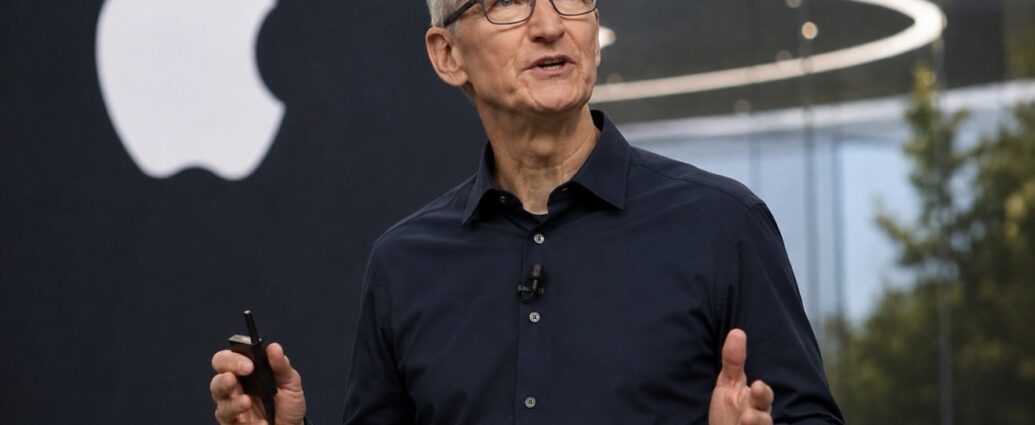
iPhone revenue surged to approximately $57 billion, itself a March-quarter record and up roughly 22% year over year. Chief Executive Officer Tim Cook told analysts demand for Apple’s newest devices was “off the charts,” though supply constraints limited how much inventory the company could deliver during portions of the quarter.
One of the quarter’s strongest performances came from Greater China, where revenue climbed 28% to approximately $20.5 billion despite continuing geopolitical tensions between Washington and Beijing and intensifying competition from domestic Chinese smartphone manufacturers.
But the quarter’s most important story may have been Apple’s Services division, which continues transforming the company’s financial profile.
Revenue from Services climbed to an all-time record of $30.98 billion, up 16% from a year earlier. The segment — which includes the App Store, Apple Music, iCloud, Apple TV+, and Apple’s growing advertising business — operates at gross margins near 77%, nearly double the margin profile of Apple’s hardware business.
The acceleration marks the third consecutive quarter of stronger Services growth, an especially notable achievement for a division already generating tens of billions of dollars annually.
Wall Street analysts increasingly view Services as the company’s most important long-term earnings engine because the recurring subscription and advertising revenue creates steadier cash flow than the cyclical hardware business.
What makes Apple’s quarter stand out most sharply across Silicon Valley, however, is what the company is not doing.
While rivals including Microsoft, Amazon, Meta, and Alphabet are collectively committing hundreds of billions of dollars toward AI chips, data centers, and cloud infrastructure expansion, Apple continues pursuing a far more restrained strategy.
The company spent approximately $11.4 billion on research and development during the quarter — a substantial 33% increase year over year, but still only a fraction of the AI infrastructure spending now underway elsewhere across Big Tech.
By comparison, analysts estimate Microsoft and Amazon alone could each spend close to or above $200 billion on AI-related capital expenditures during 2026 as the industry races to build out massive artificial intelligence computing capacity.
Cook told analysts Apple is integrating AI “incrementally on top of” its existing product roadmap rather than launching a separate AI infrastructure buildout comparable to competitors.
Instead, Apple’s strategy increasingly relies on partnerships and software integration rather than building enormous standalone AI cloud infrastructure.
Earlier this year, the company announced a collaboration with Google to integrate Google’s Gemini AI technology into a redesigned Siri experience expected to launch later this year. During the earnings call, Cook said the partnership “is going well” and that Apple remains “happy with where things are.”
Investors and developers are now closely watching Apple’s upcoming Worldwide Developers Conference, scheduled for June 8 through June 12, where the company is widely expected to unveil a major Siri redesign featuring support for third-party AI agents and broader artificial intelligence integration across Apple’s ecosystem.
The quarter also carried major leadership significance.
On April 20, Apple announced that Cook, who has led the company for 15 years following the death of co-founder Steve Jobs, will step down as CEO on September 1 and transition into the role of Executive Chairman.
He will be succeeded by John Ternus, Apple’s current Senior Vice President of Hardware Engineering, who joined the earnings call and told investors the company has “an incredible roadmap ahead.”
Despite the record quarter, Apple did signal one emerging concern that analysts are monitoring closely.
Cook warned that rising memory costs are becoming the company’s primary supply-chain constraint and could increasingly pressure profitability during the second half of the year as global demand for AI-related semiconductor components surges.
“We believe memory costs will drive an increasing impact on our business,” Cook said — a warning analysts interpreted as an early sign that the artificial intelligence boom may begin driving broader inflationary pressure across the electronics supply chain.
For investors, Apple’s latest results reinforce a growing debate across Wall Street and Silicon Valley alike: whether the companies spending the most aggressively on AI infrastructure will ultimately outperform firms pursuing more disciplined capital-allocation strategies.
So far, Apple appears to be proving that record-breaking financial performance does not necessarily require betting the entire company on artificial intelligence infrastructure.
— JBizNews Desk
© JBizNews.com. All rights reserved. This article is original reporting by JBizNews Desk. Unauthorized reproduction or redistribution is strictly prohibited.