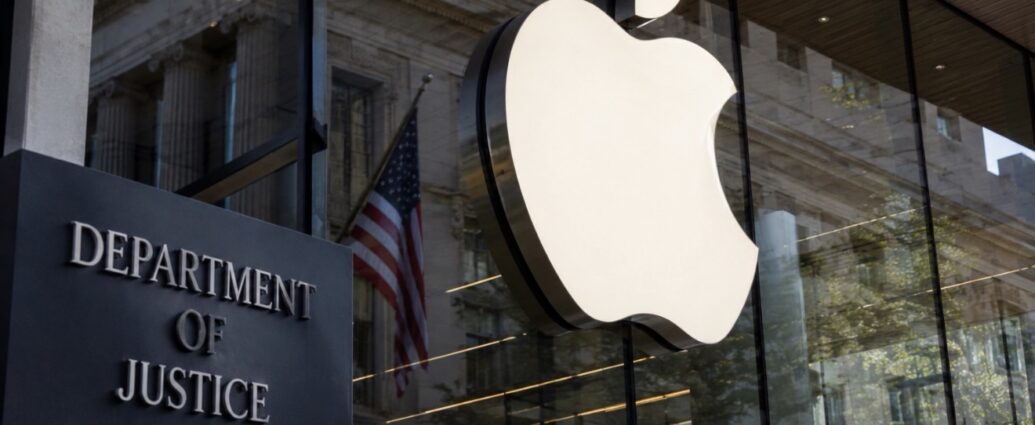
Apple is engaged in preliminary settlement discussions with the U.S. Department of Justice that could resolve the federal government’s landmark antitrust lawsuit over the iPhone ecosystem before the case reaches trial. The negotiations follow a series of software and platform changes introduced by Apple over the past year that address several of the government’s original allegations, while recent court rulings have also strengthened the company’s legal position. Although discussions remain active, officials familiar with the matter caution that no agreement has been reached and litigation could still proceed.
The Justice Department filed its antitrust complaint in March 2024, alleging Apple violated federal competition laws by maintaining an illegal monopoly in the U.S. smartphone market through restrictions that discouraged consumers from switching devices and limited competition from rival software and hardware developers. The complaint focused on Apple’s treatment of so-called “super apps,” cloud gaming services, messaging interoperability, digital wallets, and wearable devices that compete with Apple products.
Since the lawsuit was filed, Apple has introduced a number of significant platform changes. The company expanded support for Rich Communication Services (RCS) messaging, allowing better communication between iPhone and Android users. It also loosened restrictions affecting cloud gaming applications, opened portions of its NFC payment technology to third-party developers in several markets, and continued expanding developer access following regulatory changes overseas. Apple argues these updates demonstrate that innovation—not anticompetitive conduct—drives its platform decisions.
People familiar with the negotiations say Apple has made multiple settlement proposals throughout 2026, seeking to resolve the litigation without admitting wrongdoing while avoiding years of costly courtroom proceedings. The discussions remain confidential, and neither side has publicly outlined specific settlement terms.
Apple’s legal position has improved in recent weeks following an important procedural victory. A federal judge overseeing discovery ruled that Apple may obtain internal documents from numerous federal agencies—including defense and national security departments—that use iPhones extensively within government operations. Apple contends those records could support its argument that many of its security restrictions exist to protect users and sensitive government communications rather than suppress competition.
The broader legal environment has also shifted. The Justice Department’s Antitrust Division has operated for months under acting leadership while awaiting permanent appointments, reducing certainty about the agency’s long-term litigation strategy. Legal analysts note that changes in leadership often create opportunities for negotiated settlements, particularly in complex technology cases that could otherwise require years of discovery and appeals.
For the technology industry, the outcome could influence future government enforcement against dominant digital platforms. If the case ends through negotiated software changes rather than structural remedies, regulators may increasingly rely on behavioral commitments instead of attempting to break up or significantly restructure major technology companies. Conversely, critics argue that a settlement without meaningful structural reforms could leave Apple’s broader ecosystem control largely intact while establishing a less aggressive precedent for future antitrust enforcement.
Investors are closely monitoring the negotiations because removing one of Apple’s largest legal uncertainties could improve visibility for the company’s long-term business strategy. A settlement would eliminate the risk of court-ordered changes to the iPhone ecosystem while allowing Apple to continue emphasizing privacy, security, and integrated hardware-software design as key competitive advantages.
Neither Apple nor the Justice Department has publicly commented on the ongoing settlement discussions. No trial date has been scheduled, and negotiations are expected to continue alongside pretrial proceedings.
JBizNews Desk | New York
© JBizNews.com All Rights Reserved. Reproduction or distribution without written permission is prohibited.