Iranian hardliners took to the streets in Tehran and Mashhad on Saturday night to protest the emerging agreement with the United States, directing their anger at Iran’s negotiating team and senior officials, according to the Qatari-owned Arabic newspaper Al-Araby Al-Jadeed.
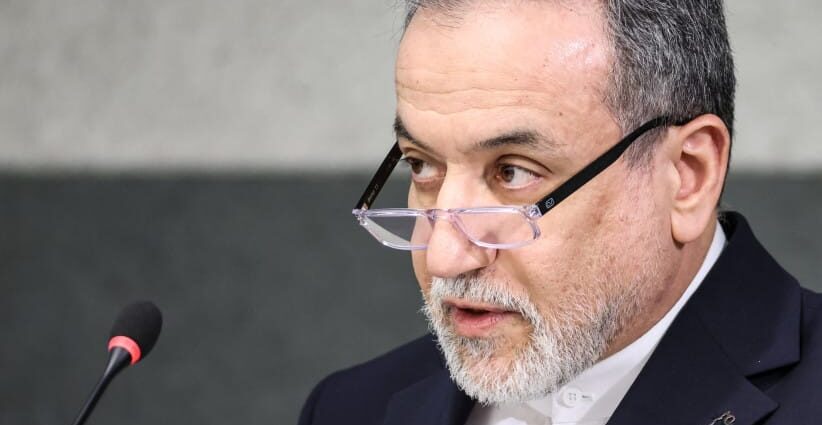
Demonstrators in Tehran gathered in a central square and chanted slogans against Iranian Foreign Minister Abbas Araghchi and Parliament Speaker Mohammad Bagher Ghalibaf.
“Araghchi, be ashamed and leave the country,” protesters shouted, according to the report. Others chanted: “Ghalibaf, Araghchi – what about the blood of our leader?”
A separate demonstration was held in the eastern Iranian city of Mashhad outside a Foreign Ministry office, where participants also raised slogans against Araghchi. Social media accounts reported localized friction in some areas between supporters and opponents of the proposed deal.
According to Al-Araby Al-Jadeed, most activists and lawmakers who have publicly opposed the emerging agreement belong to Iran’s conservative camp, particularly circles close to Saeed Jalili, the former secretary of Iran’s Supreme National Security Council.
Editorial criticizes deal framework, questions opening Strait of Hormuz
Hossein Shariatmadari, the editor of the hardline Iranian newspaper Kayhan, also criticized the proposed framework in an editorial titled “A letter to Messrs. Ghalibaf and Araghchi.”
“Did closing the Strait of Hormuz really block the commercial and economic breathing route of the enemy?” he wrote, questioning the logic of giving up what he described as one of Iran’s most important bargaining chips in the war.
Shariatmadari wrote that securing compensation “was and remains” one of the demands announced by the leader of the revolution, and questioned how Iran would be able to extract such compensation from the US and its partners if it agreed to reopen the strait. Opening the waterway under the proposed framework, he argued, would limit Tehran’s ability to press that demand.
The conservative Fars News Agency, considered close to the Islamic Revolutionary Guard Corps, reported Saturday that US President Donald Trump’s “strange insistence” on signing a memorandum of understanding with Iran on Sunday constituted a test for Iran’s negotiating team.
Fars noted that Trump had repeatedly said the memorandum would be signed on Sunday, while Iranian officials involved in the negotiations had said that the understandings had not yet been completed and that a signing on that date would definitely not take place.
The agency also pointed out that Sunday, June 14, is Trump’s birthday, arguing that he sought to use the date symbolically and turn it into a propaganda event.
Iranian Foreign Ministry spokesman Esmaeil Baghaei said in this context that any possible understanding with the United States would amount only to a framework for continuing talks, rather than a final agreement between the two countries.