By JBizNews Desk | May 10, 2026
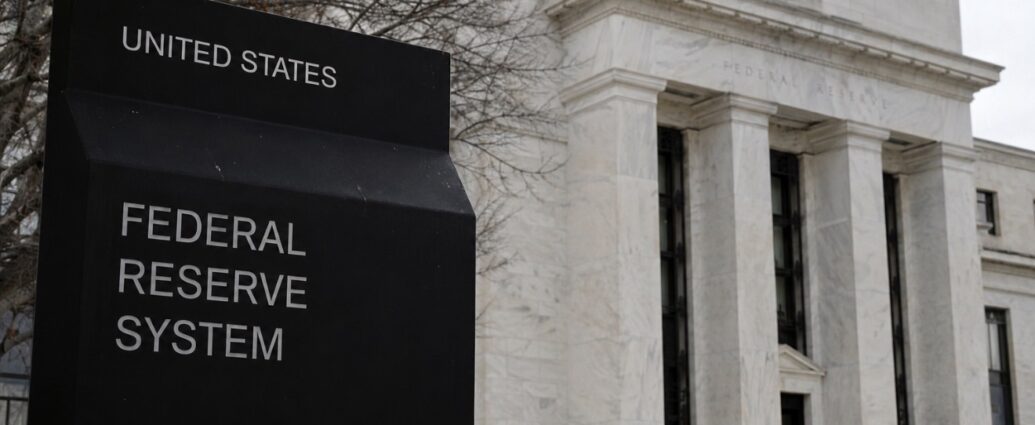
New Federal Reserve commercial lending data analyzed by Neuberger Berman shows traditional banks sharply regaining market share from private credit firms, marking one of the biggest reversals in corporate lending since the shadow-lending boom began after the 2008 financial crisis.
According to the first-quarter 2026 lending breakdown, commercial bank lending to businesses surged approximately 12.7%, the fastest pace of growth since 2022, while private credit lending volumes declined roughly 14% over the same period.
The numbers signal a major shift in the balance of financial power across American corporate lending markets — one that is already beginning to affect small and midsize companies that spent years relying on private lenders after banks pulled back following the global financial crisis.
For more than a decade, private credit firms aggressively expanded into areas once dominated by traditional banks, building a roughly $2 trillion industry by offering flexible financing to middle-market companies, leveraged buyouts and higher-risk borrowers.
The sector exploded partly because post-2008 banking regulations made many commercial banks more cautious about extending credit to riskier companies.
Private lenders stepped into the gap.
Firms including Blackstone, Apollo Global Management, Ares Management, Blue Owl Capital and dozens of other direct-lending platforms generated years of strong returns by financing businesses banks often avoided.
At its peak, private credit became one of Wall Street’s hottest investment categories, promising yields of roughly 8% to 10% with comparatively low default rates.
Now, however, the economics underpinning that boom are beginning to reverse.
The core problem traces back to the low-interest-rate era of 2021 and 2022, when private lenders issued enormous volumes of loans at historically cheap borrowing costs.
Many of those loans carried maturities of approximately five years — meaning they are now beginning to approach refinancing windows at a time when interest rates, energy costs and economic uncertainty have all risen dramatically.
Borrowers who once refinanced easily are suddenly confronting much more expensive debt markets.
“When debt comes due and the interest rate required to roll over the debt is much higher, then the borrowers are much more likely to default on the payment,” said Amir Sufi, professor of finance at the University of Chicago Booth School of Business.
That refinancing pressure has started weakening private credit portfolios across the industry.
The stress is increasingly visible among some of the sector’s largest firms.
Blackstone’s flagship private-credit fund BCRED posted its first monthly loss in three years earlier this year after marking down several loans, including debt tied to software company Medallia.
Ares Management moved to cap investor withdrawals from one of its $10.7 billion private-credit vehicles after redemption requests surged to approximately 11.6%, while Apollo Global Management implemented similar restrictions inside portions of its lending platform.
The redemption gates represent one of the first major liquidity tests for an industry that expanded rapidly during years of cheap money and strong investor appetite.
The underlying quality of many loan portfolios is also deteriorating.
According to the International Monetary Fund’s 2025 Financial Stability Report, approximately 40% of private-credit borrowers now have negative free cash flow, up sharply from roughly 25% in 2021.
That deterioration has raised concerns across Wall Street about how private-credit portfolios will perform if economic conditions weaken further.
One of the industry’s biggest vulnerabilities involves software lending.
According to Morgan Stanley, direct-lending portfolios currently carry approximately 26% exposure to software companies, particularly software-as-a-service businesses that were aggressively financed during the technology boom.
Now, fears surrounding slowing enterprise spending and disruption from generative and agentic artificial intelligence are pressuring valuations across the SaaS sector.
That matters because falling software valuations directly threaten the collateral value underlying many private-credit loans.
Blue Owl Capital and Apollo both maintain substantial software exposure, leaving portions of their portfolios vulnerable if defaults rise or valuations continue falling.
For the broader economy, the consequences could become significant.
“When restructurings happen, capital becomes trapped, leading to tighter future lending conditions,” said William Barrett, managing partner at Reach Capital.
That tightening is already beginning to affect the middle-market businesses that private credit was originally built to serve.
As private lenders grow more cautious and focus increasingly on protecting existing portfolios, many companies are returning to banks for financing — helping fuel the sharp rebound in commercial lending now appearing in Federal Reserve data.
Wall Street remains divided over how dangerous the situation ultimately becomes.
JPMorgan Chase chief executive Jamie Dimon recently argued that private credit does not yet represent a systemic threat to the financial system because the market remains relatively small compared with traditional banking.
“I don’t think it’s systemic. It almost can’t be systemic at that size relative to anything else,” Dimon said.
Goldman Sachs chief executive David Solomon has similarly said the firm remains optimistic about private credit’s long-term future despite current turbulence.
Others, however, see meaningful differences emerging inside the market itself.
Brad Rogoff, global head of research at Barclays, noted that investment-grade private debt — including asset-backed structures and senior private placements — carries significantly different risk characteristics than highly leveraged sub-investment-grade loans concentrated in U.S. middle-market software financing.
“There is a different risk profile between the two of them,” Rogoff said.
For investors, the reversal now underway could reshape one of Wall Street’s most profitable growth stories of the past decade.
Private credit was once viewed as a disruptive alternative to traditional banking — faster, more flexible and less constrained by regulation.
But the Federal Reserve’s latest lending data suggests banks are beginning to reclaim the ground they lost during the era of cheap money and aggressive shadow lending.
For small and midsize businesses caught in the transition, however, the picture is far more complicated.
As private lenders retreat, banks are returning — but often with stricter underwriting standards, tighter terms and higher financing costs than borrowers became accustomed to during the easy-credit years.
The Federal Reserve data showing the strongest commercial-bank lending growth in four years may represent a recovery for traditional lenders.
For the businesses navigating the shift, it also marks the beginning of a far more expensive and selective credit environment.
JBizNews Desk