
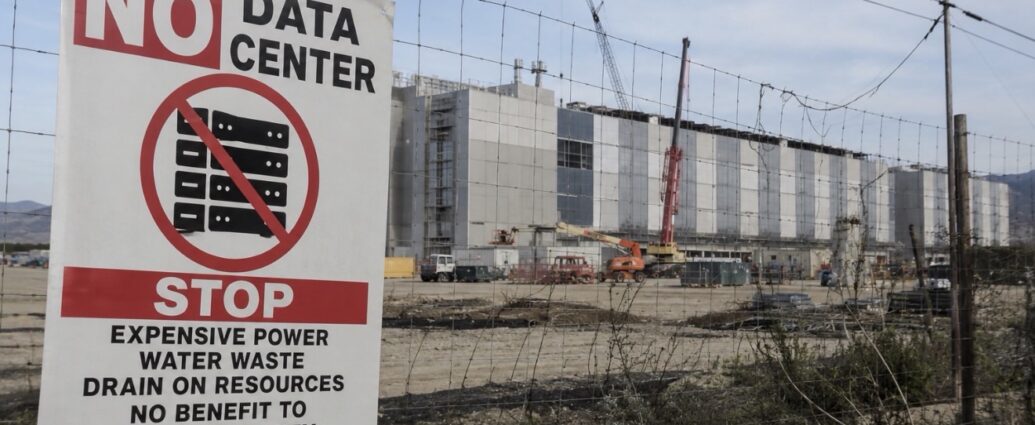
Wall Street is beginning to price local resistance into the AI infrastructure boom.
Banks and asset managers financing new U.S. data centers are increasingly looking beyond traditional credit metrics and asking a more basic question before committing billions of dollars: will the surrounding community actually allow the project to be built?
Lenders are now examining zoning fights, permitting delays, electricity constraints and public opposition alongside a developer’s balance sheet, tenant agreements and projected returns.
The reason is simple. A data center can have a major technology company signed as a customer and still become significantly more expensive if construction is delayed for months or years by lawsuits, utility disputes or local political pressure.
At least 75 U.S. data-center projects worth roughly $130 billion faced some form of local opposition during the first quarter, according to Data Center Watch estimates cited by financial institutions.
That opposition is becoming more intense as AI campuses grow larger.
Residents and local officials are raising concerns about electricity demand, water consumption, noise, land use and whether households could end up paying higher utility bills to support infrastructure built primarily for technology companies.
For lenders, those concerns translate directly into financial risk.
A delayed project can mean higher interest costs, missed construction deadlines and penalties tied to customer agreements. A project that loses zoning approval can force developers to relocate entirely, putting millions of dollars of early-stage spending at risk.
Banks are therefore beginning to treat community support almost like another layer of collateral.
The shift is especially important because the amount of capital involved is enormous. Goldman Sachs has estimated that technology companies and infrastructure providers could spend more than $6 trillion on AI-related infrastructure through 2030.
Much of that money will be financed rather than paid entirely from corporate cash.
That means banks, private-credit funds, insurers and infrastructure investors will increasingly determine which AI projects actually get built.
For developers, winning financing may now require more than showing a strong tenant and attractive projected returns. They may also need commitments from utilities, local governments and surrounding communities before lenders are willing to release capital.
The change illustrates how quickly the AI boom is moving from Silicon Valley into local politics.
The next bottleneck may not be chips or even electricity.
It could be permission to build.
JBizNews Desk | New York
© JBizNews.com All Rights Reserved. Reproduction or distribution without written permission is prohibited.




