Beef prices continue climbing across the United States as the nation’s cattle inventory falls to levels not seen in generations.
According to the U.S. Department of Agriculture’s annual cattle inventory report, released January 30, 2026, the nation’s cattle herd totaled 86.2 million head, the lowest level since 1951.
The breeding herd stood at 27.6 million beef cows, the smallest since 1961.
Record Prices Reach Consumers
The supply shortage is increasingly visible at grocery stores.
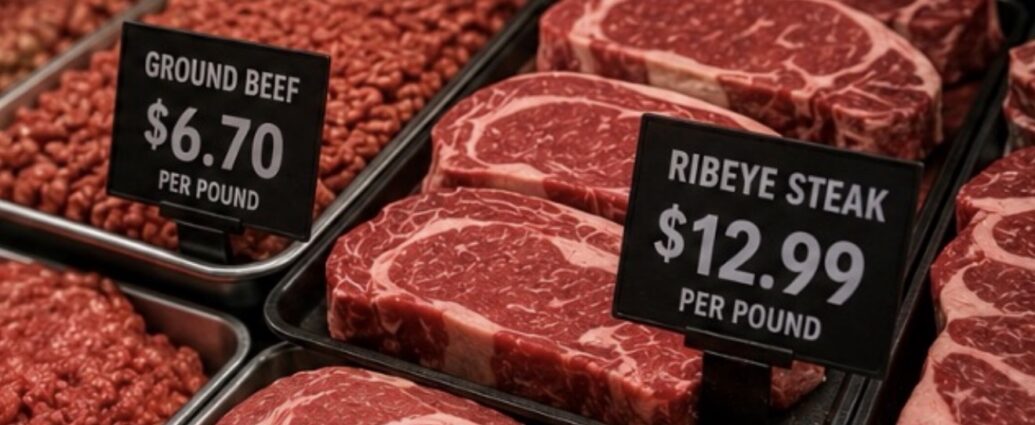
Average ground beef prices have climbed above $6.70 per pound, setting new records.
Retail beef prices are roughly 20% higher than a year ago and approximately 72% above January 2020 levels, when ground beef averaged about $3.88 per pound.
At the farm level, cattle prices in April were nearly 18% higher than a year earlier.
Years of Pressure on Ranchers
The shortage reflects years of challenges across the cattle industry.
Extended drought conditions throughout portions of the Great Plains and Southwest reduced grazing opportunities and forced ranchers to sell breeding stock earlier than planned.
Higher interest rates during 2024 and 2025 increased financing costs for cattle producers.
At the same time, rising feed expenses and higher fuel costs further squeezed margins.
The result has been a smaller national herd and reduced future production capacity.
Recovery Will Take Years
Unlike other agricultural products, cattle require years to rebuild.
Even if ranchers began expanding herds immediately, additional supply would likely not reach grocery stores in meaningful quantities until 2028 or later.
Industry groups have repeatedly warned that rebuilding the breeding herd is a slow biological process that cannot be accelerated quickly.
USDA Sees More Tight Supply Ahead
The USDA expects beef production to decline again during 2026.
At the same time, pork and poultry production are projected to increase.
The agency forecasts a key cattle benchmark price averaging approximately $240 per hundredweight, about 7% higher than 2025 levels.
Analysts expect retail beef prices to remain elevated throughout the year.
Meat Processors Feel the Pressure
The cattle shortage is also affecting meat processors.
Tyson Foods, one of the nation’s largest meat companies, reported an operating loss of approximately $143 million in its beef segment during the first quarter of 2026.
With fewer cattle available, large processing facilities operate below capacity while paying higher prices for livestock.
The challenge affects much of the industry.
Consumers Shift to Alternatives
Many households are responding by purchasing less beef, choosing less expensive cuts, or switching to alternative proteins.
Chicken and pork remain significantly more affordable in comparison and continue attracting budget-conscious shoppers.
For now, economists and industry analysts agree on one point: meaningful relief is unlikely until the national cattle herd begins rebuilding.
And according to USDA projections, that process remains years away.
JBizNews Desk — Washington
© JBizNews.com All Rights Reserved. Reproduction or distribution without written permission is prohibited.