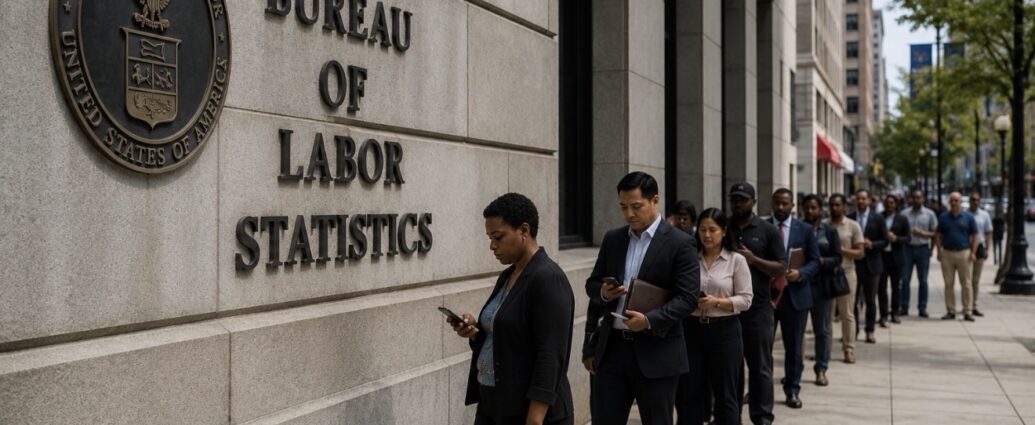
The Bureau of Labor Statistics reported Thursday that the U.S. labor force participation rate fell to 61.5% in June, its lowest level since March 2021 and, setting aside the pandemic period, the lowest in 50 years, matching a level last seen in June 1976. The decline helped push the unemployment rate down to 4.2%, but largely because hundreds of thousands of Americans stopped looking for work rather than finding new jobs.
At first glance, the June employment report appeared mixed. Employers added just 57,000 jobs, well below economists’ expectations of 115,000, and down from a downwardly revised 129,000 jobs in May. At the same time, the unemployment rate declined to its lowest level in a year. A closer look at the household survey, however, tells a very different story.
According to the report, the U.S. labor force shrank by approximately 720,000 people during June, while the number of Americans classified as not participating in the labor force increased by more than 830,000. Household employment—a separate measure from the payroll survey—fell by 507,000, while the employment-to-population ratio declined to 59%, its lowest level since October 2021.
Many economists said those numbers provide a more accurate picture of current labor-market conditions than the headline unemployment rate.
Dan North, Senior Economist for North America at Allianz, said the labor force participation rate—not the unemployment rate—is the figure demanding the most attention, describing June’s decline as unusually large both on a monthly and yearly basis.
Mike Reid, Head of U.S. Economics at RBC, characterized the report as a “massive exodus” from the labor force, suggesting the decline reflects a combination of retirements, discouraged workers abandoning their job searches and broader demographic changes.
Heather Long, Chief Economist at Navy Federal Credit Union, noted it was especially striking to see roughly 720,000 Americans stop looking for work during the same month that the leisure and hospitality sector also lost jobs.
What makes June’s report particularly noteworthy is who exited the workforce.
Rather than older Americans nearing retirement, much of the decline occurred among prime-age workers, those between 25 and 54 years old—a demographic that historically maintains the strongest attachment to the labor market. Some economists cautioned that monthly household survey data can be volatile and subject to future revisions. Nevertheless, the latest figures continue a longer-term trend that has seen labor force participation remain well below its peak of more than 67% reached around the year 2000.
For businesses, the implications are significant.
A shrinking labor force reduces the number of available workers, making it more difficult for employers to fill open positions while placing upward pressure on wages and hiring costs. At the same time, fewer people earning paychecks ultimately means less consumer spending—the primary engine of the U.S. economy.
Separate data released by Challenger, Gray & Christmas showed U.S. employers announced the highest number of layoffs for the month of May since 2020, with companies citing artificial intelligence as a contributing factor in roughly 40% of announced job cuts. The figures suggest automation continues reshaping hiring decisions across multiple industries.
For the Federal Reserve, June’s employment report adds another layer of complexity to an already difficult economic outlook.
Slower hiring and declining labor force participation argue against further interest-rate increases, with some economists saying the data strengthens the case for the Fed to hold rates steady. Seema Shah, Chief Global Strategist at Principal Asset Management, said the report challenges recent expectations that the labor market had regained momentum while easing pressure on policymakers to tighten monetary policy further.
At the same time, inflation remains above the Federal Reserve’s long-term 2% target, leaving policymakers balancing signs of a cooling labor market against continued concerns over elevated prices. Federal Reserve Chair Kevin Warsh, who described labor conditions as “steady” earlier this week, now faces another closely watched employment report that complicates the central bank’s policy decisions.
The next monthly employment report is scheduled for August 7, when investors, businesses and policymakers will be watching closely to determine whether June’s sharp decline in labor force participation proves to be a temporary anomaly—or a sign that America’s workforce is entering a more prolonged slowdown.
JBizNews Desk | Washington, D.C.
© JBizNews.com All Rights Reserved. Reproduction or distribution without written permission is prohibited.