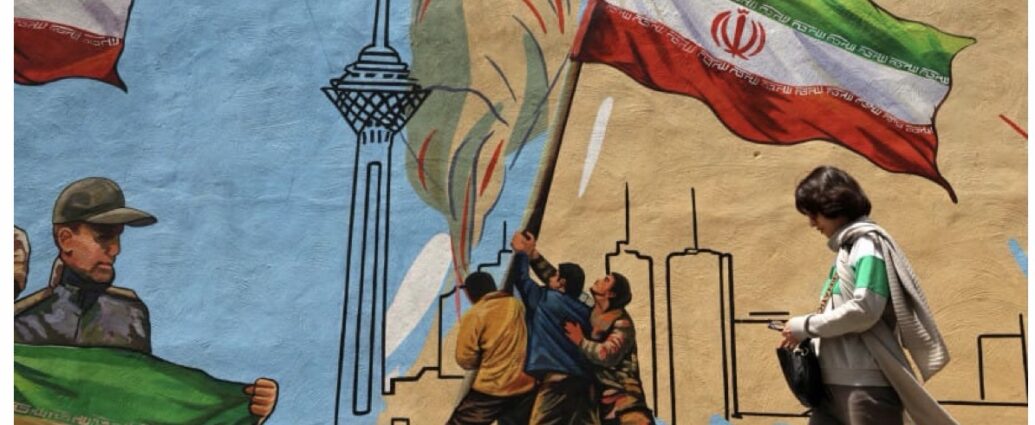
On the surface, the streets of Tehran appear to have returned to normal. Cafés are open, and traffic jams in the capital have resumed their usual pace. However, beneath this routine lies a nation on the brink of financial collapse, one that even the most brutal crackdowns may not contain.
While the streets are full of people, their pockets are empty. The Iranian rial has become a liability that citizens are desperate to offload.
“There is simply crazy inflation in the market because nobody wants to hold the Iranian currency,” explains Prof. Amos Nadan, head of the Dayan Center at Tel Aviv University, adding, “This currency is fundamentally unstable.”
Even before the recent military escalations, Iran was grappling with an inflation rate of approximately 70 percent—the highest since World War II. Today, the numbers tell the story of a struggling middle class. The new monthly minimum wage stands at over 160 million rials, a figure that sounds astronomical until it is converted to its actual value: a mere $104.

The human cost of this devaluation is staggering
“The truth is that this might not be the end. Because when there isn’t much economic activity in Iran—as there wasn’t during the war—there isn’t much opportunity for the currency to weaken dramatically,” says Eyal Hashkes, a strategic consultant and author of The Swords of Economy. “The moment life returns to full normality, we will see an even more significant weakening of the rial.”
The human cost of this devaluation is staggering. Daily necessities have become luxury items. A single kebab in a restaurant now costs between five and six million rials, while a basic meal of chicken and rice can cost up to four million.
“We are seeing very difficult cases across many fields—child prostitution and other extremes just to bring food home,” notes Prof. Nadan. “This is a population that is suffering, especially the poor, in a very severe way.”
Iran’s economic woes were not caused by the war; they were merely accelerated by it. Long before the first shots were fired, the country suffered from a chronic energy crisis, forced rolling blackouts, and a persistent drought that dried up the nation’s reservoirs. These problems led to massive riots in January, which the regime suppressed with lethal force, resulting in the deaths of tens of thousands of protesters.
In an attempt to stifle dissent, the regime has kept the internet largely paralyzed. This digital blackout has cost the economy an estimated $37 million per day due to the inability to process online payments and disruptions to export chains.
According to Eyal Hashkes, the only way for Iran to emerge from this stagnation is to remove economic sanctions. Without external investment, Iran cannot grow. “Without removing sanctions, it will be impossible to regrow the economy.”
To further destabilize the regime’s ability to fund its military proxies, Israel targeted key industrial sites during the conflict, focusing on steel and petrochemical plants. While the strikes were defined as attacks on the military industry, the collateral damage to the civilian economy was immense. “The attacks on steel facilities and other industries like petrochemicals led to a decrease of billions, or even tens of billions, in potential annual revenue for Iran,” says Hashkes.
Perhaps the most significant pressure point remains the maritime blockade of the Strait of Hormuz. For weeks, the flow of goods from Iranian ports has ground to a halt. Tehran’s primary lifeline—oil—is no longer reaching its main customer, China.
“Something like 85 percent of Iran’s exports is oil,” says Prof. Nadan.
The crisis is reaching a logistical breaking point. Analysts estimate that by mid-May, Iran will have completely run out of storage space for its unexported oil. When that happens, the regime will have to make a choice that could haunt it for decades: shutting down the wells.
“In the future, Iran will run out of storage for all this oil,” Hashkes says. “When that happens, they will have to start turning off the wells. After a well remains inactive for a long time, it often cannot simply be turned back on—it takes years of rehabilitation.”
Prof. Nadan adds that the oil’s quality is at risk. “If you don’t pump the oil, it begins to lose its quality. We remember the COVID-19 period, when prices turned negative just to keep the pumps moving. Iran is entering a new cycle of hardship,” he says.
The Central Bank of Iran recently estimated that it would take at least 12 years to rehabilitate the national economy—and that is assuming the war ends today. As the pressure builds, the question in Jerusalem and Washington is no longer whether the Iranian economy will break, but whether the Iranian people will break the regime before it does.