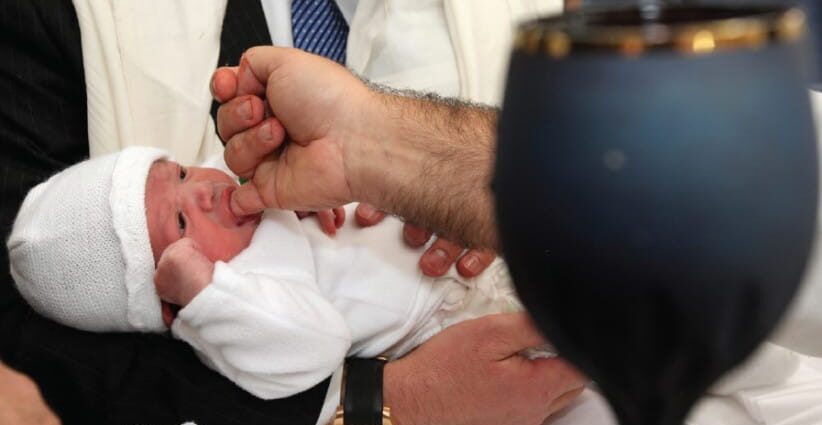
Jews have lived continuously in Belgium for 800 years, and an estimated 30,000 live there today. They are no longer being made to feel welcome.
How can we say this? Because the country is going ahead with the prosecution of two mohels, those who perform ritual circumcision, a Jewish rite mandated by the Torah and performed since the time of Abraham.
You can’t want Jews in your country and outlaw ritual circumcision. The two are mutually exclusive.
Circumcision is not some obscure or optional ritual in Judaism. It is among the oldest and most defining commandments in Jewish life, a covenantal act performed for millennia under empires, kingdoms, dictatorships, and democracies alike.
A country that effectively criminalizes that practice is not merely regulating medicine; it is placing itself in direct conflict with the continued flourishing of Jewish communal life.
Add to that statistics from one of the Anti-Defamation League’s Belgian partners showing that antisemitic incidents in the country rose by 80% in 2025, that Belgium remains one of the few EU countries without a dedicated national action plan to combat antisemitism, and that it is consistently among the harshest critics of Israel in Europe, and a picture emerges of a country not exactly eager to make Jews feel at home.
This is especially troubling given Belgium’s history. According to Yad Vashem, some 66,000 Jews lived in Belgium when the Nazis occupied the country in May 1940, and approximately 28,000 were murdered in the Holocaust. One would think that history alone would make Belgian authorities especially sensitive to measures perceived by Jews as an assault on their religious identity.
Earlier this month, Antwerp’s Public Prosecutor’s Office ordered the prosecution of two mohels on charges of intentional assault and battery with malice aforethought against minors and the unlawful practice of medicine.
Non-medical circumcision is not outlawed in Belgium, but it must be carried out with the involvement of a doctor. Mohels, trained in the ritual, are not necessarily doctors. A judge is set to decide on June 18 whether the two men will stand trial.
European Jews call out Belgium for outlawing ritual circumcision
On Tuesday, 45 leaders of European Jewish communities penned an open letter saying they were “horrified” by the criminalization of the act of circumcision. Belgium’s refusal to find any accommodation on this matter – as was done in France, Holland, and Germany, where there were also concerns about circumcision on safety grounds – indicates that this prosecution is “antisemitic in nature,” they wrote.
Harsh words, but not without merit.
The US Ambassador to Belgium, Bill White, infuriated the Belgian authorities when he posted that the decision to prosecute the mohels was “a shameful stain on Belgium.”
“The prosecution of these religious figures (mohels), one of whom is American, is WRONG and won’t be tolerated,” he wrote. “Belgium will be thought of now as antisemitic by the world. Until this is resolved, there is no way around it.”
In February, as the investigation was ongoing, White was even more blunt. “Stop this unacceptable harassment of the Jewish community here in Antwerp and in Belgium. It’s 2026; you need to get into the 21st century and allow our brethren Jewish families in Belgium to legally execute their religious freedoms!”
The country, however, has remained unmoved.
The open letter from European Jewish leaders read: “We remind Belgium that freedom of religion is a fundamental right. This decision stands in direct contradiction to it … Belgian Jews are now second-class citizens with limited rights.”
That is an intolerable situation. Wherever Jews choose to reside, they have the right, as do all people, to practice their religion freely and without interference.
European Jews have heard versions of this message before: you may live here, but not fully as Jews. And it hasn’t ended well.
Having said that, there is something else that needs to be asked but too often is not: If this is the atmosphere in the country, if Jews are being harassed in the street, synagogues are being attacked, and Israel is regularly delegitimized, then why do Jews want to live there?
Might this not be the time for Belgium’s Jews – and, indeed, Jews of other countries where Jewish life is coming under daily attack – to ask themselves whether they belong in a country sending unmistakable signals that they are not wanted?