By JBizNews Desk | May 18, 2026
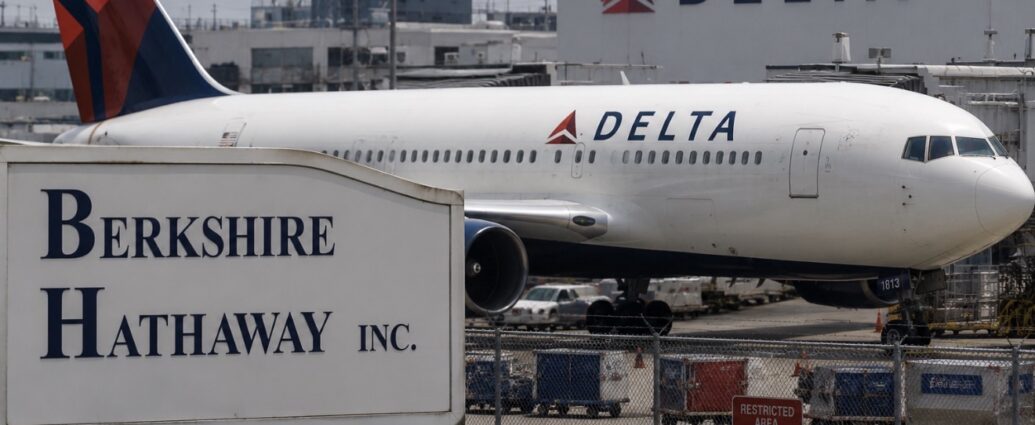
Berkshire Hathaway disclosed a new 39,809,456-share, $2.65 billion stake in Delta Air Lines in its first Form 13F filing of the Greg Abel era Friday afternoon, ending a six-year Warren Buffett-era boycott of the airline sector and giving the Atlanta-based carrier one of the most influential institutional endorsements on Wall Street at a moment when fuel costs, regional consolidation and the Iran war are rapidly reshaping the U.S. aviation industry.
The filing, posted to the U.S. Securities and Exchange Commission’s EDGAR system, showed the new position represents roughly 6.1% of Delta’s outstanding shares and ranks as Berkshire’s 14th-largest holding at the end of the first quarter. Delta shares jumped approximately 3% in after-hours trading following the disclosure.
The symbolism surrounding the investment is difficult to overstate. Berkshire entered 2020 holding multibillion-dollar positions in Delta, American Airlines, United Airlines and Southwest Airlines, only for Warren Buffett to liquidate the entire roughly $4 billion airline portfolio during the depths of the COVID-19 pandemic in April 2020. Buffett told shareholders at the time that “the world has changed for the airlines,” effectively declaring the industry structurally damaged after global travel collapsed.
The airline exit became one of the defining late-era Buffett calls. Buffett had long carried deep skepticism toward airlines, once famously joking that “a farsighted capitalist at Kitty Hawk would have shot Orville Wright down.” He also repeatedly described his earlier investment in US Air preferred stock during the late 1980s as one of the worst trades of his career.
The new Delta position therefore marks not only Berkshire’s return to aviation, but one of the clearest signs yet that Abel intends to reshape parts of the Berkshire portfolio in ways Buffett would likely not have pursued himself.
The choice of Delta specifically appears deliberate.
Under CEO Ed Bastian, Delta has spent the past several years distinguishing itself from the broader airline industry on many of the operational and financial metrics Berkshire historically values most highly: free-cash-flow generation, pricing discipline, premium-cabin revenue growth and loyalty-program monetization.
Delta generated roughly $4.3 billion in free cash flow during fiscal 2025 and produced approximately $1.3 billion in adjusted operating cash flow during the first quarter of 2026 on revenue of $13.7 billion. The airline has guided toward between $7 billion and $7.5 billion in free cash flow for the current fiscal year.
One of the most strategically attractive pieces of Delta’s business is its co-branded relationship with American Express, which now generates more than $7 billion annually for the airline through SkyMiles loyalty-card partnerships and related fee streams. That agreement — extended through 2029 — increasingly resembles the type of stable, contracted cash-flow business Berkshire traditionally favors.
The broader industry backdrop may also have strengthened Delta’s appeal.
The Iran war and continuing closure of the Strait of Hormuz have approximately doubled domestic jet-fuel costs since February, pressuring the weakest airlines and accelerating consolidation across the sector. Spirit Airlines shut down operations earlier this month after prolonged financial strain, while low-cost carriers including JetBlue Airways, Frontier Group Holdings and Allegiant Travel continue facing margin pressure from fuel, labor and financing costs.
At the same time, short-haul regional flying is steadily disappearing from the U.S. aviation system. According to aviation analytics firm OAG, flights under 250 nautical miles have fallen roughly 11% over the past decade, a trend now accelerating as airlines prioritize longer and more profitable routes.
Delta is structurally positioned to benefit from those shifts. The airline operates one of the industry’s strongest international networks and maintains dominant hub positions in Atlanta, Detroit, Minneapolis-St. Paul, Salt Lake City and John F. Kennedy International Airport in New York. Delta has also invested aggressively in newer aircraft including the Airbus A321neo and A330neo, which offer materially better fuel efficiency than older fleets.
Wall Street analysts increasingly view Delta as the strongest operator among the traditional U.S. legacy airlines.
The carrier currently trades at roughly six times forward earnings, below its own historical valuation averages and at a discount to many industrial and transportation peers. Delta has also reduced debt by more than $20 billion from pandemic-era peaks, and both S&P Global Ratings and Fitch Ratings restored the airline’s investment-grade credit rating earlier this year.
Susquehanna analyst Christopher Stathoulopoulos wrote Friday that Berkshire’s investment “validates the premium-airline thesis that has been visible in Delta’s numbers for two years but underappreciated by the broader market.”
Delta’s current market capitalization stands near $42 billion, compared with roughly $30 billion for United Airlines and approximately $9 billion for American Airlines.
The Delta investment also stands out because of what Berkshire simultaneously sold.
The same 13F filing showed Berkshire fully exited positions in Visa, Mastercard, Amazon.com, UnitedHealth Group, Aon and Domino’s Pizza during the quarter while modestly increasing its holdings in Alphabet and initiating a smaller new position in Macy’s.
Berkshire ended the quarter holding a record $397 billion in cash and short-term Treasury bills after remaining a net seller of equities overall. Against that backdrop, the Delta investment represented roughly one-third of Berkshire’s net new equity capital deployment during the quarter — a significant conviction signal from Abel’s investment team.
The filing also comes after the departure earlier this year of former Buffett lieutenant Todd Combs, who left Berkshire to join JPMorgan Chase. That departure further shifts portfolio influence toward Abel as Berkshire transitions into the post-Buffett era.
For Delta, the endorsement arrives ahead of a closely watched June Investor Day where management is expected to outline updated long-term strategy and capital-allocation targets.
CEO Ed Bastian said Friday evening that Delta “appreciates Berkshire Hathaway’s confidence in our long-term strategy.”
For Greg Abel, the message embedded in the filing may be even more important than the investment itself.
The post-Buffett Berkshire appears willing to break with Buffett orthodoxy when the numbers justify it — and willing to commit real capital behind that conviction.
— JBizNews Desk
© JBizNews.com. All rights reserved. This article is original reporting by JBizNews Desk. Unauthorized reproduction or redistribution is strictly prohibited.