JBizNews Desk — May 29, 2026
Three major U.S. retailers delivered stronger-than-expected earnings Thursday morning, sending shares higher across the sector and offering fresh evidence that American consumers are still spending even as inflation climbs to its highest level in nearly three years.
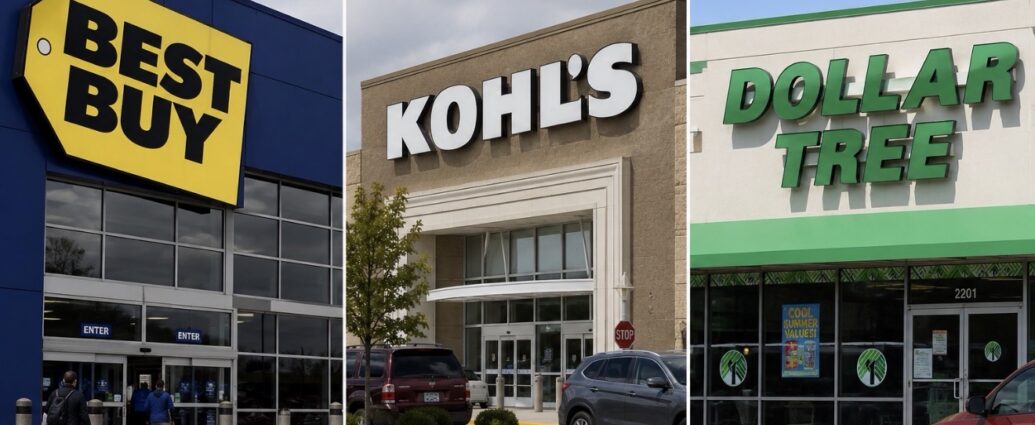
The earnings from Best Buy, Kohl’s, and Dollar Tree covered three very different segments of retail — electronics, department stores, and discount chains — yet all managed to outperform Wall Street expectations at the same time, reinforcing the view that household spending has remained resilient heading into the summer.
The strongest report came from Best Buy.
The electronics retailer said comparable sales rose 2% during its fiscal first quarter ended May 2, exceeding both company guidance and analyst expectations of roughly 0.9%. Revenue reached approximately $8.9 billion, above forecasts near $8.8 billion, while adjusted earnings came in at $1.28 per share, topping estimates of $1.22.
Chief Executive Corie Barry credited broad-based demand across most major product categories, helped in part by larger tax refunds and new product launches including Apple’s MacBook Neo lineup.
Comparable sales — a closely watched retail metric measuring revenue growth at stores open at least one year — are considered one of the clearest indicators of underlying consumer demand because they exclude the effect of opening new locations. Best Buy’s return to positive comparable growth marked a notable turnaround from the prior holiday quarter, when sales had declined.
Kohl’s told a more complicated story, but still cleared lowered investor expectations.
The department-store chain posted a quarterly net loss of $14 million, or 13 cents per share, narrower than analysts had expected. Revenue totaled roughly $3 billion, slightly ahead of forecasts.
Sales trends, however, remained negative. Net sales fell approximately 1.7%, while comparable sales declined 1.1%. Still, that represented an improvement from the steeper 2.8% comparable-sales decline reported during the prior quarter.
Management reaffirmed its full-year outlook, forecasting sales ranging from down 2% to flat for fiscal 2026.
Investors appeared focused less on the decline itself and more on signs that conditions may be stabilizing. Kohl’s shares had already fallen more than 35% this year entering Thursday’s report, leaving expectations extremely low.
The company also disclosed that it has applied for approximately $190 million in tariff refunds, though no payments have yet been received. The figure highlights how directly trade policy and tariff disputes continue affecting corporate balance sheets across retail.
Dollar Tree completed the trio of positive surprises.
Shares in the discount retailer climbed after the company also posted results above expectations, benefiting from the continued shift toward value-oriented shopping behavior as consumers remain pressured by higher prices.
Discount chains historically perform well during inflationary periods as shoppers look for cheaper alternatives on household goods and everyday essentials. But what stood out Thursday was that strength appeared simultaneously across discount retail, department stores, and consumer electronics — a broader pattern suggesting consumer spending remains more durable than many economists expected.
The timing of the reports amplified the message.
The earnings arrived just hours after the Commerce Department reported that the Personal Consumption Expenditures Price Index, the Federal Reserve’s preferred inflation gauge, rose 3.8% in April, the highest reading in nearly three years.
Ordinarily, hotter inflation would be expected to pressure discretionary spending. Yet Thursday’s retail results showed households continuing to purchase electronics, apparel, and household items despite rising prices and elevated borrowing costs.
That resilience now becomes one of the central questions facing Wall Street heading into the second half of 2026.
Consumers have so far continued spending through inflation, tariffs, higher interest rates, and geopolitical uncertainty. Whether that durability can continue through the summer — especially if prices remain elevated — may determine the direction not only of the retail sector, but of the broader U.S. economy itself.
New York — JBizNews Desk
© JBizNews.com All Rights Reserved. Reproduction or distribution without written permission is prohibited.