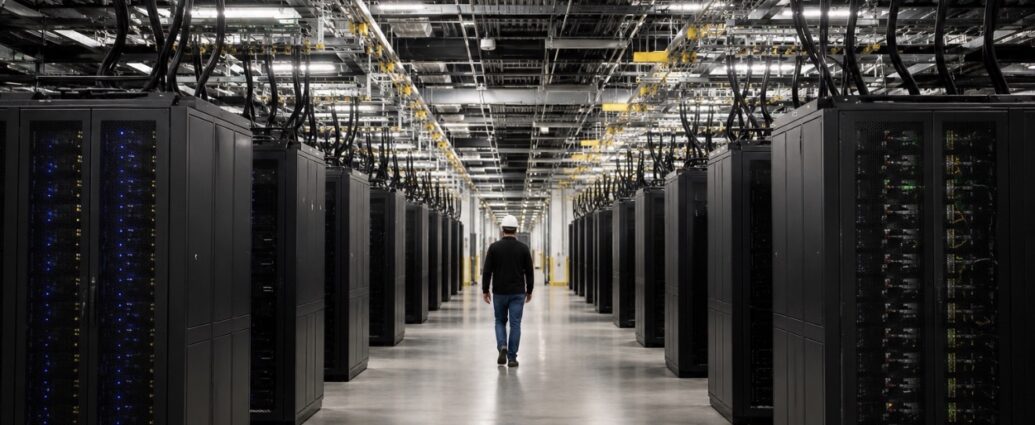
Microsoft, Meta, Oracle, Amazon and Alphabet have committed approximately $1.09 trillion to future lease payments, largely for data centers still under construction or not yet operational.
The obligations are disclosed in regulatory filings but generally do not appear as lease liabilities until the facilities are ready for use. That means the financial scale of the AI buildout is far larger than standard balance-sheet figures suggest.
The five companies currently report about $285 billion in recognized lease liabilities. Their pending commitments are nearly four times that amount.
Microsoft leads with approximately $329.1 billion, followed by Meta at nearly $279 billion, Oracle at roughly $260 billion, Amazon at $137.2 billion and Alphabet at $85.2 billion.
The commitments extend beyond annual capital spending. Many run for 15 years or longer, locking companies into payments even if AI demand slows, technology changes or major customers reduce spending.
The structure allows technology companies to expand faster without paying the full cost of each data center upfront. Developers secure land, electricity and construction financing, while Big Tech signs long-term leases for the finished capacity.
Oracle carries the clearest risk. Its pending lease commitments are nearly seven times its recognized lease liabilities, while the company already has substantial debt and negative free cash flow from infrastructure spending.
Microsoft, Amazon and Alphabet have stronger balance sheets, but their commitments still show that the AI race is increasingly being financed through long-term contracts rather than only cash spending.
Meta faces a different challenge because much of its infrastructure supports its own advertising and AI products rather than a large public-cloud business. Its returns therefore depend heavily on internal revenue growth.
The commercial case remains strong. Cloud revenue continues rising rapidly, and Amazon, Microsoft and Google have all said customer demand exceeds available computing capacity.
The danger is that companies are making decade-long commitments based on assumptions that AI use will keep growing at extraordinary rates.
More efficient models, cheaper chips, electricity shortages or slower corporate adoption could reduce demand while lease payments remain fixed.
The $1.09 trillion total does not represent hidden misconduct. It shows how accounting rules and financing structures can delay when major obligations appear on company balance sheets.
Big Tech is no longer experimenting with artificial intelligence. It is signing contracts that assume the boom will continue well into the next decade.
If demand holds, the leases will support one of the largest infrastructure expansions in corporate history. If it does not, they could become the AI boom’s most expensive legacy.
JBizNews Desk | New York
© JBizNews.com All Rights Reserved. Reproduction or distribution without written permission is prohibited.