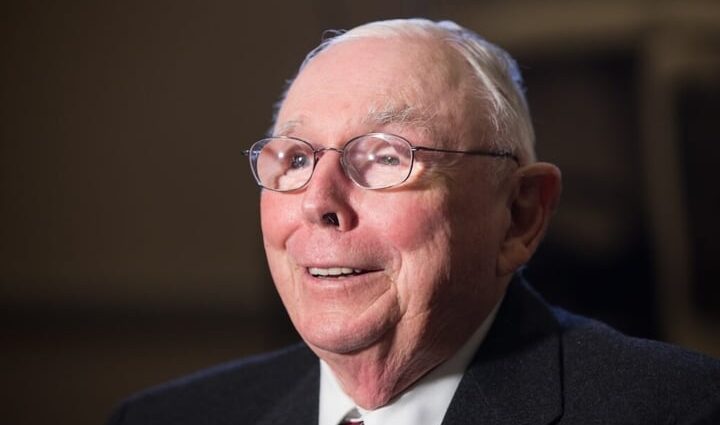
Longtime Berkshire Hathaway Vice Chair Charlie Munger spent decades warning investors about the dangers of chasing easy money. Near the end of his life, the billionaire investor boiled that philosophy down to something far simpler than stock charts or balance sheets: don’t fall down trying to look cool.
“And so I got old myself,” Munger said during the Q&A portion of the Daily Journal Corporation annual shareholders meeting in 2023, shortly before his death later that year at 99.
“And it got time to use something to avoid falling down. People tried to sell me on the cane,” he said. “But I noticed that my friends who use canes would fall down occasionally. So I never used the God damn cane. Instead, I bought one of these modern walkers.”
Don’t Miss:
- Small differences in withdrawal and tax strategy can significantly impact long-term retirement income — see where you stand today.
- Demand for Faster Diagnostics Is Surging — NASA- and NIH-Supported Space-Tested System Targets At-Home Lab-Quality Blood Testing
Then came the part that sounded less like advice about aging and more like Munger explaining the philosophy behind Berkshire Hathaway.
“I did that for six and a half years,” Munger said. “I never fell down once in six and a half years just because I was more cautious. That is my advice to all people, just to be a little more cautious.”
Building a Fortune by Avoiding Unnecessary Mistakes
That “little more cautious” mindset shaped nearly every major business decision Munger made alongside Berkshire Hathaway chief Warren Buffett,
While investors chased market fads and fast profits for decades, Berkshire Hathaway built its empire slowly. Munger believed avoiding catastrophic mistakes mattered more than constantly chasing spectacular gains. He and Buffett stayed away from excessive leverage, ignored investments they did not fully understand, and kept large cash reserves when markets became overheated.
The strategy often looked old-fashioned during speculative booms. Then the bubbles burst.
Munger spent years warning that financial disasters usually begin when people convince themselves the normal rules no longer apply. During that same shareholder meeting, he pointed to denial as one of the biggest drivers of bad decisions.
“If I had to name one factor that dominates human bad decisions, it would be what I call denial,” Munger said. “If the truth is unpleasant enough, their mind plays tricks on them and they think it isn’t really happening.”
Trending: The “Uber of Smartphone Monetization” Turning Ad Scrolling Into Earnings Opens Its $0.50/Share Pre-IPO Round With Bonus Shares Available
Advance One Inch at a Time
Munger’s investing philosophy was rooted in patience and compounding rather than nonstop action.
He believed many investors destroy their own returns by constantly reacting to headlines, chasing trends, or trying to get rich too quickly. Berkshire Hathaway became one of the world’s most valuable companies largely because Munger and Buffett allowed strong investments to compound over very long periods of time.
That philosophy extended beyond investing. During the meeting, Munger described success as advancing steadily instead of chasing unrealistic leaps forward.
“You climb as hard as you can by just advancing one inch at a time,” Munger said.
It sounded simple, but that steady approach helped produce one of the greatest fortunes in modern business history.
Munger also viewed caution as practical rather than fearful. Building savings slowly, avoiding crushing debt, and staying diversified may not generate excitement, but those decisions often protect people when markets or life suddenly turn ugly.
See Also: Think the biggest tech gains happen after an IPO? Click here to …





This post was originally published here