JBizNews Desk — May 28, 2026
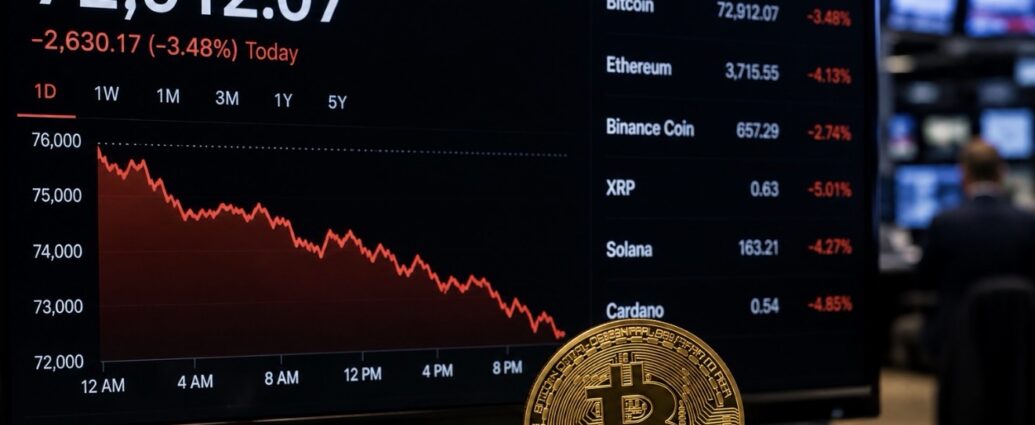
Bitcoin fell below $73,000 Thursday, sliding sharply even as President Donald Trump renewed his pledge to make the United States “the crypto capital of the world,” underscoring how geopolitical fears and institutional selling are now overpowering Washington’s increasingly pro-crypto rhetoric.
According to CoinDesk market data, Bitcoin dropped as low as approximately $72,912 before stabilizing near $72,978 during Asian trading hours, down roughly 3.4% over 24 hours and more than 6% for the week.
The selloff triggered one of the largest leveraged liquidations of the year.
Nearly $1 billion in crypto positions were wiped out within a single day, with long bullish bets accounting for roughly 93% of the losses. Bitcoin and Ethereum led the liquidation wave as traders who had positioned for continued gains were forced out rapidly when prices broke below key support levels.
The catalyst was not crypto itself.
It was the Middle East.
Fresh U.S. airstrikes near the Strait of Hormuz, new sanctions targeting Iran, and rising fears surrounding broader regional escalation abruptly reversed the optimism that had built around a potential ceasefire framework earlier in the week.
Oil prices surged while global equity markets weakened — and crypto followed.
The connection between war and Bitcoin is increasingly direct.
The Strait of Hormuz handles roughly one-fifth of global oil shipments. Any threat to that corridor pushes energy prices higher, which raises inflation concerns globally and increases the likelihood that central banks keep interest rates elevated longer than expected.
Higher interest rates typically drain capital away from speculative and high-risk assets, including cryptocurrencies.
Bitcoin had managed to remain above the $74,000 level through weeks of escalating Iran headlines, but Thursday’s renewed military tensions finally broke that floor. The speed of the decline suggested many traders had been heavily positioned for further upside before the reversal hit.
Institutional investors accelerated the pressure.
BlackRock’s IBIT Bitcoin exchange-traded fund recorded approximately $527.8 million in net outflows, marking its second-largest single-day withdrawal on record. More than $2.5 billion has reportedly exited crypto ETFs over the past two weeks after strong inflows earlier this spring had fueled Bitcoin’s climb toward new highs.
When large institutional funds pull that level of capital from the market, the spot price reacts quickly.
The decline also arrived against a politically significant backdrop.
Late Wednesday, Trump posted on Truth Social that the United States would become “the crypto capital of the world” while renewing support for the Digital Asset Market Clarity Act, known as the CLARITY Act, legislation designed to establish clearer regulatory rules for cryptocurrencies and digital assets.
Bitcoin briefly steadied following Trump’s comments before resuming its decline.
Trump later doubled down publicly during the selloff, declaring he would “never let crypto down” while criticizing former SEC Chair Gary Gensler and what he called the government’s former “anti-crypto army” for pushing innovation overseas.
The legislation Trump supports is advancing.
The CLARITY Act cleared the Senate Banking Committee earlier this month with bipartisan support, representing the most significant crypto legislation to move through Congress in years. The bill would define whether digital assets fall under SEC or Commodity Futures Trading Commission oversight while establishing clearer rules for stablecoins and digital-token classifications.
Markets had previously rallied on expectations that regulatory clarity could unlock another wave of institutional adoption.
Instead, geopolitical instability and ETF outflows overwhelmed the bullish policy narrative.
The broader takeaway is increasingly clear.
For much of the past year, pro-crypto statements from Washington were often enough to drive Bitcoin sharply higher. Thursday’s selloff suggested that dynamic may be weakening as cryptocurrencies become more tied to the same macroeconomic forces driving oil, stocks, bonds, and broader global markets.
When inflation rises, war fears intensify, and institutional money begins heading for the exits, political support alone may no longer be enough to stop the slide.
The same global forces now rattling traditional financial markets are increasingly controlling digital assets too.
New York — JBizNews Desk
© JBizNews.com All Rights Reserved. Reproduction or distribution without written permission is prohibited.