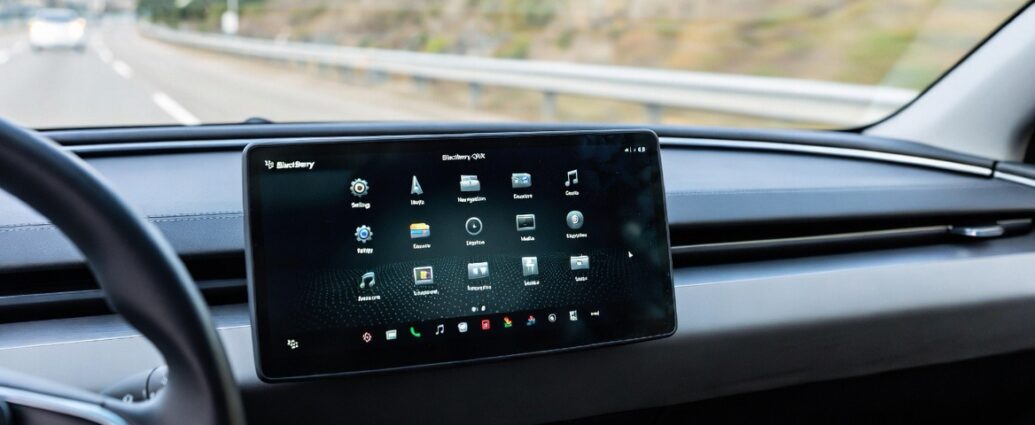
Waterloo, Ontario — May 5, 2026 — Once written off as a fallen smartphone giant, BlackBerry has staged a remarkable quiet comeback, with its QNX embedded software now powering safety-critical systems in more than 275 million vehicles worldwide. The milestone, confirmed by Counterpoint Research and highlighted in recent earnings, is turning heads on Wall Street and in the auto industry as the shift to software-defined vehicles accelerates and BlackBerry emerges as a hidden powerhouse in one of the most critical sectors of the global economy.
QNX powers safety-critical software across automotive, medical, industrial, rail and robotics markets. This broad reach is the foundation of BlackBerry’s revival. In the automotive sector, QNX runs real-time operating systems in advanced driver-assistance systems, infotainment, and safety features. The same technology is used in medical devices that require fail-safe operation, industrial control systems that cannot afford downtime, rail signaling and braking systems, and robotics platforms that demand deterministic performance. The diversification means BlackBerry is no longer dependent on a single industry cycle — it has built a resilient, high-margin software franchise that spans multiple mission-critical domains where reliability is non-negotiable.
The numbers tell the story of a dramatic turnaround. QNX delivered record quarterly revenue of $78.7 million in the fourth quarter of fiscal 2026, up 20% year-over-year, according to the company’s earnings. For the full fiscal year, the division contributed significantly to BlackBerry’s total revenue of $549 million, with strong gross margins and a royalty backlog that has swelled to approximately $950 million. CEO John Giamatteo declared the company is “no longer in transition,” signaling that the long restructuring is finally paying off and setting the stage for sustained growth in the high-margin automotive software market.
The economic impact is substantial. Ten of the top 10 global automakers and 24 of the top 25 electric vehicle manufacturers rely on QNX. As cars become rolling computers, the demand for reliable, safety-certified embedded software is exploding. BlackBerry’s technology is now a foundational piece of the software-defined vehicle revolution, helping manufacturers reduce development costs, accelerate time to market, and meet stringent safety standards required by regulators worldwide. The same underlying technology is being adopted in hospitals, factories, rail networks and robotic systems, creating multiple high-value revenue streams that are far less cyclical than traditional hardware businesses.
The growth comes at a pivotal moment for the auto industry. Global vehicle production is shifting toward connected and autonomous features, driving massive demand for embedded software. BlackBerry’s QNX platform has added 100 million vehicles since 2020, a testament to its entrenched position. Recent design wins, including partnerships with BMW for next-generation software-defined vehicles and Volvo for software-defined audio solutions, underscore the momentum. A leading Chinese EV maker also selected QNX for its D19 electric SUV, which entered mass production earlier this year with over-the-air update capability, further expanding BlackBerry’s global footprint.
For investors, the resurgence is starting to show in the numbers. BlackBerry returned to GAAP profitability for eight consecutive quarters, with adjusted EBITDA expanding and the company guiding for double-digit revenue growth in fiscal 2027. The QNX backlog and expanding non-automotive applications — including robotics, medical devices, and industrial IoT — position the company for sustained growth even as the broader tech sector faces headwinds from geopolitical tensions and the fuel-price crunch affecting airlines. The high-margin nature of the QNX business provides a buffer against cyclical downturns in vehicle sales, making BlackBerry an increasingly attractive play in the software-defined mobility space.
Yet the comeback is not without challenges. BlackBerry still faces competition from in-house solutions developed by automakers and alternative platforms. Royalty revenue is tied to vehicle sales, which can fluctuate with economic cycles. Overhead costs have limited free cash flow, though the high-margin nature of the QNX business provides a buffer. Analysts note that while the 275 million vehicle milestone is impressive, converting the backlog into consistent revenue growth will be key to sustaining investor confidence and driving further stock appreciation.
The broader economic implications are significant. As software becomes the backbone of modern mobility, companies like BlackBerry that provide mission-critical, safety-certified platforms are gaining strategic importance. The QNX success story highlights how legacy tech names can reinvent themselves in the AI and software-defined era, creating high-value intellectual property that powers everything from everyday commuting to autonomous trucking. This shift is also creating new revenue streams for BlackBerry, with the software division now representing a growing share of the company’s overall business and contributing to stronger balance sheet metrics.
BlackBerry’s transformation is a reminder that even companies once left for dead can find new life in the hidden layers of the digital economy. With QNX now embedded in more than a quarter of a billion vehicles on the road today — and expanding into medical, industrial, rail and robotics markets — the quiet comeback is finally turning heads and generating real revenue at a time when the auto industry is undergoing its most profound shift in decades. The milestone adds to the weekend’s heavy slate of breaking business news, from airline collapses driven by the fuel-price crunch to conglomerate earnings and OPEC+ production decisions. Markets will be watching closely when trading resumes Monday for any signs of how BlackBerry’s automotive software momentum is being priced into the stock and broader tech indices.
JbizNews- Desk – Tech / Automotive Software