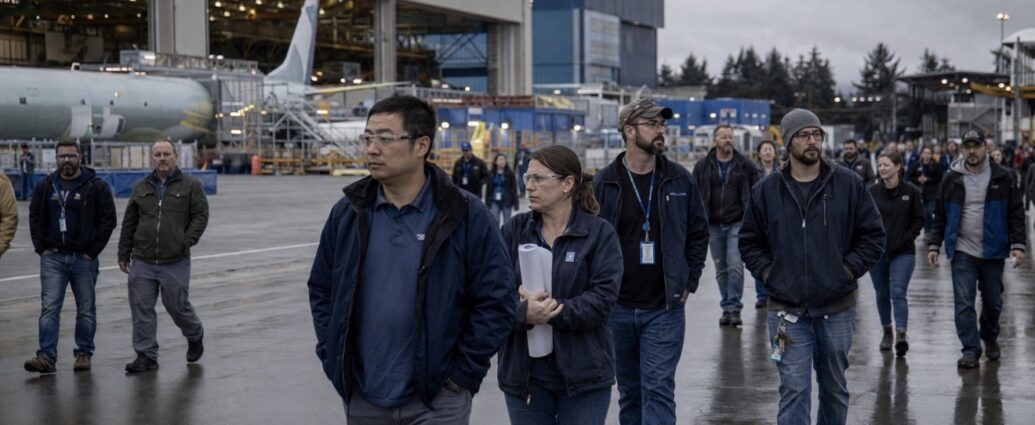
Boeing’s engineers and technical workers have rejected the company’s proposed four-year labor contracts and overwhelmingly authorized their union to call a strike, creating a new threat to the aircraft manufacturer’s already strained recovery.
The vote does not mean workers are walking off the job immediately. The current contracts remain in effect through October 6, making October 7 the earliest date a strike could begin.
Members of the Society of Professional Engineering Employees in Aerospace, or SPEEA, rejected the agreements despite their own negotiating team having recommended approval.
Among Boeing’s professional employees, including engineers and scientists, 64.3% voted against the contract. Technical workers rejected their agreement by an even wider 71.9%.
The separate strike-authorization votes were much stronger. Nearly 88% of professional employees and approximately 90% of technical workers gave union leaders permission to call a strike if a satisfactory agreement is not reached before the existing contracts expire.
SPEEA represents approximately 17,000 Boeing employees, most of them concentrated in Washington state. The workforce includes engineers, technicians, analysts, planners and other specialists whose work supports aircraft design, testing, certification and production.
That makes the potential disruption different from a traditional factory strike. Boeing could continue operating some assembly lines, but losing thousands of engineers and technical specialists could slow the work required to resolve manufacturing problems, approve design changes and certify new aircraft.
The timing is especially sensitive. Boeing is still working to obtain regulatory approval for the 737 Max 10 and the long-delayed 777-9, while also attempting to increase production without compromising safety or quality.
Boeing said its proposal included the largest wage package it had offered SPEEA employees in approximately four decades, along with additional paid leave, limits on mandatory overtime and improvements to health and dental benefits.
The proposed wage structure would have produced approximately 32% compounded growth over four years for many employees, according to Boeing. But union members objected to provisions tying parts of their compensation to inflation and performance measures, while also raising concerns about job security, outsourcing and whether the agreement would keep pace with Seattle’s rising living costs.
SPEEA said the vote demonstrated that Boeing’s terms fell short and that employees were prepared to strike unless meaningful improvements were made.
Boeing responded that it was disappointed with the rejection and had begun implementing a strike contingency plan. No additional negotiations are currently scheduled.
The company now faces a narrow negotiating window and a difficult decision. Improving the offer could raise Boeing’s labor costs for years, but an engineering strike could create far greater costs by delaying aircraft certifications, deliveries and customer payments.
Boeing experienced the financial consequences of a large work stoppage in 2024, when approximately 33,000 machinists went on strike for seven weeks, halting production of several commercial aircraft. SPEEA’s last major strike occurred in 2000 and lasted 40 days.
For airlines and passengers, there would be no immediate interruption to flights. But a prolonged strike could delay new aircraft deliveries, complicate airline expansion plans and further limit the supply of planes in an industry already struggling with manufacturing backlogs.
The contract was rejected. The strike was authorized. But the walkout has not begun—and Boeing still has until October 7 to prevent it.
JBizNews Desk | Seattle
© JBizNews.com All Rights Reserved. Reproduction or distribution without written permission is prohibited.