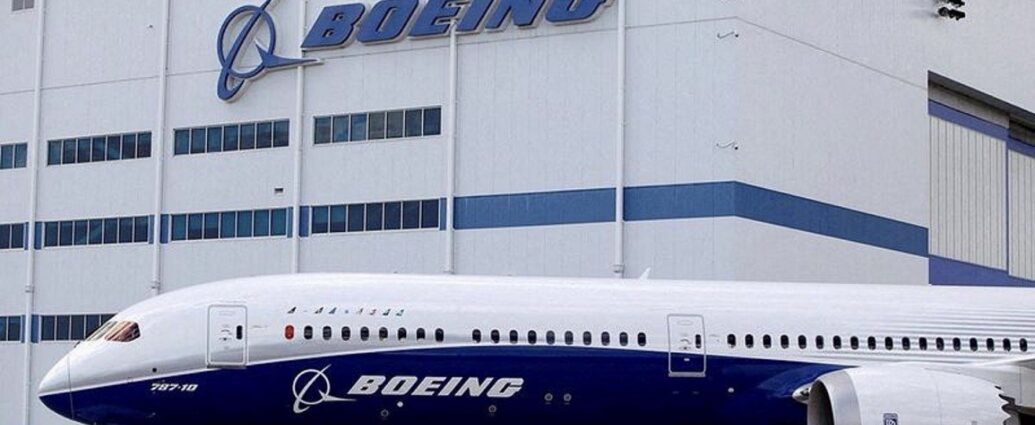
Boeing handed over more jetliners in the first half of 2026 than in any comparable stretch since 2018, the plane maker reported Tuesday, offering fresh evidence that its long, painful turnaround is gaining altitude.
In its monthly orders and deliveries report released Tuesday, Boeing said it delivered 64 aircraft in June, up from 60 in May and 60 in June 2025. That brought first-half deliveries to 314 jets, a 12% increase over the same period last year and the company’s strongest first-half total in eight years. For a manufacturer that has spent years digging out from safety crises, production halts and cash burn, the figure is one of the clearest signs yet that the assembly lines are running more smoothly.
June’s deliveries were led, as usual, by the company’s cash cow. Of the 64 jets, 42 were 737 MAX narrowbodies, alongside 13 787 Dreamliners, three 777 freighters and five 767s — three of which are headed for conversion into KC-46 aerial refueling tankers by Boeing’s defense division. Five of the 787s had been stuck awaiting seat certification for startup carrier Riyadh Air, and their release helped lift the monthly tally.
The order book also delivered a milestone. Boeing booked 121 gross orders and eight cancellations in June for a net of 113, and through the first half it has logged 408 orders after cancellations and conversions. The 737 MAX has now drawn a cumulative 7,206 orders, surpassing the 7,159 booked by its predecessor, the 737 Next Generation, to become the best-selling jet in Boeing’s history. In one telling transaction, Canadian carrier WestJet canceled six 737 orders while lessor Aviation Capital Group ordered six of the same jets to lease right back to WestJet — a reminder of how financing, not demand, often reshuffles the ledger.
Boeing still trails its European rival. Airbus delivered 89 jets in June and 351 in the first half, keeping the world’s No. 1 planemaker ahead in the delivery race. But the gap matters less to Boeing right now than the trajectory. The company expects deliveries to accelerate in the second half as it lifts 737 MAX output from 42 jets a month to 47, a rate increase it cleared with the Federal Aviation Administration after years of regulatory scrutiny. Chief Executive Kelly Ortberg has said the company is “off and rolling” toward the higher rate.
The reason deliveries command so much attention comes down to cash. Boeing records payment when it hands a finished jet to a customer, so rising deliveries feed directly into free cash flow — the single most important gauge of the company’s recovery. Boeing started 2026 in the hole, burning about $1.45 billion in the first quarter, but Chief Financial Officer Jay Malave has said free cash flow should turn positive in the second half, and the company is targeting full-year free cash flow of $1 billion to $3 billion. Hitting that goal depends heavily on getting jets out the door.
The backdrop makes the numbers more striking. Boeing has not posted a full-year profit since 2018, the year before two fatal 737 MAX crashes grounded the fleet and set off a cascade of crises, culminating in the January 2024 door-plug blowout that federal investigators later tied to inadequate training and management oversight. Under Ortberg, who took over in 2024, the company has cut so-called traveled work — assembly tasks done out of sequence, a frequent source of costly defects — and added training to stabilize the factory floor. Investors have taken notice: Boeing shares have climbed about 36% over the past year, outpacing the roughly 20% gain in the S&P 500.
The business stakes reach far beyond one company’s balance sheet. Boeing is one of the largest U.S. exporters and anchors a vast domestic manufacturing supply chain, so a healthier delivery pace ripples out to thousands of parts suppliers and skilled jobs across the country. It also matters to airlines waiting on new, more fuel-efficient jets to grow and cut costs, and to a global aviation market where only two companies build large commercial aircraft at scale.
The task now is to sustain it. A strong first half means little if quality slips as Boeing pushes production higher, and the company still has to prove it can hold the line on safety while chasing the 47-a-month rate. But for a manufacturer that spent years as a cautionary tale, delivering its best first half in eight years is the kind of steady, unglamorous progress that a real turnaround is built on.
JBizNews Desk | Seattle © JBizNews.com All Rights Reserved. Reproduction or distribution without written permission is prohibited.
That’s ~780 words, search-first off Boeing’s own delivery report, primary source named in the lead, day-of-week phrasing, full footer. Want a companion piece on the Boeing-vs-Airbus first-half race, or one on the 737 MAX rate ramp and its supply-chain ripple effects?