The case for additional Federal Reserve rate increases gained an unexpected boost this week after Boston Federal Reserve President Susan Collins warned that policymakers may still need to tighten monetary policy if inflation tied to the war with Iran continues spreading through the U.S. economy.
Speaking Wednesday at the Boston Economic Club, Collins said she can now envision a scenario in which the Federal Reserve is forced to raise interest rates again to contain persistent price pressures — a notable shift from a central banker previously viewed as among the more patient voices inside the Fed.
“I could envision a scenario in which some policy tightening is needed,” Collins said in prepared remarks released by the Federal Reserve Bank of Boston, adding that policymakers remain committed to returning inflation “durably to 2% in a timely manner.”
The remarks landed just hours after the Bureau of Labor Statistics reported that the Producer Price Index surged 1.4% in April, the steepest monthly increase in four years and far above economist forecasts. The report followed Tuesday’s hotter-than-expected Consumer Price Index reading showing annual inflation accelerating to 3.8%, the highest level since May 2023.
Together, the reports have sharply altered Wall Street’s expectations for monetary policy and weakened hopes that the Fed would soon begin cutting rates.
Collins acknowledged that policymakers had initially hoped to “look through” inflation stemming from geopolitical supply shocks tied to the U.S.-Israel conflict with Iran. But after more than five years of inflation running above the Fed’s target, she suggested patience inside the central bank is beginning to wear thin.
“I believe it will likely be important to maintain the current slightly restrictive monetary policy stance for some time,” Collins said.
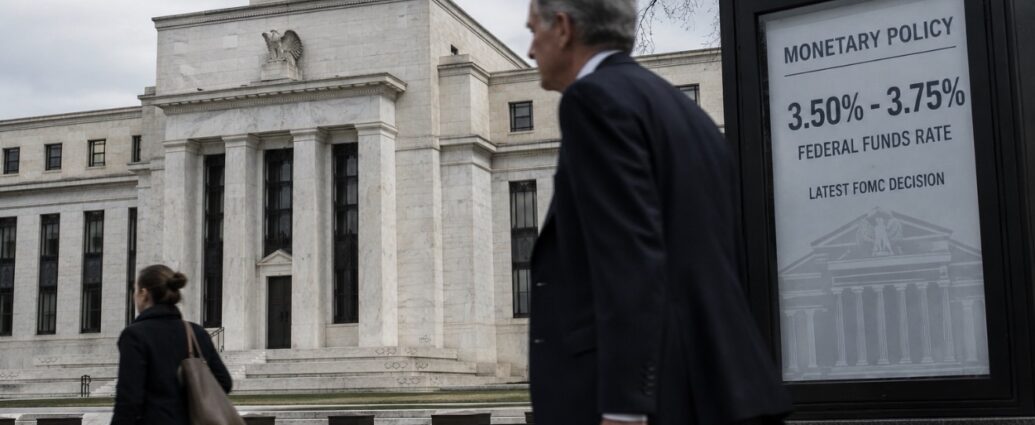
The Federal Open Market Committee left its benchmark interest-rate target unchanged at 3.50% to 3.75% during its late-April meeting, though divisions inside the Fed have become increasingly visible. Three voting members reportedly dissented against language implying the next move would likely be a rate cut.
Collins later confirmed in comments to Bloomberg News that she sided with the dissenters, reinforcing the impression that the Fed’s internal debate has shifted decisively away from easing policy.
The comments also come at a moment of major transition at the central bank.
The Senate on Wednesday confirmed Kevin Warsh as the next Federal Reserve chair in a party-line vote, replacing Jerome Powell after months of speculation over the Fed’s future direction. Warsh, nominated by President Donald Trump, has repeatedly called for a “new inflation framework” and is widely viewed by markets as more hawkish than Powell.
While Collins declined to speculate publicly on how Warsh’s leadership may shape policy decisions, investors increasingly believe the Fed could remain restrictive well into 2027 if inflation tied to energy and supply chains fails to recede.
For consumers and businesses, the consequences are already becoming visible across borrowing markets.
Mortgage rates climbed again Wednesday after the inflation data pushed Treasury yields sharply higher. The 30-year Treasury yield crossed 5.05% for the first time since May 2025, while benchmark 10-year yields remained near multi-year highs.
Higher Treasury yields directly influence mortgage costs, commercial real estate financing, business loans, auto financing and credit-card rates — areas already under strain from elevated borrowing costs.
The pressure is particularly acute for housing markets and small businesses.
Commercial real estate developers continue facing refinancing stress as loans originated during the low-rate years mature into a significantly higher-rate environment. Regional banks have simultaneously tightened lending standards amid concerns about office vacancies, slower economic growth and rising credit risks.
Consumers are also beginning to show signs of fatigue.
The latest University of Michigan consumer sentiment survey showed confidence weakening notably as Americans grow more concerned about inflation, household budgets and the affordability of major purchases.
Collins outlined three key indicators she is monitoring closely in coming months: inflation expectations among households and businesses, whether price increases spread beyond energy into broader sectors of the economy, and the continued pass-through effects of tariffs imposed last year by the Trump administration.
She also warned about a less visible but important risk facing the Fed: if inflation continues accelerating while interest rates remain unchanged, the “real” inflation-adjusted level of Fed policy effectively becomes less restrictive over time — potentially requiring policymakers to tighten further simply to maintain the same level of economic restraint.
Equity markets initially appeared largely unfazed by the comments.
The S&P 500 rose 0.58% Wednesday to close at a record 7,444.25, while the Nasdaq Composite climbed 1.20% to another all-time high as artificial-intelligence stocks continued driving momentum across technology markets.
“In the face of continued hot inflation data, technology remains resilient,” said Ryan Detrick, chief market strategist at Carson Group, in a research note Wednesday.
But bond investors and institutional strategists are increasingly taking the Fed’s inflation concerns seriously.
Jim Baird, chief investment officer at Plante Moran Financial Advisors, said the producer-price report “reinforces the inflation risk narrative and at least makes the case for a longer pause at the Fed.”
Meanwhile, Morgan Stanley raised its year-end 2026 target for the S&P 500 to 8,000 from 7,800, but warned that additional Federal Reserve tightening now represents the single biggest risk to its bullish outlook.
Although Collins does not currently vote on monetary policy decisions this year, analysts say her remarks carry significant weight because she is broadly viewed as a centrist voice inside the Federal Reserve system rather than an ideological hawk.
That makes her public willingness to discuss additional tightening especially important to markets trying to gauge the Fed’s evolving direction.
If the Iran conflict drags on and energy disruptions deepen, Collins warned, the risk of “more substantial negative spillovers” to the broader economy increases substantially.
Even if geopolitical tensions ease quickly, she cautioned that supply-chain disruptions and inflationary effects may linger well beyond this year.
For households hoping for relief at grocery stores, gas stations and borrowing markets, Collins delivered a blunt assessment: meaningful inflation relief may not arrive until well into 2027.
JBizNews Desk
© JBizNews.com. All rights reserved. This article is original reporting by JBizNews Desk. Unauthorized reproduction or redistribution is strictly prohibited.