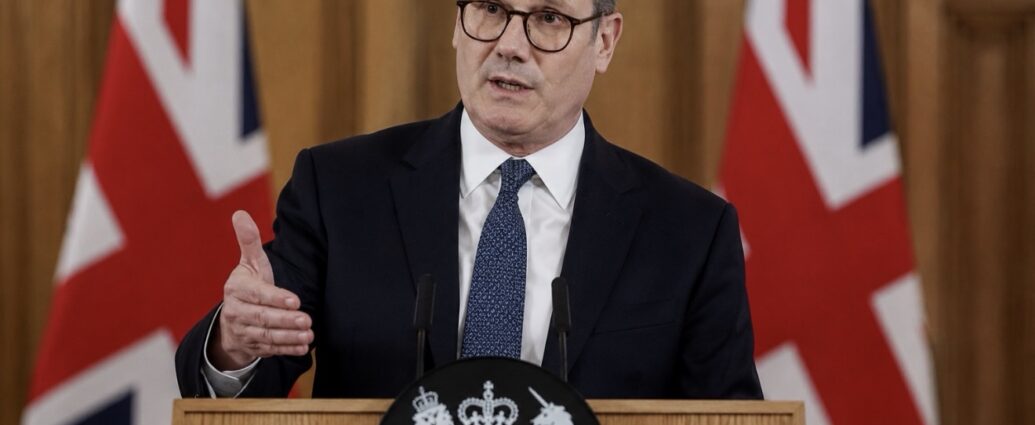
Britain will bar children under 16 from using a range of major social media apps, Prime Minister Keir Starmer announced Monday, putting the country at the front of a global push to pull young people away from platforms built to keep them scrolling.
Speaking at Downing Street, Starmer said the ban would cover Snapchat, TikTok, YouTube, Instagram, Facebook and X, and would take effect next year.
Messaging services such as WhatsApp and Signal, along with YouTube Kids, would be exempt.
Crucially, the penalties fall on the companies, not the children. Platforms that fail to take reasonable steps to keep under-16s off their services could face fines running into the millions.
“Every parent can see it with their own eyes. Social media is making children unhappy,” said Starmer, who has two teenage children and framed the move as a “big moment for our country.”
The government said its plan drew support from about nine in ten parents and generated 116,000 responses during public consultation, one of the largest in years.
The British plan follows the model set by Australia, which last year became the first country to bar under-16s from holding social media accounts.
But Starmer said Britain would go further.
The government also intends to block livestreaming and stranger contact with children on gaming platforms, restrict AI chatbots that simulate romantic or sexual relationships to adults only, and is weighing additional measures such as overnight curfews and forced breaks in endless scrolling for those under 18.
For the technology industry, the stakes are real and largely American.
The companies in the crosshairs are among the biggest names in U.S. tech: Meta, which owns Instagram and Facebook; Snap, the maker of Snapchat; Google, which owns YouTube; and TikTok’s parent, the Chinese firm ByteDance.
These platforms depend on advertising revenue, and advertising depends on engaged users, including the teenagers a ban would lock out.
Beyond the lost users, the companies face the cost and complexity of verifying ages across millions of accounts, a technical and privacy challenge with no easy solution.
The platforms are pushing back.
A YouTube spokesperson warned that a blanket restriction could backfire by pushing children out of supervised, curated services and toward anonymous, less-safe corners of the internet.
Starmer anticipated the resistance, saying he would fight back if technology companies resisted and acknowledging that some teenagers would inevitably find workarounds.
He compared it to alcohol, arguing that the difficulty of perfect enforcement is no reason to abandon the effort.
Here is why it matters well beyond Britain.
The country is one of the largest and wealthiest markets in Europe, and a ban there sets a precedent that other governments are likely to study closely.
Australia, Canada, Brazil and Indonesia have already moved on age limits, and France, Spain, Denmark and others are weighing similar steps.
Each new market that closes to younger users chips away at a business model the social media giants have spent two decades building, one that treats teenage attention as a core asset.
The timing is pointed.
Starmer said he expected to raise the issue with President Donald Trump and other leaders at the Group of Seven summit in France this week, suggesting the campaign to regulate children’s access to social media is becoming an international cause rather than a national experiment.
For the American companies that dominate these platforms, the message from London is a warning:
The era of unrestricted access to young users is starting to close, one country at a time.
London — JBizNews Desk
JBizNews Desk / © JBizNews.com All Rights Reserved. Reproduction or distribution without written permission is prohibited.