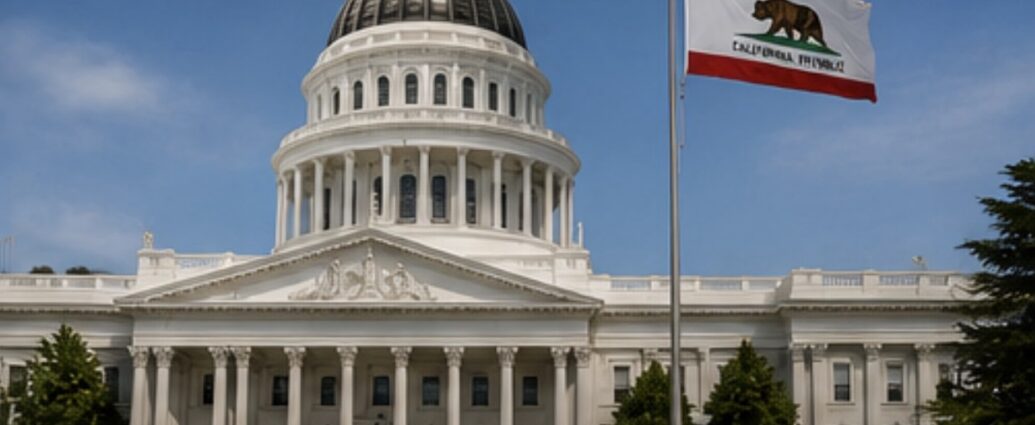
SACRAMENTO — While businesses across America race to deploy artificial intelligence, California has become the first state to begin asking a question many policymakers have largely avoided:
What happens to workers when the software gets good enough to replace them?
On May 21, 2026, Governor Gavin Newsom signed what his office described as a first-of-its-kind executive order directing state agencies to study the impact of artificial intelligence on employment and recommend protections for workers displaced by automation.
The move may prove more significant than it initially appears.
For months, discussions around artificial intelligence have focused primarily on productivity, innovation, investment, and economic opportunity. Much less attention has been devoted to the potential consequences for workers whose jobs may no longer be necessary.
California is now attempting to address that issue before it becomes larger.
The timing was notable.
The executive order arrived just one day after Meta Platforms announced plans affecting approximately 8,000 employees and Intuit disclosed approximately 3,000 job cuts, both linked in part to AI-driven efficiency initiatives.
With Silicon Valley at the center of the artificial-intelligence revolution, California has a stronger incentive than any other state to understand the labor-market consequences.
The order directs the California Labor and Workforce Development Agency to evaluate existing worker protections and determine whether they remain adequate in an era of AI-driven displacement.
Specifically, officials have been tasked with examining severance standards, unemployment insurance enrollment, and California’s WARN Act, which governs advance notice requirements for mass layoffs.
The agency must provide recommendations within 180 days, while a separate review examining AI’s effect on collective bargaining and organized labor is scheduled for completion by October 15.
At its core, the initiative recognizes that modern labor laws were built for a different economy.
Existing protections generally assume workers lose jobs because of recessions, factory closures, relocations, or business failures.
Artificial intelligence introduces a different scenario.
A company can be profitable, growing, and financially healthy while simultaneously eliminating positions because software now performs certain tasks more efficiently.
That distinction creates policy challenges lawmakers have not previously faced.
Supporters argue workers displaced by automation may require different forms of assistance than workers affected by traditional economic downturns.
Critics counter that government intervention could slow innovation or create new burdens for employers already competing in rapidly evolving markets.
Regardless of where the debate ultimately lands, California’s action is likely to attract national attention.
The state has a long history of establishing labor, environmental, and consumer-protection policies that later influence legislation elsewhere in the country.
If California develops new standards regarding AI-related layoffs, other states may eventually follow.
For businesses, that possibility deserves close attention.
Companies aggressively pursuing automation strategies may eventually face new reporting requirements, notice obligations, severance standards, or workforce-transition programs.
For workers, the executive order does not immediately create new rights or benefits.
No severance payments increase automatically. No new unemployment programs begin tomorrow.
What it does do is formally launch a policy discussion that is likely to grow more important with each passing year.
Artificial intelligence is no longer a future concept. It is already changing hiring decisions, workforce planning, and corporate investment strategies.
California has become the first state to formally acknowledge that reality and begin preparing for its consequences.
The debate over who benefits from AI—and who bears its costs—is only beginning.
Wall Street — JBizNews Desk
© JBizNews.com All Rights Reserved. Reproduction or distribution without written permission is prohibited.