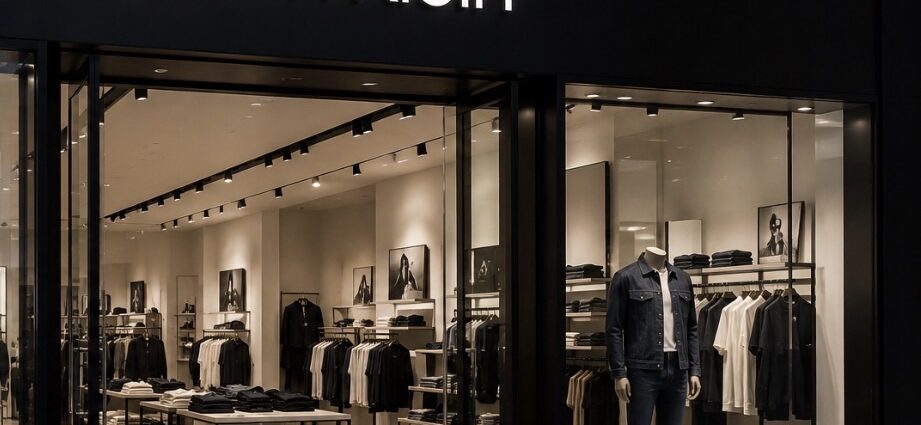
NEW YORK — In a year when many global consumer brands are cutting forecasts, warning about geopolitical uncertainty, or struggling with weakening consumer demand, PVH Corp., the parent company of Calvin Klein and Tommy Hilfiger, delivered a different message to investors Wednesday: the plan remains intact.
The apparel giant reported first-quarter revenue of approximately $2.0 billion, exceeding its own expectations on a reported basis and meeting guidance after accounting for foreign-exchange fluctuations. More importantly, management reaffirmed its full-year outlook despite acknowledging that the ongoing conflict in the Middle East is creating meaningful pressure across parts of its global business.
For investors, the significance was not that PVH raised guidance. It didn’t. The significance was that it didn’t lower it.
In today’s environment, simply holding the line has become an achievement.
Chief Executive Officer Stefan Larsson said the company “delivered on our plan and commitments in the first quarter,” pointing to continued execution of PVH’s multiyear transformation strategy known as the PVH+ Plan.
The strongest area of the quarter came from the company’s direct relationship with consumers.
PVH reported that direct-to-consumer revenue rose 6%, or 3% excluding currency effects, driven by growth across both Calvin Klein and Tommy Hilfiger, as well as gains in both physical stores and e-commerce channels.
That matters because direct-to-consumer sales are increasingly becoming the most important battleground in apparel retail.
When brands sell directly through their own stores and websites, they not only capture higher margins but also gain valuable information about customer preferences, purchasing patterns, and product performance. In an industry where fashion trends can change rapidly, that direct connection has become a competitive advantage.
The quarter also demonstrated strong operational discipline.
PVH reported operating margins at the high end of its guidance range, reflecting improved inventory management, cost controls, and a more focused merchandising strategy.
The company has increasingly concentrated resources around what management calls its “hero categories”—products with strong brand recognition and repeat demand.
For Calvin Klein, that means denim and underwear. For Tommy Hilfiger, sweaters and outerwear remain central pillars of the strategy.
The approach appears to be working.
Yet the most revealing part of the earnings report may have been the company’s explanation for why guidance remained unchanged.
PVH’s updated outlook incorporates what management described as the expected prolonged impact of the Middle East conflict. Rising shipping costs, economic uncertainty, softer consumer demand in certain markets, and broader geopolitical risks are all expected to create headwinds throughout the year.
Ordinarily, those pressures might have resulted in lower forecasts.
Instead, PVH expects those challenges to be largely offset by tariff refunds the company anticipates receiving, creating a rare situation in which two major external forces effectively cancel each other out.
The result is a full-year forecast calling for roughly flat revenue and an adjusted operating margin of approximately 8.8%.
That balancing act highlights a broader reality facing multinational consumer companies.
The apparel business today involves much more than designing products and selling clothing. Companies must constantly navigate tariffs, exchange rates, geopolitical conflicts, supply-chain disruptions, shifting trade policies, and changing consumer behavior.
In many ways, today’s global fashion companies increasingly resemble geopolitical risk managers.
PVH’s results provide an important window into global consumer spending because its brands operate across dozens of countries and demographic groups. The company’s ability to maintain growth in direct-to-consumer sales suggests consumers continue engaging with premium apparel brands despite inflation pressures and economic uncertainty.
That resilience has become increasingly important as investors look for signs that discretionary spending remains healthy.
The coming quarters will provide a more complete test.
Energy prices remain elevated, geopolitical tensions remain unresolved, and consumer confidence continues facing pressure from higher borrowing costs and inflation concerns.
For now, however, PVH delivered something many companies have struggled to provide in 2026: stability.
The company’s brands continue attracting customers, its direct-sales strategy is producing results, margins remain disciplined, and management remains confident enough to stand by its full-year targets.
In a year defined by uncertainty, that may be one of the strongest statements a global consumer company can make.
Wall Street — JBizNews Desk
© JBizNews.com All Rights Reserved. Reproduction or distribution without written permission is prohibited.