By JBizNews Desk
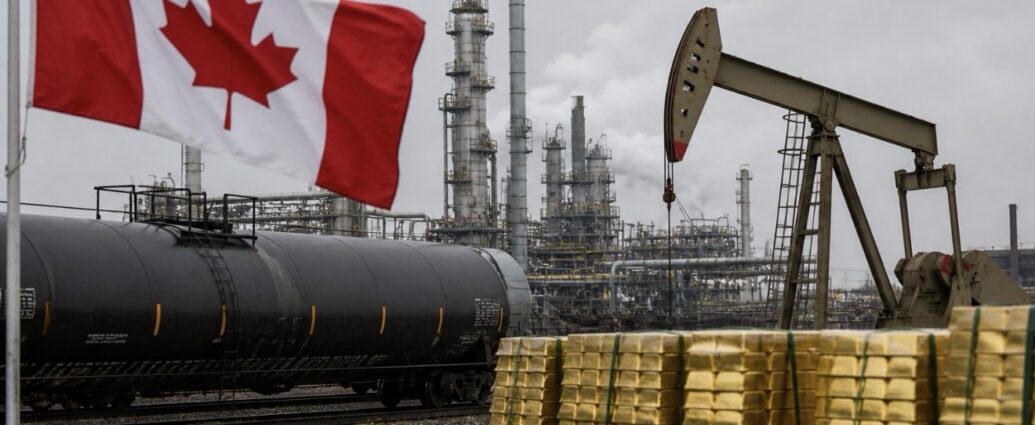
Canada returned to trade-surplus territory in March for the first time in six months, as soaring oil prices tied to the Iran conflict and surging global demand for gold fueled a sharp rebound in exports and delivered an unexpected boost to the country’s economy.
According to new data released by Statistics Canada, the country’s merchandise trade balance swung dramatically from a C$5.1 billion deficit in February to a C$1.8 billion surplus in March, far outperforming analyst expectations that had projected another sizable deficit.
The turnaround marks Canada’s first monthly trade surplus since September 2025 and highlights how rapidly global geopolitical tensions are reshaping commodity-exporting economies.
Total Canadian exports climbed 8.5% to C$72.8 billion, the strongest monthly level since January 2025, driven overwhelmingly by gains in energy and precious metals.
Without those sectors, export growth was far more modest — underscoring how heavily the improvement depended on rising commodity prices rather than broad-based economic expansion.
Imports, meanwhile, fell 1.6% from February’s record highs, declining across most major product categories.
Oil Prices Deliver Massive Boost
The biggest driver of the trade rebound was energy.
Canadian energy exports surged 15.6% to C$17.1 billion, the highest level since September 2022, as crude oil shipments jumped nearly 19% during the month.
The gains came as escalating tensions surrounding Iran and the Strait of Hormuz pushed global oil markets sharply higher, fueling fears over disruptions to one of the world’s most important energy shipping routes.
Canada, one of the world’s largest crude exporters, has become one of the clearest beneficiaries of the price spike.
Higher oil prices immediately boosted the nominal value of Canadian exports, strengthening trade flows and improving government revenue expectations.
Gold Exports Reach Record Levels
The second major contributor was gold.
Exports of unwrought gold, silver, and platinum-group metals surged 37.7% in March, adding more than C$3 billion to Canada’s monthly export totals.
Much of the increase came from sharply higher gold shipments to the United Kingdom, reflecting growing international demand for physical safe-haven assets amid geopolitical uncertainty and inflation concerns.
What made the move particularly notable was that export volumes climbed even as gold prices softened during part of the month — suggesting the surge was driven not merely by pricing, but by strong physical demand from institutional buyers and global markets.
U.S. Trade Surplus Widens
Canada’s trade surplus with the United States widened significantly, reaching C$7.1 billion, the highest level in six months.
Exports to the U.S. rose 8.3%, driven primarily by crude oil and vehicle shipments, while imports from the U.S. declined modestly.
At the same time, however, Canada’s reliance on the American market continued to decline.
The share of Canadian exports directed toward the United States fell to 66.7%, the lowest proportion ever recorded, reflecting a gradual diversification toward European and other international markets.
That shift has accelerated as trade friction tied to President Donald Trump’s tariff policies pushed Canadian exporters to expand relationships beyond North America.
Non-U.S. Exports Hit Record Highs
Exports to countries outside the United States climbed 9.1% to a record C$24.3 billion, marking the second consecutive monthly record.
The gains were fueled by:
- Gold shipments to the United Kingdom
- Crude oil exports to Germany and the Netherlands
- Broader commodity demand tied to global supply uncertainty
Meanwhile, imports from non-U.S. trading partners declined, narrowing Canada’s trade deficit with the rest of the world to its smallest level since early 2021.
Economists Warn the Boom May Be Fragile
Despite the strong headline numbers, economists cautioned that much of the improvement reflects commodity pricing rather than underlying economic momentum.
Andrew Grantham, senior economist at Canadian Imperial Bank of Commerce, said the data confirms that elevated energy prices are boosting Canada’s nominal trade position, but warned the gains have not yet translated into broad increases in real economic activity.
The Canadian Chamber of Commerce offered a similar assessment, noting that while Canada’s economy appears to be benefiting from global commodity flows, much of the improvement remains tied to geopolitical instability rather than sustained industrial expansion or productivity growth.
That distinction matters because commodity-driven surpluses can reverse quickly if oil prices retreat or global demand weakens.
A Commodity Supercycle — or Temporary Relief?
For now, Canada is benefiting from a global environment increasingly defined by resource scarcity, supply-chain instability, and geopolitical fragmentation.
Oil, gold, and critical commodities have become strategic assets once again — and Canada remains one of the world’s largest suppliers of all three.
Economists expect elevated oil prices to continue supporting Canadian exports into the second quarter, particularly if tensions surrounding Iran and Middle East shipping routes persist.
But the country’s improving trade position also highlights a broader reality now shaping the global economy: geopolitical crises are increasingly becoming economic drivers in their own right.
For Canada, March provided a badly needed turnaround after months of trade pressure.
Whether it becomes the start of a sustained recovery — or simply a temporary windfall tied to war-driven commodity prices — will depend largely on events unfolding far beyond Canadian borders.
JBizNews Desk
© JBizNews.com. All rights reserved.