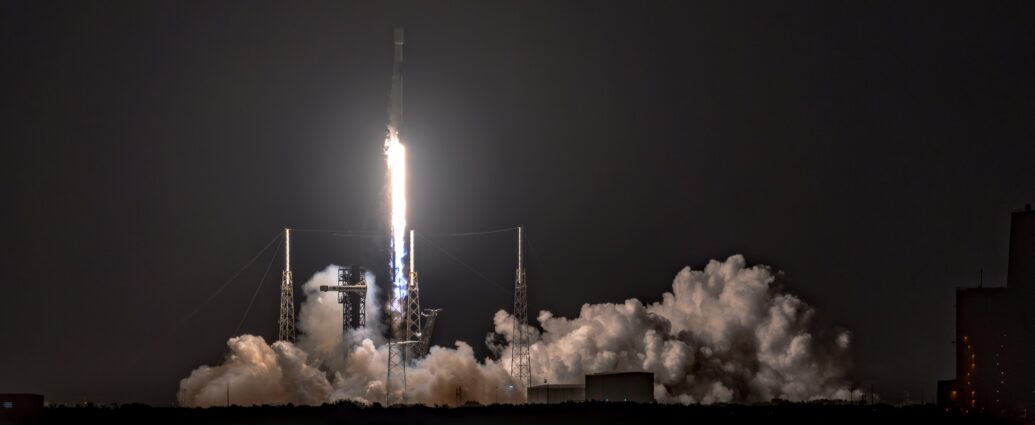
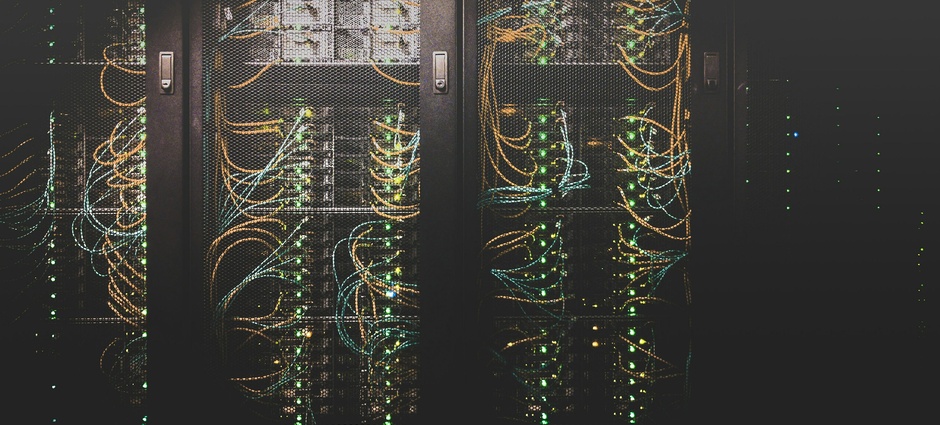
Network equipment at the University of Washington in a 2019 file photograph

Network equipment at the University of Washington in a 2019 file photograph, not a Dyania, NVIDIA or Cleveland Clinic installation. Photo: Taylor Vick / Unsplash.

Dyania Health and NVIDIA are working together to run artificial intelligence that reviews medical records on hospitals’ own computing systems, rather than sending patient records outside their networks.

The collaboration, announced Friday, centers on Dyania’s Synapsis AI. The companies say it reads years of clinical notes, test results, imaging reports and other records, then answers clinical questions with evidence from the patient’s chart.

The arrangement is a technology collaboration, not a clinical trial showing that the system improves patient survival or makes better treatment decisions than doctors. Its use in predicting the durability of replacement heart valves still needs external validation, according to Dyania’s announcement.

Hospitals keep large amounts of information as narrative notes rather than neatly organized database fields. Reviewing those records by hand can make research and patient registries slow to build. Dyania and NVIDIA are seeking to automate more of that work while keeping the computing within hospital networks.

Dyania builds its models using NVIDIA’s NeMo tools. Its software runs on NVIDIA computing infrastructure inside the health system. The companies plan to bring the system to more health systems in the United States and internationally, publish case studies and work on further technical integration. These are plans, rather than completed deployments at every hospital.

An initial Cleveland Clinic project used records from 7,812 patients who received an aortic valve replacement between 2005 and 2021. Dyania said its system answered 88 clinical questions for each patient, collecting information about the valve, other medical conditions, medicines, follow-up heart scans and later events.

The researchers then trained a model to estimate the risk of valve failure or another procedure at three, five and 10 years. The analysis used follow-up information to revise those estimates. The companies describe that as a way to help clinicians understand how an implanted valve may perform over time.

The announcement does not establish that these predictions will work equally well in other hospitals or patient populations. Dyania says the tool requires external validation from clinicians. A model developed from past records is not, by itself, proof that using it changes patient outcomes.

Both Dyania’s November 13 announcement and NVIDIA’s own account describe the hospital-based work. Neither announcement provides a price for the system or a timetable for broad deployment.

JBizNews Desk | New York
© JBizNews.com. All rights reserved. Unauthorized reproduction or redistribution is strictly prohibited.


Official LangChain corporate logo

LangChain logo. Courtesy LangChain.

LangChain announced Friday that it has raised $300 million at a $3 billion valuation, giving the San Francisco software company more capital to help businesses build, run and control their own artificial-intelligence agents.

The Series C round was led by CapitalG, with new investors GIC and DFJ Growth joining existing backers IVP and Sapphire Ventures. It brings LangChain’s total funding to $460 million, the company said in its November 13 announcement.

The money is going into the software around AI models, rather than a new model itself. An agent combines a model with access to information and tools so it can carry out a task, not simply answer a question. For a business, the challenge is making that system work reliably, testing its mistakes and deciding what information or actions it can access.

LangChain is building that business around LangSmith, its platform for deploying agents, monitoring what they do and improving their performance. The company says more than 7,000 organizations use LangSmith, naming customers including Nvidia, Toyota, Salesforce, Harvey and Rippling.

“Every company should be free to choose the best models for its needs, control its data and infrastructure, and continuously improve its agents, while maintaining the governance needed to operate securely at scale,” co-founder and Chief Executive Harrison Chase said in the announcement.

That choice is central to LangChain’s pitch. Its open-source tools, including LangChain and LangGraph, let developers build agents using different models. LangSmith provides the services for putting those systems into everyday use, watching their behavior and testing changes before they cause problems.

The company described three areas of work: infrastructure to run agents, testing and monitoring to improve them, and controls over their use of models, data and other tools. Its governance products are intended to help companies manage model spending, protect sensitive information and decide which systems an agent may use.

LangChain cited Workday as an example of the operational gains it is trying to sell. The company said Workday uses LangSmith to run and govern agents and has cut the time to deploy a new agent from five months to less than a day. It also said Clay uses the platform to monitor hundreds of millions of agent runs each month.

The new valuation is 2.4 times the $1.25 billion value LangChain announced in October 2025, when it raised $125 million in a round led by IVP. CapitalG and Sapphire joined as new investors in that earlier financing and are now returning backers.

LangChain plans to show additional LangSmith capabilities at a November 20 release event, building on the platform for running, improving and governing agents.

JBizNews Desk | San Francisco

© JBizNews.com. All rights reserved. Unauthorized reproduction or redistribution is strictly prohibited.
Boston-based Metalenz announced Wednesday that it acquired Israeli startup PxE Imaging, adding technology designed to capture color and depth information with a single camera. Financial terms were not disclosed.

In its company announcement, Metalenz said PxE’s Holocoder technology is patterned directly onto an image sensor and redirects light rather than absorbing it through a conventional color filter. The company says this delivers 2.5 times more light while capturing depth alongside color. That performance figure is a company claim, not an independent test.

The company said capturing that information in hardware can reduce the need for separate sensors and some software processing. The acquisition expands Metalenz into visible imaging, adding to its polarization sensing technology. Applications named in the announcement include consumer electronics, automotive systems, drones, robotics and machine vision.

PxE co-founder and CEO Yoav Berlatzky said joining Metalenz would give the technology a manufacturing platform and wider commercial reach. Metalenz co-founder and CEO Rob Devlin said the combination expands the information its sensors can provide without relying on heavy computation.

Metalenz, spun out of Harvard University in 2016, said it has shipped more than 300 million metasurface optics into consumer devices. That figure describes Metalenz’s existing business, not PxE shipments.

JBizNews Desk | New York

© JBizNews.com. All rights reserved. Unauthorized reproduction or redistribution is strictly prohibited.
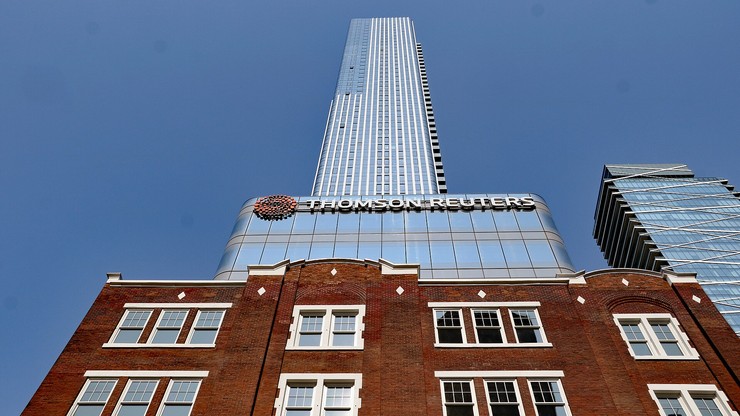
Thomson Reuters head office at 19 Duncan Street, Toronto

Thomson Reuters head office, 19 Duncan Street, Toronto, July 2024 file. Can Pac Swire / Wikimedia Commons (CC BY-SA 2.0, cropped).

Thomson Reuters plans to repurchase up to $500 million of its common shares under a new normal course issuer bid approved by the Toronto Stock Exchange, the company announced Wednesday.

Under the new NCIB, the company may repurchase up to 7 million common shares, about 1.6% of its 433,458,865 issued and outstanding shares as of October 31, 2026, between November 13, 2026, and November 12, 2027. Any shares repurchased will be cancelled.

Purchases may take place on the TSX, the Nasdaq Global Select Market and other eligible exchanges and trading systems, at the market price at the time of purchase. Daily repurchases on the TSX are capped at 181,938 shares, other than pursuant to a block purchase exception, representing 25% of the average daily trading volume for the six months ended October 31.

The Woodbridge Company Limited, the company’s controlling shareholder with about 70% of outstanding shares, intends to participate proportionally in the buyback under a TSX exemption and an automatic disposition plan, so that its percentage interest is maintained. Woodbridge’s ownership has risen from about 62% over the last decade, primarily because of the company’s share repurchases.

Thomson Reuters said the bid gives it a flexible way to return capital to shareholders who choose to sell, within what it called a disciplined capital strategy balancing growth, leverage, credit ratings and shareholder returns. The company may suspend or discontinue repurchases at any time, and there is no assurance the full amount will be spent.

Under its previous amended NCIB, which became effective on February 27, 2026, Thomson Reuters repurchased 6,155,886 common shares at a cost of $600 million over the past 12 months, an average price of $97.48 per share.

JBizNews Desk | Toronto

© JBizNews.com. All rights reserved. Unauthorized reproduction or redistribution is strictly prohibited.

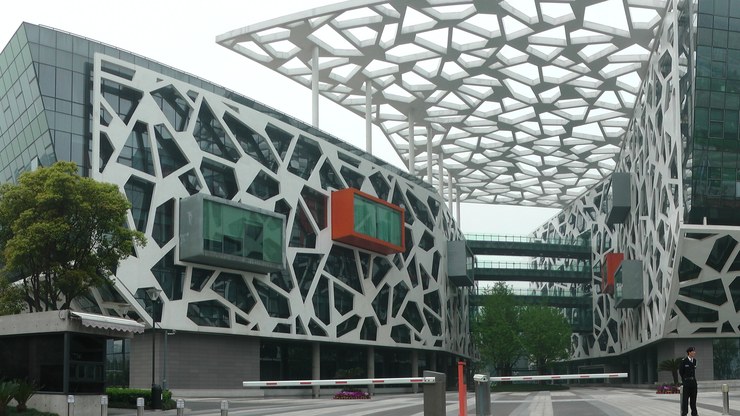
Alibaba Group headquarters building in Hangzhou, China

Alibaba Group headquarters in Hangzhou, archive: Thomas Lombard / Wikimedia (CC BY-SA 3.0, cropped)

Alibaba Group Holding plans to spin off its semiconductor unit T-Head and list the chip designer’s shares in Hong Kong, the company said in a stock exchange filing on Tuesday.

Under the proposal, T-Head (Shanghai) Technology Co. would offer its H shares to the public in Hong Kong and place shares with institutional and professional investors. The Hong Kong Stock Exchange has confirmed that Alibaba may proceed with the spin-off, and T-Head submitted a confidential listing application on September 11, according to the filing.

Alibaba said T-Head is expected to remain its subsidiary after the offering is completed. The size and structure of the offering, and how much Alibaba’s stake would decrease, have not been finalized.

The plan still requires approval from the exchange’s Listing Committee, the completion of a filing with the China Securities Regulatory Commission, and final decisions from both Alibaba and T-Head. The company cautioned that there is no assurance the spin-off will take place or when.

T-Head was founded in 2018 out of Alibaba’s DAMO Academy research arm. It designs data-center processors, including the Yitian 710 server chip used in Alibaba’s cloud operations and the Hanguang 800 artificial-intelligence chip, and it focuses on the open-source RISC-V chip architecture. The filing describes the unit as a leading provider of full-stack data-center chips in China.

Alibaba told shareholders a separate listing would let investors value T-Head on its own merits, attract investors seeking dedicated exposure to its chip business, raise its profile with customers and partners, and give the unit direct access to equity and debt capital markets.

The company said the spin-off is small relative to the wider group: the applicable size ratios are expected to be below 5%, and the move would not affect Alibaba’s dual-primary listing status in Hong Kong and New York, where its American depositary shares trade under the symbol BABA.

JBizNews Desk | Hong Kong

© JBizNews.com. All rights reserved. Unauthorized reproduction or redistribution is strictly prohibited.
CoreWeave CEO Michael Intrator at Web Summit in Lisbon, November 13, 2024, file photo

CoreWeave CEO Michael Intrator at Web Summit in Lisbon, November 13, 2024. Photo: Carlos Rodrigues / Web Summit via Sportsfile, CC BY 2.0; cropped. File photo, 2024.

CoreWeave raised its 2026 revenue forecast to $13 billion-$13.3 billion Tuesday after reporting $3.661 billion in third-quarter revenue. Revenue rose about 168% from a year earlier. The company also reported a $709 million net loss.

CoreWeave shares traded at $55.17, up 13.22%, in premarket trading Wednesday at 9:13 a.m. Eastern, according to the Nasdaq quote. Premarket prices can change before the regular session opens.

The company reported approximately $132.5 billion in revenue backlog as of September 30 in its third-quarter results release. That figure covers future revenue under committed customer contracts, subject to delivery and service-availability requirements; it is not revenue already earned.

Alongside its full-year revenue forecast, CoreWeave projected adjusted operating income of $1.275 billion-$1.375 billion for 2026. The adjusted figure is a non-GAAP measure, not net profit.

CoreWeave now expects $37 billion-$39 billion in capital expenditures for 2026, raising the low end of its previous range. The company said it expects to deploy infrastructure and deliver it to customers sooner than planned.

CEO Michael Intrator said the company expects approximately $9 billion in customer prepayments and deposits over the next three months. He described those funds, alongside financing backed by customer contracts and operating cash flow, as support for continued expansion.

The results pair a larger sales outlook and a substantial pipeline of contracted business with heavy investment needs and continuing losses. The revenue forecast, spending plan and expected customer payments are company projections, not completed results.

JBizNews Desk | Business

© JBizNews.com. All rights reserved. Unauthorized reproduction or redistribution is strictly prohibited.

Archive July2023 Nvidia headquarters in SantaClara, California

Coolcaesar / Wikimedia Commons / CC BY-SA 4.0 / July 2023 archive

In Beijing, China, on November 9, Foreign Ministry spokesperson Guo Jiakun gave the ministry’s response in its English transcript: “We responded to that last week. The ‘Chinese spy’ allegation is purely unsubstantiated and directed at smearing China.” This is Beijing’s denial, not an independent finding that resolves the allegation or ends Nvidia’s board inquiry.

In the same briefing, Guo was asked about a possible meeting involving U.S. President Donald Trump, Chinese President Xi Jinping and Russian President Vladimir Putin in Shenzhen the following week. He said: “China maintains communication with the relevant parties on the meeting between the three presidents. As for your specific question, I have no information to offer at the moment.” The response confirms communication, not a summit date, location agreement or agenda. It announces no chip approval or reversal of import restrictions, leaving both the diplomatic arrangements and any trade-policy outcome unconfirmed.

China’s foreign ministry rejected the Chinese-spy allegation surrounding Nvidia Chief Executive Jensen Huang on Monday, adding Beijing’s denial to a story now under review by the chipmaker’s independent directors.

At a November 9 briefing, spokesperson Guo Jiakun called the so-called “Chinese spy” narrative unfounded speculation and a smear, according to the ministry’s published transcript. His response addressed a question about reports involving Huang and a Chinese technology executive. This is China’s denial of the allegation, not an independent finding about what happened.

The denial does not establish the outcome of Nvidia’s inquiry. For the company and its shareholders, the central unanswered issue remains what the directors’ review will find and whether any sensitive information was compromised. Nvidia’s board has said it has no reason to believe that national security or company secrets were compromised, while committing to examine all available information.

Nvidia’s board launched an independent investigation Sunday after reporting that founder and Chief Executive Jensen Huang had been targeted by a foreign intelligence effort.

A committee of independent directors, assisted by outside independent counsel, will oversee the inquiry, the board said in its November 8 statement. Huang supports the review and has committed to cooperating with it.

“While the Board has no reason to believe that either national security or NVIDIA secrets were compromised, the Board’s inquiry will examine all available information,” the statement said.

The directors said U.S. national and economic security is “paramount to the interests of NVIDIA and its shareholders.” Their decision puts oversight of the review with independent directors and outside counsel while the company examines the information available to it.

The board also expressed confidence in Huang and his leadership team. It said it would provide further updates as appropriate.

In overnight trading, Robinhood’s NVDA page showed Nvidia at $178.57 at 12:44:02 a.m. Eastern on November 9, down $8.07, or 4.32%, in the platform’s 24 Hour Market. This was an overnight venue quote, not a regular-session closing price.

JBizNews Desk | New York

© JBizNews.com. All rights reserved. Unauthorized reproduction or redistribution is strictly prohibited.
AceYYC / CC BY-SA 4.0. Archive aerial downtown Calgary2021 illustrative location, not a company facility. Native3:2 proportionate resize, no crop/fill.

AceYYC / CC BY-SA 4.0

Strathcona Resources agreed to acquire Greenfire Resources in a Canadian oil deal valued at approximately C$2.7 billion to C$2.9 billion, including about C$550 million of net debt.

The companies’ announcement pairs Strathcona, a heavy-oil producer focused on thermal oil and enhanced recovery, with Greenfire, a Calgary-based oil-sands producer operating in Alberta’s Athabasca region. The agreement has not closed.

Greenfire shareholders may choose either 0.25 Strathcona share or C$11 in cash for each Greenfire share, without proration. The share option was worth C$9.09 using November 6 closing prices, a 15% premium to Greenfire’s close; the cash option represented a 39% premium. All dollar figures are Canadian.

Waterous Energy Fund and its affiliates, which hold 72% of Greenfire and 57% of Strathcona, signed a support agreement and will elect shares. Approval requires at least two-thirds of votes cast at each company’s meeting, plus separate minority votes excluding Waterous and other ineligible holders. Court, Toronto Stock Exchange and Competition Act approvals are also required. Shareholder meetings are expected in January 2027, with closing expected shortly afterward if conditions are met.

Strathcona forecast approximately C$75 million in annual run-rate savings within the first year of combined operations, citing borrowing costs, procurement and duplicate public-company expenses. That is management’s target, not a realized result. Greenfire’s shares would be delisted from the Toronto and New York stock exchanges after completion.

JBizNews Desk | Calgary, Alberta

© JBizNews.com. All rights reserved. Unauthorized reproduction or redistribution is strictly prohibited.
Hanah Abercrombie / U.S. Air Force / Public domain. Archive laboratory blood testing at Vandenberg Air Force Base, April 24, 2019, resized. Not the Innovent trial.

Hanah Abercrombie / U.S. Air Force / Public domain / Archive laboratory blood testing, April 2019, resized; not the Innovent trial

Innovent Biologics said its cholesterol medicine Sintbilo met the main goal in a Phase 3 trial testing it as a stand-alone treatment, and the company plans to seek a new indication in China.

The CREDIT-5 study enrolled 198 Chinese adults with non-familial hypercholesterolemia or mixed hyperlipidemia, Innovent said in its Sunday company announcement. The multicenter trial was randomized, double-blind and placebo-controlled. Its primary endpoint was the percentage change in LDL cholesterol from baseline after 12 weeks.

Participants receiving 150 milligrams of Sintbilo every two weeks had a mean LDL-C reduction of 65.19%, compared with a 6.61% reduction in the matching placebo group. Those receiving 450 milligrams every four weeks had a reduction of 64.01%, compared with 4.31% for the matching placebo group. The company reported p-values below 0.0001 for both comparisons.

Those percentages are changes from each group’s baseline cholesterol levels, not placebo-adjusted reductions. Across the study, 131 participants received the medicine and 67 received placebo, following a four-week run-in period during which lipid-lowering drugs and products were prohibited.

Innovent said there were no severe or serious treatment-emergent adverse events, no adverse events leading to discontinuation or interruption of the study medicine, and no new safety signal compared with previous studies. Those safety findings are the company’s account of this trial, rather than a guarantee about all patients or longer-term use.

Sintbilo, also called tafolecimab, is an antibody targeting PCSK9. According to Innovent, it is already approved in China for adults with primary hypercholesterolemia, including heterozygous familial and non-familial forms, and mixed dyslipidemia.

The company plans to submit a new-indication application to China’s National Medical Products Administration. Sunday’s announcement reported trial findings and a planned filing, not a new regulatory approval.

CREDIT-5’s main measurement was cholesterol reduction. The results do not establish that the treatment reduced heart attacks or deaths in this study.

JBizNews Desk | Suzhou, China

© JBizNews.com. All rights reserved. Unauthorized reproduction or redistribution is strictly prohibited.

Giselleai / Wikimedia Commons, CC BY 2.0. Archive aerial view of Darwin, June 2007. Not an EcOz project site; resized.

Giselleai / Wikimedia Commons / CC BY 2.0 / Archive aerial view of Darwin, June 2007; not an EcOz project site

Onterris has acquired EcOz Environmental Consultants, expanding its Australian consulting network into the Northern Territory with offices in Darwin and Alice Springs.

The environmental services company, which trades on the New York Stock Exchange under the symbol ONT, announced the acquisition Sunday in a company release. EcOz will join Onterris’ consulting division, adding a Northern Territory presence to its existing network across Queensland, New South Wales, Victoria and South Australia.

EcOz provides environmental and advisory services for the development, operation and rehabilitation of projects. Its work focuses on helping clients manage regulatory, environmental and stakeholder risks through practical, science-based advice, according to the announcement.

For Onterris, the acquisition extends the geographic reach of an Australian platform it has been building through local capabilities. The company pointed to EcOz’s technical expertise, client relationships and established presence in the Northern Territory as the reasons for the deal.

“We are excited to welcome EcOz to Onterris and further expand our environmental consulting capabilities across Northern Australia,” Onterris President and Chief Executive Officer Vijay Manthripragada said in the release.

EcOz owner and Managing Director Ray Hall said the firm’s work had been built on local relationships and a commitment to the communities and environments it serves. “I’m excited about what comes next and the opportunity to build on those strengths as our people, capabilities and impact continue to grow as Onterris,” he said.

Nash Advisory served as lead financial adviser and Ward Keller as legal adviser to EcOz. Jones Day advised Onterris on legal matters. The announcement did not disclose a purchase price or financing terms.

JBizNews Desk | Little Rock, Arkansas

© JBizNews.com. All rights reserved. Unauthorized reproduction or redistribution is strictly prohibited.
Juan de Vojníkov, CC BY-SA4.0 https://creativecommons.org/licenses/by-sa/4.0/ . Archive human hair root microscope photo2007, resized, not trialimage.

Juan de Vojníkov / Wikimedia Commons / CC BY-SA 4.0 / Archive human hair root under a microscope, 2007, resized; not a trial image

Veradermics will hold an investor call Monday morning to discuss 12-month data from a late-stage trial of its experimental extended-release oral minoxidil treatment for male pattern hair loss.

The call and live webcast are scheduled for Monday, November 9, at 8 a.m. Eastern, the company said in a November 8 company announcement. The discussion will cover topline results from Part B of Study 302, which evaluated VDPHL01 in more than 500 men with mild-to-moderate pattern hair loss.

Sunday’s announcement scheduled the presentation but did not disclose the 12-month results, safety-event counts or a regulatory action. It therefore does not establish how much hair growth was observed or whether the longer-term findings met the company’s expectations.

VDPHL01 is an investigational, non-hormonal tablet using an extended-release formulation of minoxidil. The company says its gel-matrix technology is designed to release the drug steadily over time. The formulation remains in development rather than approved for routine treatment.

Veradermics described Study 302 in the announcement as a randomized, double-blind, placebo-controlled registration-directed Phase 3 trial. Monday’s discussion concerns its 12-month Part B data, rather than a newly announced trial or an approval decision.

The company said the webcast and accompanying slides would be available through the Events page in its investor-relations website, with a replay following the call. Veradermics trades on the New York Stock Exchange under the symbol MANE.

JBizNews Desk | New Haven, Connecticut

© JBizNews.com. All rights reserved. Unauthorized reproduction or redistribution is strictly prohibited.
Archive MRI scanner in Gothenburg, Sweden, not a RadNet facility

Jan Ainali / Wikimedia Commons / CC BY 3.0 / Archive MRI scanner in Gothenburg, Sweden, 2008; not a RadNet facility

RadNet raised its full-year outlook for its imaging-center business Sunday after reporting a 22.1% increase in third-quarter revenue, as more MRI, CT and PET/CT scans helped lift sales. But the company’s net income fell, showing that stronger demand did not translate into higher bottom-line profit.

In its November 8 earnings release, the outpatient diagnostic-imaging provider reported total revenue of $638.3 million for the quarter, up from $522.9 million a year earlier. Net income declined to $4.2 million, or 5 cents a diluted share, from $5.4 million, or 7 cents a share.

The company’s adjusted earnings told a different story. Adjusted diluted earnings per share rose to 30 cents from 24 cents, while adjusted EBITDA increased 23.8% to $105 million. Those are non-GAAP measures that exclude certain expenses and other items; they are not substitutes for the company’s reported net income.

For the full year, RadNet now expects its imaging-center segment to generate revenue of $2.385 billion to $2.435 billion, compared with its previous range of $2.370 billion to $2.420 billion. It raised that segment’s adjusted EBITDA forecast to $350 million to $363 million from $345 million to $358 million, and its free-cash-flow forecast to $120 million to $130 million from $115 million to $125 million.

That outlook also calls for higher spending on equipment and facilities. The imaging-center capital-expenditure range increased to $170 million to $180 million from $165 million to $175 million. The revenue, cash-flow and spending forecasts apply to that segment, not the entire company, and remain projections rather than guaranteed results.

Chief Executive Howard Berger attributed the quarter’s growth to filling capacity at existing centers, new locations, acquisitions, a shift toward advanced imaging, improved commercial-insurer reimbursement and health-system joint ventures. Advanced-imaging procedure volumes rose 19.9% overall and 8.9% at centers operating in both comparison periods.

The distinction matters because acquisitions and new centers can increase total volumes even without growth at existing locations. Across all imaging procedures, including routine exams such as X-rays and ultrasound, RadNet reported volume growth of 10.8% overall and 3.2% on a same-center basis.

The smaller digital-health business, which includes artificial-intelligence and radiology technology, reported revenue of $32.9 million, including intersegment revenue, up 32.6%. Its adjusted EBITDA fell 11.8% to $3 million. RadNet ended September with $750.6 million in cash.

RadNet’s imaging-center markets include New York and New Jersey.

JBizNews Desk | Los Angeles

© JBizNews.com. All rights reserved. Unauthorized reproduction or redistribution is strictly prohibited.

Archive September2014 Regeneron Eastview office building nearing completion, not a current trial facility image

Jim.henderson / Wikimedia Commons / CC0 / September 2014 Eastview building archive, resized

Regeneron said a single dose of an experimental medicine reduced liver fat by 58% to 80% across dose groups after 36 weeks in a small early-stage trial, offering an initial signal for a treatment aimed at metabolic dysfunction-associated steatotic liver disease, or MASLD.

The company’s November 8 announcement described the first results from a randomized, double-blind, placebo-controlled Phase 1/2 study of CIDEB siRNA. Thirty participants received the medicine across four dose levels, while 10 received placebo. The study’s main purpose was to assess safety and tolerability; changes in liver fat and liver-injury markers were secondary measures.

At Week 36, the placebo group had a mean liver-fat reduction of 2.9%. Among participants receiving CIDEB siRNA, 62% reached liver fat below 5%, the trial’s definition of normalization, compared with none on placebo. The measurements were made using an MRI-based test.

Regeneron also reported improvements in markers of liver injury, including lower mean ALT levels across all doses, sustained through Week 36. It said the findings were presented at the American Association for the Study of Liver Diseases meeting and published simultaneously in The New England Journal of Medicine.

MASLD involves excess fat building up in the liver and can include more serious disease with inflammation and scarring. The new results measure liver fat and injury markers, not a demonstrated reversal of fibrosis. They do not establish that the experimental medicine is a cure or that it prevents liver failure or other long-term complications.

Overall adverse-event rates were generally similar between the active-treatment and placebo groups, according to Regeneron. Events were mild or moderate except for one serious episode of severe hyperglycemia in a treated participant, which was attributed to a later diagnosis of adult-onset Type 1 diabetes rather than the study medicine. There were no trial discontinuations.

CIDEB siRNA is designed to mimic the protective effect of rare genetic changes in the CIDEB gene. Regeneron developed the approach with Alnylam and holds exclusive development and commercialization rights, while Alnylam is entitled to milestone and royalty payments.

The medicine remains investigational, and Regeneron said its safety and efficacy have not been evaluated by a regulatory authority. Longer-term safety and tissue-based outcomes are being studied in ongoing trials. The company will discuss its liver-disease pipeline at a virtual investor event Tuesday, November 10, at 8:30 a.m. Eastern, available through its events website.

JBizNews Desk | Tarrytown, New York

© JBizNews.com. All rights reserved. Unauthorized reproduction or redistribution is strictly prohibited.
Archive illustrative cement production plant, not the CSN Cimentos acquisition target

HandaKiln / Wikimedia Commons / CC BY-SA 4.0 / Archive cement-plant illustration, not the acquisition target

China’s Huaxin Building Materials Group has signed an agreement to buy 99.99% of Brazil’s CSN Cimentos for approximately $1.64 billion, advancing an overseas expansion strategy as its domestic cement business faces pressure.

The deal, signed November 7 and disclosed in a November 8 Hong Kong exchange filing, would give Huaxin control of Brazil’s second-largest cement producer. It still requires regulatory clearances and has not closed.

Huaxin put the expected payment for the shares at 9.0337 billion Brazilian reais, equivalent to about $1.642 billion, subject to adjustments for debt and working capital at closing. That is distinct from the transaction’s agreed enterprise value of 12.7 billion reais, or approximately $2.3085 billion.

CSN Cimentos operates seven integrated cement plants and six grinding plants, with annual cement production capacity of 17 million tonnes. Its products mainly serve northeastern and southeastern Brazil, according to the filing. The seller is Companhia Siderúrgica Nacional, the Brazilian group with steel, mining, cement, logistics and energy businesses.

The signed purchase agreement moves the transaction beyond the exclusive agreement disclosed October 30. Huaxin said it expects the conditions for closing to be satisfied in the first quarter of 2027, although it warned that the acquisition may not proceed.

Required clearances include approval from Brazil’s competition authority, CADE, and electricity regulator ANEEL, alongside Chinese overseas-investment filings and foreign-exchange registration. Huaxin said the purchase would be paid in cash in Brazilian reais, using internal resources, bank loans, bond issuance and other external financing.

The company described the transaction as a way to expand internationally and offset weakness in its domestic market. It said the acquisition would mark its first entry, and the first by any Chinese cement producer, into Brazil’s cement market. If completed, CSN Cimentos would become a controlled subsidiary and its financial results would be included in Huaxin’s accounts.

JBizNews Desk | Wuhan

© JBizNews.com. All rights reserved. Unauthorized reproduction or redistribution is strictly prohibited.
Illustrative archive laboratory test tubes, not the Vir trial or experimental medicines

Unsplash License / Archive laboratory illustration, cropped / Not the Vir trial

Vir Biotechnology said its experimental monthly treatment for chronic hepatitis delta met the main goal of a late-stage clinical trial, moving the two-drug regimen closer to a planned U.S. regulatory submission in mid-2027.

The company’s November 8 release reported that 44% of treated participants had both undetectable hepatitis delta virus and normalized ALT blood-test levels after 48 weeks. That compared with 0% in a delayed-treatment group assessed at Week 12. The different assessment times are important: this was not a comparison of two groups each observed without treatment for 48 weeks.

The Phase 3 ECLIPSE 1 trial enrolled 124 adults, randomly assigning 83 to receive elebsiran and tobevibart and 41 to delayed treatment. The delayed group began therapy at Week 12. The combination is given monthly as two separate injections under the skin.

Vir said the primary result was statistically significant, with a p-value below 0.0001. A key secondary goal was also met: 79% of treated participants had undetectable viral RNA at Week 48, compared with 0% in the delayed-treatment group at Week 12. Undetectable means the test did not detect the viral target; it does not establish a cure.

The potential beneficiaries are adults with chronic hepatitis delta, a serious liver infection for which treatment options remain limited. Vir said the trial included patients with advanced disease and that undetectable virus was seen in participants both with and without cirrhosis. The findings offer evidence of viral suppression, rather than proof that the regimen prevents liver failure, cancer or death over the longer term.

All patients completed 48 weeks of treatment, according to the company. It reported no treatment interruptions or discontinuations and one Grade 3 treatment-related decrease in neutrophil count, which resolved in 15 days. Most treatment-related adverse events were mild to moderate and temporary; flu-like symptoms were the most common.

Elebsiran and tobevibart remain investigational, and the combination is not an approved treatment. These are company-reported topline results, not a regulatory decision. The longer-term benefits and risks, and the outcome of any application, remain to be determined.

Vir expects results from the ECLIPSE 2 and ECLIPSE 3 trials in the first quarter of 2027 and plans to use data from all three studies in its regulatory filing package. It will discuss the new findings on a conference call Monday, November 9, at 8:30 a.m. Eastern, with a webcast available through its investor website.

Separate Phase 2 data track longer treatment and early follow-up after stopping

In a separate November 8 company announcement, Vir reported expanded results from the Phase 2 SOLSTICE study: all 28 participants who completed 96 weeks of combination therapy had undetectable hepatitis delta virus. That is a result for a treatment-completer subset, not the entire study population, and is separate from the Phase 3 ECLIPSE 1 results above.

Vir also reported an exploratory analysis of 10 participants who chose to stop treatment after maintaining undetectable virus for at least 96 weeks. All 10 had a sustained viral response 12 weeks after their last dose. Among those who had reached later follow-up points, seven had sustained responses at 24 weeks and one at 48 weeks. Those figures do not mean all 10 had been followed for 48 weeks.

The company said all 10 continued follow-up and had stable ALT levels, with no viral rebound or ALT flares observed at the interim assessment. But it called the analysis preliminary and exploratory, with incomplete follow-up and safety data not yet fully assessed. The small, selected group may not represent the broader study population; the findings do not establish a sustained treatment-free response or cure.

JBizNews Desk | San Francisco

© JBizNews.com. All rights reserved. Unauthorized reproduction or redistribution is strictly prohibited.

Archive December2015 Teva factory exterior in Kfar Sava, Israel, not an Irish facility

David Shay / Wikimedia Commons / CC BY-SA 4.0 / December 2015 archive

Teva Pharmaceuticals says it remains committed to supplying high-quality medicines and working with healthcare professionals in Ireland after the Irish Hospital Consultants Association approved a motion encouraging members to avoid its products when clinically appropriate alternatives are available.

The company said in a statement Sunday that it was “disappointed” by the decision and respectfully disagreed with it. Teva placed patient care and the continuity of its work with Irish healthcare professionals at the center of its response.

“Healthcare shouldn’t be politicized, and treatment decisions should be guided by clinical evidence, patient need, and professional judgment,” Teva said.

“Any action that seeks to restrict access to medicines for reasons unrelated to patient care risks undermining the principle that patients should receive the treatment most appropriate for their condition,” it said.

The consultants’ motion is conditional: it encourages avoiding Teva medicines where clinically appropriate and equivalent alternatives exist, provided that doing so does not compromise patient safety, continuity of treatment or clinical outcomes. It is a professional association’s position, not a government ban on the company’s medicines.

Teva said it is proud to have produced medicines in Ireland for more than 30 years, serving patients and healthcare professionals in the country and around the world. Despite its disagreement with the motion, the company said it remains committed to working constructively with Irish professionals and supporting patients through the “consistent supply of high-quality medicines.”

JBizNews Desk | New York

© JBizNews.com. All rights reserved. Unauthorized reproduction or redistribution is strictly prohibited.
Elon Musk speaking at the World Economic Forum in January2026 archive video frame

World Economic Forum / CC BY 4.0 / January 2026 archive video frame

Elon Musk said Sunday that fixes to make Grok Bot more efficient and improve its behavior are underway, putting the focus on how much work subscribers can get from an AI usage allowance shared across several products.

“Grok Bot fixes for improved token efficiency and smarter behavior are underway,” Musk wrote in an 8:17 a.m. Eastern post on X on November 8. He did not give a release date, quantify the expected improvement or announce an increase in subscription allowances.

The distinction matters for paying customers: a more efficient bot is not the same as a larger included allowance. Under the company’s current Grok Bot subscription rules, usage comes from a weekly pool shared across Grok, Grok Bot and Cursor, rather than a separate additional pool reserved for the bot.

Grok Bot is included in the Premium, Super and Ultra tiers of The X Subscription. The current list prices are $30, $100 and $200 a month, respectively, before applicable taxes and fees. The $8 Plus tier does not include Grok Bot. Higher tiers provide larger shared usage pools.

Subscribers who reach their included usage can buy top-ups or wait for the allowance to refresh, according to the pricing page. The weekly reset means that how much an individual product consumes can affect the capacity left for other Grok and Cursor work in the same pool.

The company’s subscription documentation also distinguishes these plans from existing Cursor, SuperGrok and X Premium subscriptions, which continue unless customers change or cancel them. Switching to the combined subscription is optional for existing customers.

For users deciding whether to upgrade or buy more usage, Sunday’s announcement is a commitment to work on efficiency and behavior, not a new published price or a guaranteed amount of additional work. Musk’s post did not say the fixes were already available.

JBizNews Desk | New York

© JBizNews.com. All rights reserved. Unauthorized reproduction or redistribution is strictly prohibited.
Archive September2022 Nvidia headquarters entrance in SantaClara

Coolcaesar / Wikimedia Commons / CC BY-SA 4.0 / September 2022 archive

Nvidia Chief Executive Jensen Huang admitted he was unfaithful to his wife in a reported email to employees Sunday, apologizing to his family and colleagues as the company’s board opened an independent investigation into reports that he was targeted by a foreign intelligence effort.

A company spokesperson said Huang will continue leading Nvidia as CEO without interruption. The board separately expressed confidence in him and his leadership team while assigning oversight of the inquiry to independent directors assisted by outside independent counsel.

“I was unfaithful to my wife. My actions hurt her and our children. There is no excuse for what I did. I am deeply sorry,” Huang wrote in the reported employee email.

Huang took responsibility for the hurt caused by his actions and addressed his colleagues, the board, partners and shareholders. “Leading NVIDIA is the privilege of my life,” the reported email said. “I am fully committed to NVIDIA and will work to earn back your confidence.”

Addressing the national-security concerns raised in news reports, Huang said he supports the board investigation and will cooperate fully. He also said his family bears no responsibility for his choices and asked that they be given privacy.

The published text of the reported email does not name the woman or establish that espionage occurred. Huang’s admission of infidelity and the board’s examination of potential security concerns are separate matters.

“While the Board has no reason to believe that either national security or NVIDIA secrets were compromised, the Board’s inquiry will examine all available information,” the directors said in their November 8 statement.

The board said U.S. national and economic security is paramount to the interests of Nvidia and its shareholders and promised further updates as appropriate. A company spokesperson’s statement said Huang remains committed to continuing as chief executive without interruption.

JBizNews Desk | New York

© JBizNews.com. All rights reserved. Unauthorized reproduction or redistribution is strictly prohibited.

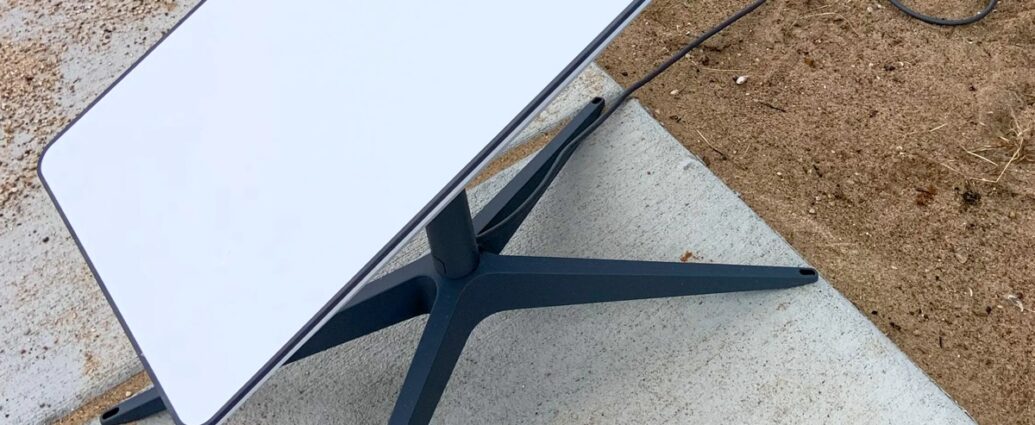
Archive Starlink satellite-internet dish and stand outside a residential home

Wikideas1 / Wikimedia Commons / CC0 / archive, cropped

Starlink lists monthly prices of $104 to $156 for its Residential Max home-internet plan in its U.S. Broadband Facts disclosure, putting the same plan’s listed price range $52 apart depending on location.

For households comparing internet bills, the important number is the quote for their own address. The satellite-internet service, a division of SpaceX, tells customers to enter their service address to see the available plans, equipment cost and monthly service price. Its published range is not a single nationwide rate.

Three plans, three price ranges

The Broadband Facts labels on Starlink’s residential order page, checked Sunday, list Residential 100 Mbps at $44 to $66 a month and Residential 200 Mbps at $68 to $102, alongside the $104-to-$156 range for Residential Max. Those are monthly service prices; the labels separately list demand surcharges, shipping and handling, and taxes as costs that vary by location.

At the top and bottom of the Max range, 12 months of service would total $1,872 and $1,248, respectively, before any separate charges. That is a $624 difference over a year, calculated from the label’s monthly figures, not a claim that every subscriber’s bill is going up by that amount.

A Sunday check using a public Portland, Oregon, address showed why the range and an individual quote must be read separately. The order page displayed $66 a month for Residential 100 Mbps, while selecting Max displayed $130 a month. Neither quote establishes what a different address or an existing customer’s account will show.

Why the address matters

Starlink says its service-plan offerings vary with network capacity, regulatory approval and local demand. Available options are filtered by the service address, account and hardware, and a plan that does not appear is not currently available for that account.

The lower-priced tiers also differ from Max in what they offer. Starlink says the 100 Mbps and 200 Mbps plans have download-speed limits matching their names. Its Max label lists typical download speeds of 170 to 320 Mbps and unlimited residential data. The company cautions that advertised maximum speeds are not guaranteed and can be slower during congestion.

For someone deciding whether the service fits the household budget, the check is straightforward: use the exact service address, compare the monthly service charge with any equipment and one-time costs, and read the plan’s Broadband Facts label. Starlink’s cost guidance directs customers to preview that address-specific breakdown before ordering.

JBizNews Desk | New York

© JBizNews.com. All rights reserved. Unauthorized reproduction or redistribution is strictly prohibited.

Falcon9 standing at Vandenberg in January2016, archive photograph

SpaceX / Wikimedia Commons / CC0

SpaceX is targeting Monday, November 9, for a Falcon 9 launch of the USSF-627 mission from California, with a four-hour window opening at 7:03 p.m. Pacific time, or 10:03 p.m. Eastern. The flight from Vandenberg Space Force Base would be the seventh for the mission’s first-stage booster.

For viewers on the East Coast, the opening of the launch window falls late Monday evening. Residents in three California counties may also hear sonic booms during the flight, depending on weather and other conditions.

SpaceX’s mission announcement lists Space Launch Complex 4E at Vandenberg as the departure point. If the mission does not fly during Monday’s opportunity, a backup is available Tuesday, November 10, at 6:49 p.m. Pacific, or 9:49 p.m. Eastern.

Seventh flight for the booster

The Falcon 9 first stage assigned to USSF-627 previously supported NROL-179, SDA-T1TL-E, SDA-T1TL-A and three Starlink missions, according to SpaceX. Monday’s planned flight would add another mission to that booster’s record.

After separating from the rocket’s second stage, the booster is scheduled to return to the Of Course I Still Love You droneship in the Pacific Ocean. The published flight sequence places stage separation at about two minutes and 29 seconds after liftoff and the first-stage landing at about eight minutes and 11 seconds. Those times are approximate.

How to watch, and where booms may be heard

A live webcast is scheduled to begin about 10 minutes before liftoff on the mission page and the company’s X account. The broadcast’s start follows the actual launch time rather than guaranteeing liftoff at the opening of the four-hour window.

SpaceX said residents of Santa Barbara, San Luis Obispo and Ventura counties could hear one or more sonic booms during the launch. What people experience will depend on weather and other conditions.

The schedule remains a launch target. For people planning to watch or living within the possible sonic-boom area, the mission page is the place to check for changes to the countdown, launch opportunity and live coverage.

Archive photograph: Falcon 9 at Vandenberg in January 2016, not the USSF-627 rocket.

JBizNews Desk | Vandenberg, California

© JBizNews.com. All rights reserved. Unauthorized reproduction or redistribution is strictly prohibited.
Open your TikTok or Instagram app and you’ll likely be greeted by short-form video content soundtracked by music from across the globe. 

“Social networks have really democratized music, in terms of release, promotion and marketing so that anyone anywhere in the world can consume it,” said Esther Nguyen, CEO of Vietnam-headquartered entertainment firm POPS Worldwide, during the Fortune Southeast Asia 500 Summit in Vietnam on Nov. 3.

While listeners today embrace music from different genres and countries, Nguyen says there’s still a way to go before Southeast Asia’s music industry can scale globally. 

“It’s a concerted effort, and South Korea has done it really well,” Nguyen explained. “[You’ll need] government regulations and policies supporting IPs, legal infrastructure and frameworks, international export support, and investments and financial incentives.”

“There needs to be a more robust investment community that are experts in entertainment and music,” she added. “L.A., New York and Tokyo, for example, [have] investors who are really well-versed in entertainment… an understanding of the industry really helps it to grow as well.”

The fragmented nature of Southeast Asian markets can also make scaling its music industry tough. “While I have personally invested in certain entertainment assets, including large theme parks and music streaming platforms, I think the biggest challenge is the fragmentation in Southeast Asia,” said Sujey Subramanian, the APAC head of asset manager ICG. “Our typical minimum equity check is $50 million, and it’s just hard to find assets of scale in the region.”

Music, and more

The panelists also discussed South Korea’s rise to become an entertainment powerhouse, debating which parts of the country’s playbook could be applicable to Southeast Asia.  

“The first thing that was exported from Korea was K-culture. We’re talking about K-dramas and food, and then K-pop came up on the back of that,” said Kenny Ong, the managing director of Sony Music for Malaysia, Singapore and Vietnam. “For Vietnam and any other Southeast Asian countries, we can’t just push content, but [also] have to create demand for the culture.”

Parallel offerings, such as merchandise and live experiences like meet-and-greets and concerts, are also bumping up profit margins for artists. “Physical music [products] are also growing [in popularity],” Ong added. “We’re talking about CDs, physical vinyls and box sets… In the past couple of years, they’re growing [in the] double digits.”

Southeast Asia can also further capitalize on the rising popularity of concert-going by upgrading its physical infrastructure. “We need venues which can host different sizes of tours… It’s not just venues which host 50,000 , we need mid-sized venues that hold 4,000 to 5,000, and smaller venues holding around 2,000, in order for artists in each country to grow and perform.”

Ultimately, the panelists were optimistic about the direction in which Southeast Asia’s music industry is headed. “We’ve seen a lot, especially in the past year, of the [Vietnamese] government really trying to clean up pirated sites and go after bad actors. We saw an eight-year IP case finally get fast-forwarded and be heard, and we got a positive result,” Nguyen concluded. “That being said, the enforcement and interpretation of IP laws still needs some work, but at least it’s going in the right direction.”

This story was originally featured on Fortune.com

This post was originally published here. 

Silicon carbide wafers used in chipmaking

Photo: FDominec / Wikimedia Commons, CC BY-SA 4.0

Two of Israel’s senior chip-equipment executives said Sunday they see no sign of a slowdown in orders despite last week’s rout in semiconductor stocks, drawing a line between a financial market hunting for short-term returns and companies investing in infrastructure for years ahead.

“We see no change. We are in contact with manufacturers around the world,” Ofer Greenberger, president and CEO of Applied Materials Israel, said on a panel at the “Seeing Beyond the Trend” conference, according to a report from the event. “There is apparently a gap here between a financial market looking for short-term returns and companies investing in infrastructure for a horizon of years. We saw this in previous cycles as well.”

Expanding capacity, not cutting

Greenberger said Applied Materials is investing heavily to expand its production capacity because it sees customer demand continuing. “There is the question of who is financing this whole cycle, but between those ordering and those supplying, we see continuity in demand,” he said. “We are investing a great deal in expanding production capacity, because we see the demand and are preparing for it.”

Lior Aviram, chairman of Camtek, agreed, while cautioning against reading too much into single market moments. Camtek tracks its order backlog, deal pipeline and customers’ road maps, he said, “and also the road maps of our customers’ customers. We are at the back of the cycle, so we feel the rises late, but we also feel a slowdown later. I stressed that right now we see no slowdown at all.”

The remarks came after the Philadelphia semiconductor index fell 12 percent last week, bringing its decline over the past half year to nearly 30 percent, though the index is still up 30 percent over the past year. According to Morgan Stanley data presented at the panel, the wafer fab equipment market, where Camtek, Applied Materials and Nova operate, is estimated at about $100 billion a year and is expected to nearly double by 2028.

A more cautious read

Yotam Ironi, head of foreign equities at Altshuler Shaham, offered a differing assessment, calling the selloff “a waking from a dream, a sobering up.” He said the correction reaches every investment portfolio and savings plan worldwide because the technology sector, and chips in particular, has grown so large in the indexes.

“Now the industry is more mature. We know how much it costs to build a server farm and how much it costs to buy chips, and the screen gives us the cost of financing every day in the form of bond yields,” Ironi said. He added that the U.S. election results signal some data-center projects could be delayed and take longer to generate cash flow, though he believes they will ultimately be built because states carrying heavy debt need the taxes and development.

On pricing, Ironi said the market is already signaling a pause: “Companies publish reports with nice growth in revenue and profits, but the stock moves sideways. Take Nvidia: relative pricing falls quarter after quarter while profitability rises. We are at least one foot into a stop in the cycle.” He said he hopes the correction proves healthy, giving everyone time to prepare financially.

What they watch for a turning point

Greenberger said he follows the capital-spending budgets of the cloud giants and utilization rates at packaging plants, which handle the silicon wafers produced by TSMC. “The packaging field is considered the canary in the coal mine. Those plants get work first, and lose it first,” he said. “Right now things look solid.” Aviram said he sees no path in which the United States pauses AI development while China continues to advance.

The panel also highlighted Israel’s position in process control, the machines that inspect and measure chips during production. Greenberger said Applied Materials Israel leads the global market in electron microscopy, and that “there is almost no chip in the world that does not pass under an Applied Israel machine.”

JBizNews Desk | Tel Aviv

© JBizNews.com. All rights reserved. Unauthorized reproduction or redistribution is strictly prohibited.

A reusable water bottle

Photo: Bibeyjj / Wikimedia Commons, CC BY-SA 4.0

The founders of Poppi are launching a new beverage startup on Monday, taking aim at the sports drink category dominated by Gatorade, owned by the same company that paid $1.95 billion for their soda brand last year.

Allison and Stephen Ellsworth’s new brand, Jetty, arrives Monday, November 9, with bottled drinks and ready-to-mix electrolyte packets at Whole Foods stores and online at Target and Amazon. The venture is self-funded with $2.5 million, and the founders expect to raise outside capital in 2027.

Competing with the buyer

PepsiCo bought Poppi, the prebiotic soda the Ellsworths built over a decade, for $1.95 billion in 2025. Jetty, which the couple owns and funds independently, now competes with Pepsi’s Gatorade, which holds about 60 percent of the U.S. sports drink market, according to Numerator data.

Jetty is pitched at everyday hydration rather than post-workout recovery. It launches with five flavors, watermelon, orange mango, fruit punch, black raspberry and white cherry, each containing 6 grams of sugar and 3 grams of fiber per 15.2-ounce bottle or 15-gram packet, along with 100 milligrams of sodium, 310 milligrams of potassium and 100 milligrams of magnesium. A 20-ounce bottle of traditional Gatorade Thirst Quencher carries about 34 grams of sugar by comparison.

A crowded aisle

The Ellsworths are entering a category drawing heavy interest. Dollar sales of hydration and electrolyte products climbed 20 percent to $2.6 billion in the 52 weeks ended October 4, according to SPINS data, and the number of new items in the category has risen 41 percent over two years. Kraft Heinz added electrolytes to Capri Sun and Kool-Aid this spring, and Pepsi unveiled a Gatorade overhaul in April aimed at broader, everyday use.

Allison Ellsworth, Jetty’s chief brand officer, said the idea grew from her own experience using a GLP-1 medication, which can dampen thirst, and from watching consumers drift away from legacy sports drinks. “Our core audience is going to be millennial moms and Gen Z,” she said. Her husband, Stephen, is the new brand’s CEO.

JBizNews Desk | New York

© JBizNews.com. All rights reserved. Unauthorized reproduction or redistribution is strictly prohibited.

A Marvell chip

Photo: ZyMOS / Wikimedia Commons, CC BY-SA 4.0

Eran Heruti, chief executive of Marvell Israel, said in an interview published Sunday that the chipmaker’s forecasts are anchored in binding customer commitments rather than market enthusiasm, and that demand for artificial intelligence infrastructure now exceeds supply by several multiples.

Speaking at the “Seeing Beyond the Trend” conference, Heruti, who also serves as vice president of engineering for the company’s Cloud Switch business unit, addressed last week’s sharp selloff in chip stocks, in which the sector index fell 12 percent and Marvell shares dropped 16.4 percent in a single day.

“We report a forecast based on customer commitments, actual orders,” Heruti said. “What characterizes the market is that demand exceeds supply by several multiples.” He attributed the decline in part to uncertainty surrounding the U.S. midterm elections and what they may mean for the scale and timing of hyperscaler capital spending on data centers and AI.

Revenue rising on data center demand

Heruti cited company revenue of $8.2 billion last year, of which $6.1 billion came from the data center business, and said he expects about $12 billion this year and $20 billion next year, of which $18 billion would come from data centers. He stressed that the trajectory reflects a deliberate, decade-long strategic build rather than riding a passing wave.

Marvell, an American company that has operated in Israel since the 2000s and acquired the Israeli chip startup Galileo at the height of the second intifada, develops custom chips, largely for connectivity and for components tailored to hyperscalers. It currently trades at a market value of about $127 billion.

AI will deliver, pace may change

“I have no doubt that the AI revolution will realize its technological potential,” Heruti said, placing it in a line of past transformations from personal computing through the internet, mobile, data and cloud. He acknowledged, however, that regulation of AI technology could affect the pace at which hyperscalers invest, which would directly affect the company’s revenue. “I am convinced the projected capital spending will materialize, but the timing data can change,” he said.

On concerns that the sector is in a bubble, Heruti noted that operating profit is positive at most players, that valuations are growing in line with revenue growth, and that net debt relative to EBITDA remains low. “The market judges them by very strict financial models, and so far they have met them successfully,” he said.

The optical bet

Heruti described optical interconnect technology as the strategic basis for Marvell’s agreed acquisition of Lumentum. Training and running AI models, he explained, requires linking tens of thousands to hundreds of thousands of processors, and the connections between them are a decisive component of performance. Copper-based connectivity is limited in distance, he said, and the penetration of optical technology is gaining momentum.

In the AI infrastructure chip market’s three categories of computing, memory and connectivity, he said, Marvell becomes the leading connectivity player following the deal, though it is “not yet in a position to fight Nvidia.” He added that Nvidia chief Jensen Huang had complimented Marvell’s CEO, calling it “the next trillion-dollar company.”

Asked why Israel has not produced a thriving domestic chip industry, Heruti pointed to the hundreds of millions of dollars in sustained investment required and the limited ability to keep pace with hyperscaler spending, while praising local talent and singling out Mobileye and Q.ai, which was sold to Apple, as exceptional success stories.

JBizNews Desk | Tel Aviv

© JBizNews.com. All rights reserved. Unauthorized reproduction or redistribution is strictly prohibited.

Oil refinery towers

Photo: W.carter / Wikimedia Commons, CC BY-SA 4.0

The Competition Authority is weighing whether to condition approval of Shapir’s control of the Ashdod oil refinery on the group’s selling off additional business activities, Israeli financial outlets reported Sunday, after the concentration committee reconvened last week to re-examine its July recommendation against the deal.

The committee’s negative recommendation, delivered in July by a two-to-one vote, still stands, and no new binding condition has been set. But the renewed discussion, requested by the Energy Ministry, has opened a possible path in which Shapir could win a control permit for the Ashdod refinery, if it agrees to shed more of its holdings.

A refinery without an owner

The Energy Ministry pushed for the review out of concern that the refinery, which produces about 40 percent of the fuels and cooking gas consumed in Israel, cannot be left without a controlling owner with the financial strength to fund its development. The ministry’s director general, Yossi Dayan, argued that without a controlling shareholder or strategic investor, the refinery could struggle to finance long-term decisions, particularly as refining operations in Haifa Bay wind down and Ashdod’s importance grows.

Shapir, controlled by the Shapira family, currently holds about 10 percent of the Ashdod refinery with an option to raise its stake to roughly 65 percent, subject to regulatory approvals. Opposing the move is Zohar Levy’s Summit, which became the company’s largest shareholder in September after raising its stake to about 17 percent. Summit argues the refinery can be advanced by several significant shareholders without a single control core, and says it is prepared to support further capital investment if needed.

One obstacle cleared, a bigger one open

Less than three weeks ago, Shapir signed an agreement to sell its natural gas distribution businesses to the Allied group for NIS 230 million, a step meant to remove a separate regulatory barrier under the Natural Gas Sector Law. That sale has not yet closed, and regulators now appear to view it as insufficient on its own to resolve the broader concentration concern.

The July decision was not driven by Shapir’s share of the refining market itself but by the group’s overall weight in the economy. Shapir is one of Israel’s largest infrastructure groups, active in toll roads, light rail, quarries, raw materials, desalination plants and major government projects, and committee members worried that adding the refinery would deepen the state’s dependence on a single group.

The committee has now appointed a professional team, with representatives of the Energy Ministry, the Finance Ministry and the National Economic Council, to examine whether transferring control to Shapir would benefit fuel and refined-product consumers. Its conclusions will go back to the concentration committee, which will decide whether to change its recommendation. The final word rests with the authorized government bodies, and the decision may slip to the next government.

JBizNews Desk | Jerusalem

© JBizNews.com. All rights reserved. Unauthorized reproduction or redistribution is strictly prohibited.
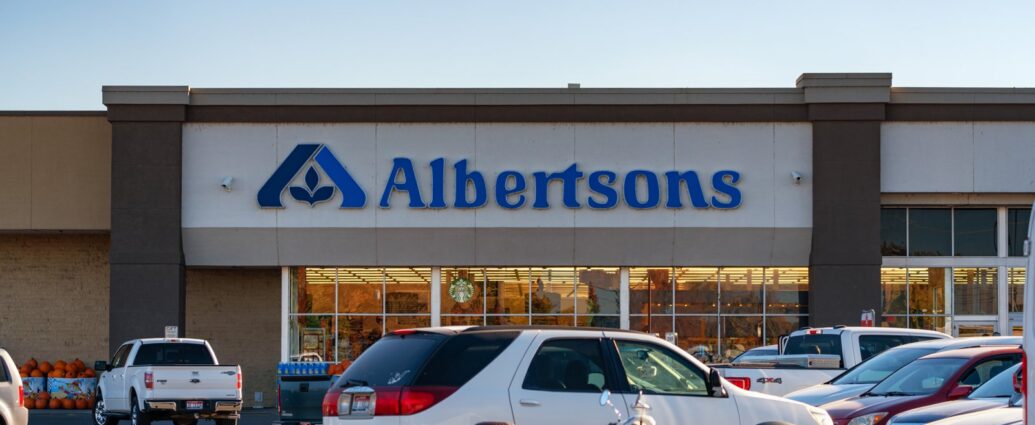
An Albertsons grocery store in Idaho Falls

Tony Webster / CC BY 2.0

Albertsons’ pursuit of more than $8 billion in damages from Kroger over their collapsed $24.6 billion merger has wrapped a two-week trial in Delaware’s Court of Chancery, and the grocery giants now face a long wait: the judge is not expected to rule until roughly the middle of next year.

Vice Chancellor Lori Will, who heard the case without a jury, closed the trial by asking both companies for a fuller accounting of their efforts to assemble store divestiture packages during the regulatory review. Lawyers are expected back in court around February to argue over what the testimony showed, with a written opinion likely months after that and any appeal heading straight to the Delaware Supreme Court.

Albertsons, whose chains include Safeway, Acme and Kings Food Markets, claims Kroger broke its commitment to take “any and all actions” to win antitrust approval, refusing to sell enough stores to satisfy regulators. It says it is owed a premium of up to $6.88 billion that the deal would have delivered to its shareholders, plus the $600 million termination fee and more than $1 billion in tax adjustments.

Kroger says it kept its obligations and that Albertsons misread the merger agreement. In its court papers, it pinned the collapse on regulators it says demanded more than 650 store sales and on courts that took too narrow a view of the grocery market by leaving out Walmart, Amazon, Costco and Aldi.

Wildly divergent accounts from the witness stand

The trial heard from former Albertsons CEO Vivek Sankaran and former Kroger CEO Rodney McMullen, who offered sharply conflicting versions of what went wrong, as well as current Albertsons CEO Susan Morris. Morris acknowledged speaking with C&S Wholesale Grocers, the company lined up to buy the divested stores, over personal email and other personal channels, while testifying that she never shared confidential information about the merger. Kroger’s pretrial filing described her contacts with C&S as repeated and unauthorized.

The 2022 merger was meant to position the two companies and their 5,000 stores to better compete with Walmart, Costco, Amazon and Aldi. Federal and Washington state courts blocked it in December 2024 after the Biden administration and several states argued the tie-up would remove direct competition and raise prices at checkout, and Albertsons terminated the deal the next day. Since the termination, Kroger’s stock has risen about 4% while Albertsons has lost nearly 30%, both trailing the S&P 500.

JBizNews Desk | Wilmington, Delaware

© JBizNews.com. All rights reserved. Unauthorized reproduction or redistribution is strictly prohibited.

Amnon Shashua in his office, December 2014. Archive photograph, reframed with blurred padding to keep his full face in cards.

Archive: Arielinson / CC BY-SA 4.0

Amnon Shashua is exploring a sale of control of One Zero at a bank valuation of NIS 1.1 billion to NIS 1.2 billion, according to a Sunday report. Shashua disputed that account, saying the discussions concern investments and white-label arrangements, not the sale described in the report.

The reported valuation is for the digital bank, not a sum Shashua would receive. He owns about 60% of One Zero, and the structure described in the report includes new capital for the bank alongside a possible purchase of some of his shares that would reduce him to a minority holding.

Potential investors and a disputed sale process

The report said representatives led by CEO Eyal Gafni and chairman Shuki Oren had held talks and presentations with interested parties in recent weeks, with at least three groups entering a data room. Investment house Meitav and businessman Moti Ben-Moshe were named as interested parties.

Shashua’s response was direct: “The information is incorrect.” He said there were talks about investments, white-label arrangements and similar matters. The report also described a gap between his valuation expectations and those of potential buyers.

Isracard held discussions in the past that stopped but could resume, according to the report. Discussions with Rami Levy and Direct Insurance did not advance. These are reported approaches and options, not an agreed transaction.

Capital needs behind the discussions

The bank has attracted about 200,000 customers but continues to report losses. The report puts accumulated losses since its establishment at NIS 1.3 billion and says Shashua, who has invested $114 million over recent years, does not want to provide further capital. That assessment of his intentions was attributed to people close to the talks.

One Zero’s own annual report records a 2025 net loss of NIS 213.9 million. It also describes capital raised from existing shareholders and plans to raise additional funds during 2026 to expand into new activities.

The Sunday report said first-half revenue reached NIS 66 million, up 33%, while expenses fell 10% to NIS 149 million. It said public deposits stood at NIS 3.8 billion at the end of the first half. Bank executives expect annual profitability in 2027, according to the report.

A banking license and customer base

For a potential buyer, the report identifies One Zero’s existing technology and banking license as attractions that would shorten the route into banking. Any buyer would need Bank of Israel approval.

The talks matter to shareholders facing further funding needs and to customers of a bank launched to compete with Israel’s established lenders. The reported alternatives concern who would finance and control the bank; the report does not announce a completed sale.

One Zero was founded in 2019 by Marius Nacht, sold to Shashua the following year and opened to the public in 2022. Its other investors include Julius Baer, Tencent and SBI, according to the report.

JBizNews Desk | Tel Aviv, Israel

© JBizNews.com. All rights reserved. Unauthorized reproduction or redistribution is strictly prohibited.

Illustrative immersive dome theater with a panoramic sports screen and tiered seating

Cosm, the immersive entertainment company that built its following screening live sports in arena-style domes, is expanding into Hollywood movies, with its first animated release, “Shrek,” arriving December 16.

The privately held company has opened four venues – near Los Angeles and Dallas with about 350 seats each, and newer domes in Atlanta and Detroit with up to 500 – with a Cleveland location planned for 2027 featuring an even larger, 100-foot dome. Its current 87-foot concave screens wrap the audience’s view, and ticket prices vary by venue and showtime, running from about $18 for a matinee to around $70 for prime seats.

Cosm has partnered with Warner Bros. to bring “The Matrix,” “Willy Wonka & the Chocolate Factory,” “Harry Potter and the Sorcerer’s Stone” and “It” to its domes, and in September announced a multi-year, multi-film deal with Universal Film starting with “Shrek,” which the company calls its first animated Shared Reality film. Rather than virtual reality, the film plays in a center rectangle while the surrounding dome extends the setting around the audience.

Sony invested $100 million in Cosm in June, taking a minority stake and placing Sony Pictures Entertainment Chairman and CEO Ravi Ahuja on its board. Cosm’s other investors include chairman Steve Winn’s Mirasol Capital, Marc Lasry’s Avenue Sports Fund, Dan Gilbert’s Rock and David Blitzer’s Bolt Ventures. Premium large-format screens like Imax, Dolby Cinema and Cosm’s domes have become a bright spot for theaters as standard attendance declines, especially with Gen Z and millennial audiences. Cosm does not disclose financial results.

JBizNews Desk | Los Angeles, California

© JBizNews.com. All rights reserved. Unauthorized reproduction or redistribution is strictly prohibited.

Generic GE Optima CT scanner, not equipment used in the Cleerly trial.

Narenfox / CC BY-SA 4.0

People checked for possible heart disease were more likely to get a clearer diagnosis and to start cholesterol-lowering treatment when their doctors used artificial intelligence to analyze plaque in their arteries, Cleerly said in preliminary trial results released Saturday.

The trial, called PARAMOUNT, randomly assigned 530 patients at 21 sites to either care guided by AI analysis of coronary CT scans or to usual care guided by stress testing. All had symptoms suggesting coronary artery disease, LDL cholesterol of at least 100 mg/dL, and no prior heart disease diagnosis; results were analyzed for 523 participants. On the trial’s main 180-day measure, plaque-guided care beat usual care with a win ratio of 2.00, driven mainly by more certainty about whether a patient’s chest pain was caused by heart disease and by bigger drops in LDL cholesterol, company said.

Use of lipid-lowering therapy in the AI-guided group rose from 31 percent before testing to 75 percent after, compared with 32 to 47 percent in the usual-care group. The approach did not increase the overall rate of catheterizations or artery-opening procedures, and among patients sent for an invasive angiogram, fewer in the AI group turned out not to need an intervention. The trial did not measure whether the approach prevents heart attacks or saves lives.

“When we measure plaque directly and use it to guide care, physicians gain clearer answers and patients are far more likely to start preventive therapy,” said Dr. Todd C. Villines of the University of Virginia, a co-principal investigator. Women made up 57 percent of participants, a group often underrepresented in heart trials.

The results are preliminary, sponsored by Cleerly and not yet peer reviewed, with full publication expected in early 2027. They were presented as late-breaking science at the American Heart Association’s annual meeting in Chicago.

JBizNews Desk | Denver, Colorado

© JBizNews.com. All rights reserved. Unauthorized reproduction or redistribution is strictly prohibited.

People with dangerously high blood fats got encouraging study news Saturday: Arrowhead Pharmaceuticals said its drug plozasiran sharply reduced attacks of acute pancreatitis, a painful and sometimes life-threatening condition, in a new analysis of two large studies.

The company presented the data at the American Heart Association’s Scientific Sessions 2026 in Chicago, according to its release.

Fewer pancreas attacks

The two studies randomized 757 adults with severe hypertriglyceridemia, very high triglycerides, to plozasiran or a placebo, injected once every three months. Across the pooled population, plozasiran reduced the rate of confirmed acute pancreatitis events by 78% versus placebo. Among patients who had suffered pancreatitis within five years before the study, the event rate fell 91%.

Side effects occurred in 73% of patients in both the drug and placebo groups, the company said. Serious side effects occurred in 8.3% of plozasiran patients and 10% of placebo patients, while worsening blood-sugar control was reported in 14% and 8.7% respectively.

An early two-in-one drug

Arrowhead also presented the first results for ARO-DIMER-PA, an experimental single molecule designed to lower both LDL cholesterol and triglycerides, in patients with mixed hyperlipidemia. In the early Phase 1/2a study, 21 participants received single doses of the drug and 10 received placebo. LDL cholesterol fell by a mean of 26% to 65% from baseline, and triglycerides fell by a median of 56% to 78% from baseline, depending on dose; those changes are measured from each patient’s starting point and are not adjusted against placebo.

No serious adverse events were reported in that study. The most common side effect was redness at the injection site.

JBizNews Desk | Pasadena, California

© JBizNews.com. All rights reserved. Unauthorized reproduction or redistribution is strictly prohibited.

SpaceX is targeting Friday, November 13, for Starship Flight 15, with a 75-minute launch window opening at 4:45 p.m. Central time, or 5:45 p.m. Eastern, according to its mission page. The target remains subject to regulatory approval and launch conditions, and the schedule can change.

The plan calls for 26 Starlink V3 satellites, an orbit about 275 kilometers above Earth and approximately 14 trips around the planet over a flight lasting more than 22 hours. SpaceX plans both the first catch attempt for a Super Heavy V3 booster and the first return-to-launch-site catch attempt for the Starship upper stage. Those are test objectives, not guaranteed outcomes.

SpaceX says its next Starship test flight will try to do something no rocket has done before: fly all the way around Earth, then bring the ship back to its Texas launch site for a catch by the launch tower’s mechanical arms.

The company laid out the Flight 15 plan in an update Saturday. Bringing the upper stage home is the last big step toward reusing the entire rocket, which SpaceX says would let it fly again quickly, carry more satellites to orbit and lower costs for Starlink and launch customers. On earlier flights, Starship ended its missions with splashdowns in the ocean.

An orbital trip before the catch attempt

Starship will first launch on a path that falls safely into the Indian Ocean if anything goes wrong early. Once flight controllers confirm the vehicle is healthy, they will give a “go” for orbit, and a single engine will push it to orbital speed.

In orbit, Starship will deploy a batch of Starlink V3 satellites. Three of them are modified to take pictures of Starship’s heatshield, one of several checks on whether the ship is ready to come home. The ship will then coast in orbit for about 21 hours while controllers run constant health checks. If a problem appears, they can end the mission early with splashdowns in pre-cleared parts of the Pacific Ocean near Hawaii or off Chile.

Coming home over land

To reach Starbase, Starship must fly over inhabited areas of northern Mexico and southern Texas, something its earlier flights avoided. SpaceX says it will send the ship back only if it meets return conditions approved by federal aviation regulators. The ship will steer with its four flaps along a path over sparsely populated areas, weaving around the major cities of the Rio Grande Valley before a final turn toward the launch site. People in Cameron County may hear one or more sonic booms as it arrives.

The catch

Over Starbase, Starship will flip vertical, fire its engines and slow to a near hover between the tower’s arms at Pad 2. The arms will then close rapidly to catch the ship by two fittings below its forward flaps. If anything is wrong with the ship or the tower, controllers can break the vehicle up high in the atmosphere or steer it into the Gulf instead.

SpaceX calls full recovery of an orbital rocket the “Holy Grail” of rocketry because it would allow a vehicle to fly again rapidly, like an airplane.

JBizNews Desk | Starbase, Texas

© JBizNews.com. All rights reserved. Unauthorized reproduction or redistribution is strictly prohibited.

By: JBizNews Desk 🌎

Switching 16,322 veterans from Humira to its biosimilar Hadlima cut first-year pharmacy costs by an estimated $132 million across the Veterans Affairs healthcare system, Organon reported Saturday. The analysis puts a dollar figure on how changing a widely used prescription drug can lower a large health system’s costs while patients continue treatment.

Average pharmacy costs fell by $8,100 per patient in the first year after the switch, according to the Jersey City-based company’s study release. Measures of treatment adherence remained similar before and after the change, and 1.3% of patients returned to Humira within 12 months.

A large health system’s drug switch

Hadlima is a biosimilar version of adalimumab, the medicine sold under the Humira brand. It is used for conditions including rheumatoid arthritis, psoriatic arthritis, ankylosing spondylitis and inflammatory bowel disease.

The VA selected Hadlima to replace Humira on its national formulary in 2024. A formulary is the list of medicines a health system selects for use. The new analysis examined what happened after veterans moved from the original medicine to the biosimilar.

Researchers used electronic health records and administrative information from the Veterans Health Administration’s Corporate Data Warehouse. They identified 58,407 people who received adalimumab between October 1, 2015, and August 1, 2025, then grouped them by whether they received Humira, Hadlima or switched between the two.

Lower pharmacy costs, similar adherence

The 16,322 veterans in the switching group had an average age of 60. Men accounted for 87% of the group. Rheumatoid arthritis was the most common diagnosis, affecting 3,577 patients, followed by psoriatic arthritis in 1,374 and ankylosing spondylitis in 1,239.

Across the conditions included in the switching group, Organon reported average first-year pharmacy cost reductions of $8,100 per patient and estimated system-wide savings of $132 million.

The adherence findings address whether patients continued taking their treatment after the change. Organon said those measures remained similar, alongside the 1.3% rate of patients returning to the original medicine within a year.

What the findings mean for drug spending

For a health system treating thousands of people with long-term inflammatory conditions, the analysis shows how a formulary choice can change total pharmacy spending. The size of the switching group turned a per-patient reduction into a nine-figure saving.

Organon, which markets Hadlima, said the findings support the role of biosimilars in lowering health-system costs while maintaining continuity of treatment.

JBizNews Desk | Jersey City, New Jersey

© JBizNews.com. All rights reserved. Unauthorized reproduction or redistribution is strictly prohibited.

By: JBizNews Desk 🌎

Russia has placed three more Japan Tobacco group companies under temporary management, expanding state-appointed control beyond the manufacturer’s Russian factories. A decree dated November 6 transfers all shares or ownership interests in the three businesses to the Russian company Industrial Assets.

The move affects more of the corporate structure behind Japan Tobacco’s Russian operations. Japan Tobacco said after the first order that it was gathering information, considering its options and assessing the potential impact on the group. That statement addresses the earlier action, not the three companies added by the second decree.

Three additional companies

The official decree lists 100% of the shares in Pereslavl-Tabak, 100% of the ownership interests in JTI Innovative Products and 100% of the ownership interests in JTI Russia. All three are owned by JTI Investments Sarl. The order took effect on its official publication on November 6.

The decree adds those holdings to the list of property subject to temporary management under Russia’s April 2023 framework. It names Industrial Assets as their temporary manager.

Earlier order covered factories

Japan Tobacco’s November 6 company statement confirmed that four manufacturing entities in Russia had been placed under temporary administration under a presidential decree signed November 5.

The company said it had continued operating in Russia in compliance with applicable regulations and sanctions. It said it would disclose further matters requiring disclosure as they arise. The statement did not provide a financial estimate for the impact of the first order.

The second decree expands the list of affected companies. It does not state a purchase price or a reason for adding them.

JBizNews Desk | Moscow

© JBizNews.com. All rights reserved. Unauthorized reproduction or redistribution is strictly prohibited.

By: JBizNews Desk 🌎

Quest Diagnostics has paid more than $13 million to settle federal allegations that it used New York Giants tickets and exclusive events to win laboratory-testing referrals paid for by Medicare and Medicaid. The Friday announcement also puts the New Jersey-based company under a five-year federal compliance agreement governing its dealings with referral sources.

The Secaucus company paid $13,014,576 plus interest, U.S. Attorney Robert Frazer said in the November 6 USAO release. The settlement covers allegations under the False Claims Act and the federal Anti-Kickback Statute.

Giants suites, training camp and exclusive events

The government’s allegations cover conduct from July 25, 2013, through August 3, 2022. They center on entertainment provided to health care providers and executives who could send patients to Quest for laboratory testing or recommend those referrals.

Quest’s 2013 naming-rights and sponsorship agreement with the Giants gave the company access to suites at MetLife Stadium and other hospitality benefits. Prosecutors alleged that Quest used those benefits to provide free entertainment to decisionmakers at current and prospective client accounts.

The events included Giants home-game suite seats, VIP training-camp visits, draft-strategy presentations with former players and family events featuring football drills and player appearances.

According to the allegations resolved by the settlement, Quest tied sales goals to Giants invitations and measured revenue received from client accounts after entertaining their decisionmakers. The government said Quest then billed Medicare and the New York and New Jersey Medicaid programs for laboratory work referred by those accounts.

Five years of federal compliance oversight

Alongside the payment, Quest entered into a five-year Corporate Integrity Agreement with the Department of Health and Human Services Office of Inspector General. It requires an independent review organization to evaluate Quest’s risk assessments and audits involving payments or other benefits exchanged with referral sources.

The Anti-Kickback Statute bars offering, paying, requesting or receiving something of value to induce referrals for services covered by federally funded health programs. The rule is intended to keep medical decisions focused on patients rather than financial rewards for providers.

The case began as a whistleblower lawsuit under the False Claims Act. Gerard Abate, Lori Anderson and Douglas Rabin will receive a combined $2,472,769 share of the recovery, the U.S. Attorney’s Office said.

JBizNews Desk | Newark, New Jersey

© JBizNews.com. All rights reserved. Unauthorized reproduction or redistribution is strictly prohibited.

Before Airbnb had over 9 million listings worldwide, there was one sole lodging: three inflatable air beds at CEO Brian Chesky’s San Francisco home. He had quit his job and packed up all his belongings in a Honda Civic to make a cross-country move, and couldn’t pay his rent. That’s when he noticed all the local hotels were booked because of the Industrial Designers Society of America’s International Design Conference in San Francisco, and a business was born.

“We called it the air-bed-and-breakfast,” he told Fortune in 2017 at a World’s Greatest Leaders event.

Chesky and Airbnb cofounder Joe Gebbia were hooked on the idea of making money and meeting new friends through their makeshift accommodations, so they opened their home to three guests: “What if you could book someone’s home the way you could book a hotel anywhere in the world?” Chesky said about their inspiration. They launched Airbnb with Gebbia’s former roommate Nathan Blecharczyk in 2008.

Chesky’s social-worker parents in upstate New York (he was born in Albany) told him to pursue a high-paying career, but much to their chagrin he went to art school instead, at the famous Rhode Island School of Design.

“I’m going to become an artist,” Chesky recalls telling his mom, to which she responded: “You somehow managed to pick the only job in the world that pays less than a social worker. You’ll get paid nothing.”

Today, Chesky doesn’t have to worry as much.

Airbnb has a market capitalization of $112 billion, above its level from before the pandemic, which threatened its very survival as a business. The company lost 80% of its business in the first months of the pandemic, and Chesky reorganized it in a scramble for survival.

How was Chesky’s business ethos shaped by his creative background?

Though Chesky’s creativity is what birthed (and saved) Airbnb, it also meant business veterans did not initially take him seriously.

Chesky’s design background was at first a hindrance to a budding Airbnb. While looking for $150,000 to fund an estimated 10% of the company, Chesky met with over 20 potential investors, all of whom turned him down.

“Joe and I were designers, and as far as they were concerned, designers didn’t start companies,” Chesky said. “We didn’t look like a tech founder, which is ridiculous because I don’t think you should ever hire somebody because they look like something else. You want a new thing.”

Investors didn’t take an interest in Airbnb until it began designing presidential-candidate-themed cereal boxes, which eventually got the attention of Paul Graham, founder of startup accelerator Y Combinator.

“Creative companies are companies that tap into a sense of imagination,” Chesky told Time. “That they might come up with new breakthrough ideas, that people that were only beholden to near-term measurable outcomes won’t ever have.”

How has Airbnb navigated challenges?

Success at Airbnb has been a double-edged sword. Explosive growth has forced the company to refocus at times. 

During the pandemic, Chesky told Fortune in 2023, he even opened his own home as an Airbnb to better understand the host experience and lived in various Airbnbs across the country for six months, where he discovered inconsistent and unnecessary practices across hosts, including complicated rent agreements.

Airbnb still faces challenges as waves of short-term rental regulations in New York and across Europe, where cities are implementing phase-outs, prohibiting rentals for less than 30 days, or no longer renewing tourist apartment licenses, for example. In the U.S., housing advocates have fought against Airbnb, according to the AP, claiming short-term rentals have essentially become hotels.

 Airbnb has pushed back against regulations, saying that short-term rental bans would limit affordable accommodations for travelers.

Last month, Airbnb implemented a new “reasonable house rules and requests” policy, where the company has stopped asking guests to “complete tasks that require significant effort or time, or would typically be performed by a cleaner,” such as stripping the bed, washing and putting away dishes, or taking trash offsite. The new policy, which will go into effect on rentals booked on or after Nov. 20, has drawn pushback as hosts threaten to boycott or hike cleaning fees, and been a pleasant surprise to customers.

A version of this story was published on Fortune.com on Jan. 24, 2024.

More on Airbnb:

  • Airbnb CEO Brian Chesky says ‘founder mode’ cost him almost his entire executive team: ‘They left or they didn’t want to work for me’
  • Airbnb guests no longer have to wash dishes or strip beds. Furious hosts are threatening to boycott and raise cleaning fees
  • Airbnb CEO Brian Chesky warns two types of people won’t survive the AI era: ‘pure people managers’ and workers who resist change

This story was originally featured on Fortune.com

This post was originally published here. 

By: JBizNews Desk 🌎

Adults with active psoriatic arthritis who had not previously received biologic medicines showed greater improvement on Johnson & Johnson’s once-daily ICOTYDE pill than on placebo in a Phase 3 study, the company said Saturday. The results support the company’s work to expand the oral medicine into treatment of a disease that affects both joints and skin.

Johnson & Johnson said in its company release that the ICONIC-PsA 1 study met its main goal. At 16 weeks, 58% of patients receiving ICOTYDE 200 milligrams achieved an ACR20 response, compared with 41% receiving placebo.

What the response measure means

ACR20 is a standard measure of improvement in arthritis trials. A patient must have at least a 20% improvement in both tender and swollen joint counts, plus at least a 20% improvement in three of five additional disease measures, to meet that standard.

The study also found numerically higher rates of more substantial responses. At week 16, 29% of ICOTYDE patients achieved ACR50, compared with 16% on placebo. ACR70 rates were 13% and 5%, respectively. Those measures use the same framework with improvement thresholds of 50% and 70%.

Among patients with qualifying skin involvement, 57% receiving ICOTYDE had clear or almost clear skin at week 16, compared with 14% receiving placebo, the company said.

Company reports further gains through 24 weeks

At week 24, 69% of patients receiving ICOTYDE achieved ACR20, 40% achieved ACR50 and 18% achieved ACR70. Patients assigned to placebo who remained on study treatment switched to ICOTYDE at week 16.

Johnson & Johnson said safety findings through week 24 were consistent with the medicine’s established safety profile, with no new safety signals identified. The results are being presented at the American College of Rheumatology’s 2026 conference.

A separate study from Friday’s psoriasis results

ICOTYDE, also called icotrokinra, targets the IL-23 receptor, part of an inflammatory signaling pathway. It is already approved in the United States for moderate-to-severe plaque psoriasis in eligible adults and children aged 12 or older. Its use for active psoriatic arthritis remains investigational.

Saturday’s announcement concerns the ICONIC-PsA 1 arthritis trial. Johnson & Johnson’s Friday announcement concerned a different study, ICONIC-ASCEND, which tested the medicine in plaque psoriasis against placebo and the injectable drug ustekinumab.

ICOTYDE was jointly discovered by Protagonist Therapeutics and Johnson & Johnson. Johnson & Johnson holds exclusive worldwide rights to develop the medicine from Phase 2 onward and commercialize compounds covered by their agreement.

JBizNews Desk | New Brunswick, New Jersey

© JBizNews.com. All rights reserved. Unauthorized reproduction or redistribution is strictly prohibited.

By: JBizNews Desk 🌎

Detailed results released Saturday show why two closely watched experimental heart drugs from Novo Nordisk and Novartis failed to reduce serious cardiovascular events, even though they sharply lowered the biological markers they were designed to target.

The findings matter to patients and investors following the next generation of heart treatments. They show that lowering a risk marker does not automatically mean fewer heart attacks or strokes in the patients studied. The companies had already disclosed the trials’ main failures earlier this year; Saturday’s presentations add detailed outcomes and safety data.

In the Novo-funded ZEUS trial, the experimental anti-inflammatory drug ziltivekimab was tested in 6,376 adults with cardiovascular disease, chronic kidney disease and elevated inflammation. According to the American Heart Association’s trial findings, 561 patients assigned to the drug experienced heart attack, stroke or cardiovascular death, compared with 565 assigned to placebo.

The drug lowered the inflammation markers hs-CRP and IL-6 by 64% and 76%, respectively, compared with placebo. Those reductions did not produce a significant reduction in the primary cardiovascular outcome. Serious infections were more common with the drug, 20% versus 18%.

In the Novartis-funded HORIZON trial, pelacarsen sharply reduced lipoprotein(a), an inherited cardiovascular risk factor. But the primary combination of cardiovascular death, heart attack, stroke or an urgent heart procedure occurred in 12.3% of patients receiving the drug and 12.1% receiving placebo, according to Cleveland Clinic’s study results.

The trial enrolled 8,322 patients with existing cardiovascular disease and elevated Lp(a), with median follow-up of 4.7 years. Pelacarsen lowered Lp(a) by 78.4% from baseline after one year, compared with 3.2% in the placebo group.

Both sets of detailed results were presented at the American Heart Association’s Scientific Sessions in Chicago and published simultaneously in The New England Journal of Medicine, the investigators said.

JBizNews Desk | Chicago, Illinois

© JBizNews.com. All rights reserved. Unauthorized reproduction or redistribution is strictly prohibited.

By: JBizNews Desk 🌎

SoftBank and ABB are exploring a way to separate ABB’s Chinese robotics operations from a $5.4 billion takeover, a move that could keep the broader sale alive after Chinese authorities blocked the acquisition in China, Bloomberg reported Saturday.

The proposal would put the China business into a separate entity with different ownership, according to people familiar with the matter cited by Bloomberg. China accounts for about 30% of ABB’s robotics business and is its largest robotics market.

ABB confirmed Thursday that SoftBank had informed it that China’s Office of the Working Mechanism for Foreign Investment Security Review prohibited the acquisition of ABB Robotics’ business in China. The companies agreed in October 2025 on an enterprise value of $5.375 billion for the robotics division.

The Swiss engineering group said the transaction remained subject to regulatory approvals and customary closing conditions, with SoftBank managing the approval process. ABB said the companies were in close dialogue and working constructively on the transaction.

A China carve-out would change the structure of a major robotics transaction at a time when governments are scrutinizing foreign ownership of advanced technology.

JBizNews Desk | Zurich, Switzerland

© JBizNews.com. All rights reserved. Unauthorized reproduction or redistribution is strictly prohibited.

Berkshire Hathaway / Wikimedia Commons

By: JBizNews Desk 🌎

Berkshire Hathaway’s third-quarter operating earnings fell 5.8% to $12.7 billion as lower insurance profits outweighed gains at its railroad, energy and manufacturing businesses. The results give shareholders a fresh picture of the conglomerate’s businesses as it spent $9.6 billion buying back its own shares during the quarter.

In its Saturday earnings release, Berkshire reported operating earnings of $12.705 billion, down from $13.485 billion a year earlier. Net earnings attributable to shareholders were $22.112 billion, compared with $30.796 billion in the third quarter of 2025.

Insurance earnings fell

Insurance underwriting earnings dropped to $1.352 billion from $2.369 billion, a decline of about 42.9%. Insurance investment income fell to $2.734 billion from $3.181 billion.

Those declines outweighed stronger earnings across several of Berkshire’s other major businesses:

  • BNSF railroad: $1.729 billion, up from $1.449 billion.
  • Berkshire Hathaway Energy: $1.612 billion, up from $1.489 billion.
  • Manufacturing, service and retailing: $4.042 billion, up from $3.616 billion.

The figures are after tax. For the first nine months of 2026, operating earnings rose to $37.034 billion from $34.286 billion a year earlier.

$9.6 billion in quarterly buybacks

Berkshire acquired approximately $9.6 billion of its own shares during the third quarter, bringing repurchases for the first nine months to about $14.4 billion.

Insurance float, the funds Berkshire holds against liabilities under insurance contracts, reached approximately $178.5 billion at September 30. That was an increase of about $2.1 billion from the end of 2025.

Operating results and investment gains

Berkshire’s operating-earnings measure excludes investment gains and losses, goodwill and intangible-asset impairments, and certain impairments of equity-method investments. Its reported net earnings include changes in the market value of stock investments under accounting rules.

Investment gains were $9.407 billion in the quarter, compared with $17.311 billion a year earlier. Berkshire emphasizes operating earnings as a measure of its businesses’ performance because portfolio valuation changes can move net income sharply between quarters.

JBizNews Desk | Omaha, Nebraska

© JBizNews.com. All rights reserved. Unauthorized reproduction or redistribution is strictly prohibited.

Wikimedia Commons / CC BY 4.0 (cropped).

By: JBizNews Desk 🌎

Similarweb shareholders will vote November 16 on a compensation package for new Chief Executive Officer Michael Akkerman that includes about $10 million in target equity awards. The proposed share package reaches $14.5 million at full overachievement, tying the largest part of his equity compensation to company performance and share-price milestones.

The shareholder decision

The proposal goes before a special general meeting of the Israeli software company. Its proxy statement puts the target equity award at approximately 1.25% of the company’s capitalization on a fully diluted basis when Akkerman’s employment agreement was signed.

The package includes a $550,000 annual base salary and a target annual bonus equal to that salary. A $500,000 one-time signing bonus is earned on the first anniversary of his start date and can be advanced. A proportional repayment applies if he resigns without good reason or is fired for cause within the first year.

How the equity is structured

About 70% of the target equity award is performance-based. The proposed grants comprise:

  • Approximately $3 million in restricted stock units, vesting over three years with continued employment.
  • Approximately $5 million in performance stock units tied to revenue and EBITDA targets for 2027 through 2029.
  • Approximately $2 million in performance stock units tied to share-price milestones measured over four years.

The share-price component uses a 60-trading-day average closing price, with milestones at $15, $20, $25 and $30. The operating-performance component pays between 50% and 150% of target based on results.

How the board assessed the package

A November 3 proxy supplement explains that compensation adviser Aon benchmarked Akkerman’s package against 11 software companies with non-founder chief executives. His cash compensation sits around the 25th to 50th percentile of that group, while the target sign-on equity grant sits around the 25th percentile, according to the company.

The board unanimously recommends approval. Shareholders are deciding the pay terms; the board’s appointment of Akkerman is separate from that vote. Approval would set the compensation structure for the new chief executive, including the performance hurdles governing most of the proposed equity.

JBizNews Desk | Givatayim, Israel

© JBizNews.com. All rights reserved. Unauthorized reproduction or redistribution is strictly prohibited.

AI illustration of two shoppers outside a compact blue home-furnishings store.

IKEA is betting on lower prices and smaller city-centre stores to bring customers back more often, its chief executive said Friday.

Jakub Jankowski, chief executive of Inter IKEA, the holding company behind the brand, said in an interview that IKEA is “finding the formula” to be affordable again for people who don’t have much money. “I think it will work,” he said. Customers, he said, want to visit every four to six weeks to buy everyday items, not two or three times a year.

Smaller stores, closer to home

IKEA plans to add more stores in city centres, where fewer shoppers drive. Jankowski said the aim is to combine the big-store home furnishing experience with being “very close to the people when they need us every day.” Chief Financial Officer Henrik Elm said small stores also let IKEA open in cities where a large store would not work.

IKEA opened 30 small stores in its 2025-2026 financial year and closed eight large ones, seven of them in China. It now has 519 stores, including 88 small-format stores, in 64 markets. Store visits reached 913 million last year.

Lower prices, same factories

Elm said IKEA can grow without building more infrastructure because it already has spare capacity in production and distribution. “We can continue to invest in lower prices, because we utilise our assets better,” he said.

The price cuts he referred to were announced in September: reductions of up to 28% on about 1,500 products in Europe, the second round of cuts in two years.

JBizNews Desk | Leiden, Netherlands

© JBizNews.com. All rights reserved. Unauthorized reproduction or redistribution is strictly prohibited.

AI illustration of two server-rack rows in a dark data center.

Google Cloud has opened its A5X computing systems, built on Nvidia’s new Vera Rubin chips, to customers. The systems became generally available Friday, Nov. 6, so companies can now rent them to train and run AI models.

Google Cloud says in its announcement that A5X instances are bare-metal machines, meaning customers get the physical servers rather than a shared slice. They run on Nvidia’s Vera Rubin NVL72 platform, a rack-sized system that works as one.

Built for AI agents

Google says the systems are aimed at “agentic” AI, software that carries out long, multi-step jobs on its own. Companies running those jobs need to move huge amounts of data quickly between chips and storage, and Google says A5X is designed around that. It pairs the machines with its Kubernetes tools for scheduling large AI jobs across many servers.

A customer’s view

Stephan Pretorius, chief technology officer of advertising group WPP, said the systems let its creative and production teams “direct intelligent agents that perform frame-accurate quality checks and adapt brand assets seamlessly.”

JBizNews Desk | Mountain View, California

© JBizNews.com. All rights reserved. Unauthorized reproduction or redistribution is strictly prohibited.

AI illustration of a man using a smartphone beside a mug and tablet in a kitchen.

Meta is rolling out upgraded AI models to its Muse and Meta AI assistants that are built to remember what matters from past chats and keep going when a task hits a snag.

The company announced the update Friday. The new models were trained using Muse Wonder, the company’s most capable model series, which it introduced a few weeks ago. They add two features called Active Memory and Active Focus.

Remembering what matters

Active Memory is meant to help the assistant recall earlier information when it becomes useful. Meta says it trained the models to tell temporary information from permanent, and what is still current from what has gone stale. In Meta’s own tests, the new Muse model used critical context correctly in 90% of tasks, up from 76% for the previous model. Meta also says it cut the forgetting of critical information by 2.4 times.

Sticking with the task

Active Focus is meant to keep Muse working toward a goal when something unexpected gets in the way. Meta says the models try harder, recover, or find another route. In its own tests, Muse completed everyday tasks with unexpected problems 67% better than before. The models can also juggle several jobs, decide when to work alone or with you, and take a correction in the middle of a task without getting confused.

Meta AI gets the same upgrade

In Meta AI, the company says the same changes make it a better partner for thinking things through. It can break a big problem into steps, ask sharper follow-up questions, and keep up when you change direction mid-conversation. On Meta’s Personal Superintelligence Index, the new Muse model scored 47%, up from 38%.

JBizNews Desk | Menlo Park, California

© JBizNews.com. All rights reserved. Unauthorized reproduction or redistribution is strictly prohibited.

Global lithium demand has jumped more than 400% just this decade, to over 1.5 million metric tons per year. By 2035, that demand could approach 4 million tons. Lithium-ion battery demand for electric vehicles, utility-scale and data center energy storage, and the emerging robotics industry are all driving the growth.

The problem is the U.S. produces little more than 1% of the world’s lithium supplies, largely from Albemarle’s Silver Peak mine in Nevada. The world relies primarily on China for refining, as it does for many other critical minerals and rare earths.

That may be about to change. About 1,500 miles from Silver Peak lies the oddly named Smackover Formation in southern Arkansas and East Texas. Crude oil was discovered there a century ago. Now industry is fixated on its unusually large lithium concentrations in its massive underground aquifer. Early French settlers called the area “Sumac Couvert,” meaning “covered in sumac bushes,” and the name evolved into Smackover.

“It’s a geologic freak with its very high lithium concentrations,” Standard Lithium CEO David Park told Fortune. “We believe that our lands alone have the potential for over 150,000 tons per year of production.”

The contenders

Standard Lithium is, well, the standard bearer for the Smackover—the region with the most potential to turn the U.S. into a major lithium player. It is slated to authorize its South West Arkansas Project (SWA) late this year and start construction on the first 22,500-ton phase in the first quarter of 2027.

Its brash challenger is Austin, Texas-based EnergyX (short for Energy Exploration Technologies), which is led by Elon Musk acolyte Teague Egan, 38. EnergyX could break ground on its 15,000-ton Project Lonestar commercial facility by the end of 2027. A 250-ton pilot plant came online earlier this year.

Big Oil is following. ExxonMobil established its position three years ago and now holds more than 400,000 net acres, the largest in the formation. It plans to start building a pilot project there next year. Chevron also bought a lot of land, announcing a 125,000-acre position last year.

The U.S. lacks the traditional resources of leading producers Australia, Chile, Argentina, and China. It has few open-pit, hard-rock deposits or economically viable evaporation ponds, such as Silver Lake.

The reason Exxon and Chevron bought in is because the Smackover instead requires newer direct lithium extraction (DLE) technology. Operators drill wells much like oil and gas producers do, pump out the brine water, process and refine the lithium, and return more than 90% of the brine underground. No hydraulic fracturing, or fracking, is needed, limiting any seismicity concerns.

Evaporation ponds can take two years to extract the lithium. DLE only requires about two days, though most of its costs come up front in the facility and well construction.

“You extract the lithium, and then you reinject the remainder of the brine so that it leaves the ecosystem the same as it was before,” EnergyX’s Egan told Fortune. “There are no huge pits or huge ponds. It takes basically one-hundredth of the land footprint.”

Making the business case

Max Yerrill, a critical minerals analyst at BMO Capital Markets, is both skeptical and optimistic. DLE remains unproven at a commercial scale and must compete in a global market vulnerable to Chinese price manipulation. The Trump administration also has eliminated EV tax credits, weakening the domestic market.

Regardless, Yerrill said, “I think DLE is the only way. It’s more out of necessity. The geology is what the geology is in a particular region.”

“In theory, there are huge amounts of lithium in the Smackover. It’s yet to be proven if it’s economic to do so,” he said. “But I think it makes sense. You’re not planning for one year out. These are 25-year projects. You have to look way down the road.”

Even in a bad year, he added, lithium is still a market that’s growing at close to 20% or more a year.

The nascent self-driving vehicle and robotaxi industry is being built up almost entirely on EVs. Tesla this week said it is discontinuing the costly Cybertruck to make way for the self-driving Cybercab, while Waymo, Avride, and Zoox are all betting on robotaxis. Egan sees them daily. “Living in Austin is seeing the future, and that is only going to spread.”

Lithium is now about much more than just cars, medical devices, and electronics, including mobile phones, Egan emphasized. Utility-scale battery storage is the biggest growth area in the U.S. right now.

“Batteries are the future, and lithium batteries have the most robust infrastructure, and that’s what we need for robotics,” Egan said. “That’s what we need for grid storage, for energy resiliency, for data center backup, and redundancy. It’s what we need for everything.”

Standard Lithium

The U.S. buildout

Similar to rare earths, lithium isn’t actually rare. The challenge is economically extracting its nearly invisible ions from brine. Lithium doesn’t exist as a shiny metal in nature. It’s typically either in the salty brine aquifers or locked inside off-white or pinkish rock ore.

China isn’t the top lithium miner, but it is the top refiner and battery manufacturer.

The Smackover projects build refining on site, so the lithium doesn’t have to go to China for processing. U.S. battery manufacturing is also on the rise.

“It’s critically important to bypass the Chinese bottleneck,” said Park, of Standard Lithium. “We’ve seen them weaponize other critical minerals. We’re strategically exposed. If they want to cut us off, they can.”

The challenge is building up the necessary financing and customer contracts to start construction, Park said. In the past, China has used price dumping to prevent potential competitors from getting off the ground. For Standard Lithium’s SWA Project, that work is already done.

“I feel very good about things,” Park said. “It’s taken longer than I would have liked, but there were a lot of people to convince along the way.”

That included both the Biden and Trump administrations for a lithium industry that has bipartisan support, even though many Republicans oppose EV subsidies. Biden’s Department of Energy gave SWA a $225 million grant, and the Trump administration fast-tracked project permitting. 

Norway oil and gas giant Equinor is also a 45% joint venture partner. Major offtake agreements are signed with global commodity trader Trafigura and battery manufacturer LG Energy Solution, which is growing its U.S. operations.

Once the first phase of SWA is complete, Standard Lithium plans to double capacity to 45,000 tons a year. It’s also advancing the Franklin Project in East Texas, for up to 70,000 tons, and two more East Texas facilities. “As we move into East Texas, the lithium concentrations get higher,” Park said. “Arkansas is more advanced technically and from a regulatory perspective than East Texas, but East Texas is catching up quickly.”

In October, EnergyX inked a 10-year offtake deal with Trafigura for its Project Lonestar, near Texarkana, and its Project Black Giant in Chile. EnergyX is focused on U.S. and South American growth.

Egan said the deal covers 100,000 tons and nearly $2 billion in lifetime value. He called it the largest DLE offtake in history. Trafigura will take 30% of Lonestar’s output, so more dealmaking remains.

“This will cause a lot more dominoes to fall, and I’m excited for the next three to six months,” Egan said. He plans to expand Project Lonestar from 15,000 to 50,000 tons by 2031.

With most of the critical minerals focus on rare earths and tungsten, Egan said he wants lithium to become an “unsexy commodity” like copper. “We want to be in an unsexy business that just produces a white powder that’s used in batteries.”

Big Oil and big goals

Lithium Americas may lead the U.S. lithium industry with Thacker Pass in Nevada, a 40,000-ton, open-pit clay mine that could be completed by the end of 2027. It’s much larger than Silver Peak and could eventually reach 160,000 tons. But analysts said the Smackover has more potential as few places have similar geology.

Exxon made big waves in 2023 when disclosed a 120,000-acre position—now much larger—in southern Arkansas. Egan said that pushed a risk-adverse industry toward DLE. 

Egan would even like the oil majors to move faster. “They’re waiting for EnergyX or Standard Lithium to go build the first commercial plant and see it proven commercially. That kind of sucks because you would want those companies to make investments into the industry and push the innovation forward and help us.”

Exxon told Fortune it plans to start building its Pine pilot project in Arkansas next year. Its acreage is at least triple that of Chevron or Standard Lithium. Exxon has drilled exploration and appraisal wells and is focusing on its technology at a Houston pilot plant.

“The Smackover has the potential to become a significant source of domestically produced lithium, and ExxonMobil is uniquely positioned to help unlock it,” Exxon said in a statement.

Slower U.S. EV sales are not reflective of the rest of the world as Chinese EV manufacturers such as BYD surge globally, Park said. And U.S. is recovering, helped by record-high fuel prices from the Iran war. “Demand is not the constraint at this point. The real question is, will supply be able to keep up?” Park said.

He credited the Trump administration for helping get SWA started but said it could do more. “The administration may have thought they could focus on rare earths and deprioritize lithium a little bit,” Park said. “I think what they’re realizing right now is the industry could use another little shot, another catalyst.”

Regardless, Standard Lithium is just about to commence construction on the first major Smackover project. “We’re near the finish line or, I should say, we’re near the starting line.”

This story was originally featured on Fortune.com

This post was originally published here. 

AI illustration of a wafer-measuring tool in a clean chipmaking laboratory.

Nova, an Israeli maker of chip-measuring equipment, reported record sales and profit for the third quarter and forecast higher sales for the final three months of the year. Its shares rebounded in Friday midday trading, up about 10.9%.

Nova said Thursday in its results that revenue was $287.8 million, up 28% from a year earlier. Profit under standard accounting rules was $90.0 million, or $2.64 a share. Excluding certain items such as stock pay and acquisition costs, profit was $98.4 million, or $2.86 a share. Both profit figures were records, the company said.

Memory and advanced packaging drive sales

Nova sells tools that measure and inspect computer chips while they are made, so factories can catch problems early. The company said it had record sales from memory chips and from advanced packaging, a way of stacking and connecting chips that is used in high-speed AI memory. It said memory demand came from its tools that measure the size and materials of chip layers, and that packaging sales grew as customers added capacity for high-bandwidth memory and advanced logic chips.

What Nova expects next

For the fourth quarter, Nova expects revenue of $305 million to $315 million and adjusted earnings of $3.03 to $3.18 a share. Chief Executive Gaby Waisman said the company is confident it can win business from the biggest changes in chip technology because it can better see its customers’ investment plans.

JBizNews Desk | Rehovot, Israel

© JBizNews.com. All rights reserved. Unauthorized reproduction or redistribution is strictly prohibited.

Anonymous soccer ball on a field.

Gotham FC, the women’s soccer club that plays in the New York-New Jersey area, has raised $100 million to spend on players, facilities and fan experiences. The club announced the raise Friday in its announcement.

The round was led by the Moelis family and includes seven new minority investors, among them David R. Giroux and Anne Welsh McNulty. Carolyn Tisch Blodgett is the club’s lead owner. Her Next 3 Ventures and the Tisch family made a substantial investment in the round. Existing investor Jennifer Mackesy also added support. It is the first time the club has taken on new minority investors since Tisch Blodgett became owner.

What the money is for

The club says the money will go toward keeping a championship-level team, reaching more fans across the New York region, and building up its operations and facilities. Plans announced over the past six months are already under way: a first dedicated training base in Whippany, New Jersey, and a move of home games to Etihad Park in Queens in 2028. Etihad Park is the new stadium of New York City FC and the first soccer-specific stadium in the city.

Fans and sponsors

The club says average home attendance is up 73% since 2023, including 42,175 fans at a summer game at Citi Field, which it calls a New York City women’s sports attendance record. It also says its partnership growth has more than quadrupled since 2024.

JBizNews Desk | Jersey City, N.J.

© JBizNews.com. All rights reserved. Unauthorized reproduction or redistribution is strictly prohibited.

Archive photo of a Falcon9launchfromVandenbergonOctober15,2025.Nottonight'sUSSF-432launch.IanHawkes/U.S.SpaceForce.

Archive: Ian Hawkes / U.S. Space Force

SpaceX launched the USSF-432 mission from California Friday evening and confirmed its Falcon 9 first stage landed on the droneship Of Course I Still Love You in the Pacific Ocean. SpaceX announced liftoff at 7:49 p.m. Eastern and the landing at 7:59 p.m.

The rocket took off from Vandenberg Space Force Base. SpaceX posted the liftoff and the landing on X.

A booster flying for the eighth time

Before the launch, SpaceX said this was the eighth flight for the first stage, which earlier flew a GPS III-8 mission and six Starlink missions, according to its mission page. A first stage is the rocket’s bottom section. Landing it on a ship lets SpaceX use it again.

Sonic booms were possible in California

SpaceX had said residents of Santa Barbara, San Luis Obispo and Ventura counties might hear one or more sonic booms during the launch, depending on weather and other conditions.

JBizNews Desk | Vandenberg Space Force Base, California

© JBizNews.com. All rights reserved. Unauthorized reproduction or redistribution is strictly prohibited.

Archive: Falcon 9 launches Bluebird 1-5 satellites from Cape Canaveral Space Force Station, Florida, September 12, 2024. DeAnna Murano / U.S. Space Force.

Archive: DeAnna Murano / U.S. Space Force

Elon Musk says SpaceX’s yearly revenue pace could top $500 billion by December 2027, up from a pace of more than $100 billion he expects this December. He called the 2027 figure his best guess, not a promise.

Musk made the remarks Friday in a conversation at the Baron Investment Conference. He said SpaceX is tracking to an annual rate of revenue “in excess of 100 billion” dollars in December. He then said “it seems quite likely that our annual recurring revenue in December of next year will exceed 500 billion,” and added: “This is not a promise… This is my best guess.”

What the number means

Both numbers are forecasts from Musk, not revenue SpaceX has reported. Musk described a revenue rate at a particular point in time, rather than total sales over a full year. Reaching that rate in December 2027 would not mean SpaceX recorded $500 billion in revenue during 2027.

Who is affected

SpaceX shareholders, and anyone weighing whether to buy shares, are the people most affected, because they are judging forecasts like this against what the company has actually reported.

JBizNews Desk | New York

© JBizNews.com. All rights reserved. Unauthorized reproduction or redistribution is strictly prohibited.

Archive photo of a Rumo freight train in Pinhais, Paraná, Brazil, March 2026.

Archive: Matt9019 (CC0)

Brazilian rail operator Rumo is using Starlink and 4G connections across more than 500 locomotives and railcars to keep trains in touch with its control center where cellular coverage drops, according to connectivity supplier Autotrac.

Autotrac’s commercial director, Márcio Toscano, described the setup Thursday at the Movecomm industry event in Brazil, according to an event report. The count is of pieces of equipment, locomotives and railcars, not of whole trains.

How the hybrid connection works

Autotrac calls the service hybrid connectivity because it combines satellite and cellular networks. It was developed with Starlink and uses 4G networks from carriers including TIM, Claro and Vivo, switching between ground and satellite links to keep data moving, Toscano said. The point is real-time contact between each train and Rumo’s operations control center along routes where phone coverage is patchy.

Other uses Autotrac described

Toscano said Rumo also uses cameras with artificial intelligence to spot signs of driver fatigue. Autotrac also serves road-concession and utility vehicle fleets, including Copel in Paraná state, where vehicles act as mobile hotspots for crews. One of its next projects is high-speed Wi-Fi for passengers on intercity and charter buses.

JBizNews Desk | Brazil

© JBizNews.com. All rights reserved. Unauthorized reproduction or redistribution is strictly prohibited.

Rendering of Core Scientific's Auburn, Alabama data center, supplied by the company

Rendering: Core Scientific

Core Scientific plans to leave Bitcoin mining by year-end and focus on data-center space for AI and high-performance computing, shifting a former major miner’s business toward customers such as CoreWeave and AMD.

Chief Financial Officer Jim Nygaard said on the company’s Thursday earnings call that it expects to finish winding down mining in the fourth quarter and begin 2027 as a provider of high-density colocation, meaning it rents out power and data-center space to customers. The exit is a target, not a finished move. The call transcript shows the company had nearly 50% fewer miners online at the end of September than at the end of 2025.

Colocation now makes up most of the revenue

The company’s results release shows third-quarter revenue of $232.9 million, up from $164.2 million in the second quarter and $81.1 million a year earlier. Colocation brought in $215.4 million of that. Mining the company does for itself brought in $12.3 million, and mining it hosts for others brought in $5.2 million.

The company said it was billing for 485 megawatts of capacity at the end of September. Core Scientific said it is converting its remaining mining sites to serve colocation customers.

The big profit number comes from an accounting gain

Net income was $1.178 billion, but the company said it was mainly driven by a noncash gain from a change in the value of its warrants, which move with its stock price. It is not cash earned from running the business. Adjusted EBITDA, a measure that leaves out some costs and accounting effects, was $133.6 million, up from $41.1 million in the second quarter.

What could slow the plan

Management said further growth depends on delivering more capacity for CoreWeave and AMD and on raising money to build it. Nygaard said the company is working on project bonds and other debt. The company’s stock fell 10.82% to $11.38 in Thursday’s regular session, a day when the broader market also fell, so the drop cannot be tied to the mining plan alone.

JBizNews Desk | Miami

© JBizNews.com. All rights reserved. Unauthorized reproduction or redistribution is strictly prohibited.