By Julia Parker — JBizNews Desk
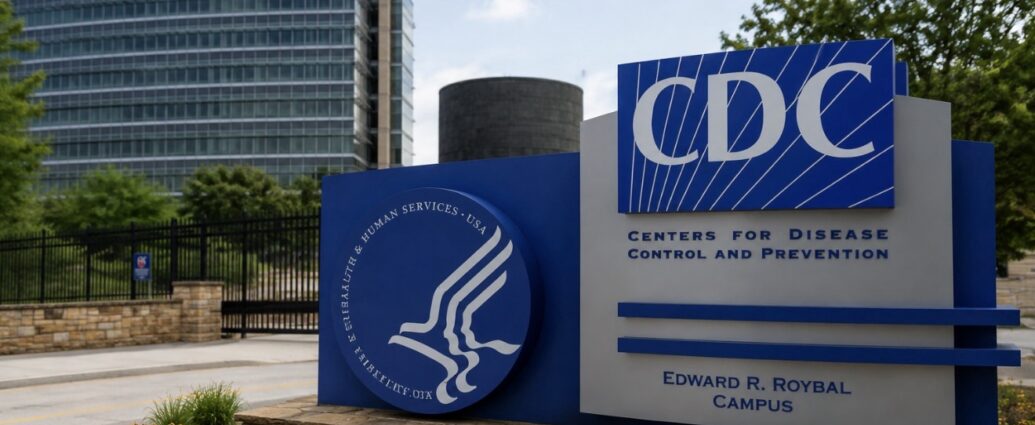
The U.S. Centers for Disease Control and Prevention said Sunday it has activated its emergency operations center and begun mobilizing additional personnel after the World Health Organization formally declared an Ebola outbreak in Central Africa a “public health emergency of international concern,” the highest alert level available under global health rules.
The outbreak, centered primarily in the Democratic Republic of the Congo and now spreading into Uganda, involves the rare Bundibugyo strain of ebolavirus — a variant for which no approved vaccines or treatments currently exist.
WHO Director-General Tedros Adhanom Ghebreyesus announced the emergency designation Sunday, marking the first global health emergency declaration since the 2024 mpox outbreak.
Satish Pillai, the CDC’s Ebola response incident manager, said the agency is deploying additional experts to affected areas while expanding laboratory testing, contact tracing, surveillance, and border monitoring through its international country offices.
“The risk to the United States remains low,” Pillai told reporters Sunday.
The CDC has issued a Level 2 travel advisory for the Democratic Republic of the Congo and a Level 1 advisory for Uganda while implementing enhanced screening procedures at select U.S. ports of entry aimed at identifying potentially symptomatic travelers.
According to the CDC’s latest official outbreak summary, the DRC has now recorded 10 confirmed cases, 336 suspected cases, and 88 deaths tied to the outbreak. Uganda has confirmed two cases, including one death involving a traveler who recently arrived from Congo.
The outbreak is concentrated in eastern Congo’s Ituri Province, particularly around the Mongbwalu, Rwampara, and Bunia health zones — areas already challenged by population displacement, mining activity, and longstanding regional insecurity.
The Bundibugyo strain is exceptionally rare. This marks only the third documented outbreak globally involving the variant and the 18th Ebola outbreak recorded in the DRC since the virus was first identified there in 1976. Historical fatality rates associated with Bundibugyo Ebola have ranged between roughly 25% and 50%.
Congolese health officials formally declared the outbreak May 15 after genomic sequencing conducted by the Institut National de Recherche Biomedicale in Kinshasa confirmed the strain. Early rapid diagnostic tests initially returned negative results — a known limitation with Bundibugyo detection that delayed identification of the outbreak.
The first suspected patient, a healthcare worker, reportedly developed fever, vomiting, and hemorrhagic symptoms in late April before dying at a treatment facility in Bunia. Uganda’s Ministry of Health later confirmed its first case involving a 59-year-old Congolese citizen treated at Kibuli Muslim Hospital in Kampala.
The outbreak is now drawing increasing attention from global pharmaceutical and public-health officials because existing Ebola countermeasures are largely designed around a different strain of the virus.
The global Ebola vaccine market — estimated at approximately $2.4 billion this year according to industry research from Mordor Intelligence — is currently dominated by Merck & Co.’s ERVEBO, a vaccine approved specifically for the Zaire strain of ebolavirus.
Johnson & Johnson markets a separate two-dose Ebola vaccine also targeted primarily toward the Zaire strain. Neither product is considered effective against Bundibugyo Ebola.
The lack of approved treatments or vaccines for the current outbreak has intensified concern among international health agencies.
Earlier this year, Merck’s MSD division partnered with the Coalition for Epidemic Preparedness Innovations on a $30 million initiative aimed at lowering Ebola vaccine production costs, while researchers at the University of Oxford launched a broader filovirus vaccine-development effort covering Ebola, Sudan, and Marburg viruses.
None of those programs, however, has yet produced an approved Bundibugyo-specific countermeasure.
Funding shortages are already emerging as a central operational concern.
The WHO has released approximately $500,000 in emergency support funding, while the Africa Centres for Disease Control and Prevention has mobilized roughly $2 million. Africa CDC officials warned Saturday that the current funding level remains only a small fraction of what would likely be required if the outbreak expands further.
Africa CDC Director-General Jean Kaseya said response teams have already been deployed to official and unofficial border crossings throughout the region, while isolation procedures, surveillance operations, and contact-tracing efforts are accelerating.
The organization also convened an emergency coordination meeting involving health officials from Congo, Uganda, and South Sudan alongside representatives from the WHO, UNICEF, the African Medicines Agency, the Pandemic Fund, and the U.S. CDC.
WHO officials have advised against broad travel bans or airport shutdowns, arguing that aggressive border restrictions could encourage unmonitored movement and complicate containment efforts.
Instead, the agency cited cross-border transmission risks, unexplained deaths, and uncertainty surrounding the outbreak’s true scale as key reasons for issuing the international emergency declaration.
WHO scientists believe the virus may already have circulated undetected in eastern Congo for several weeks before formal identification.
Operational challenges inside the affected region remain severe.
Health authorities continue to face heavy population movement tied to artisanal mining activity near Mongbwalu, weak healthcare infrastructure, security instability, and the close proximity of outbreak zones to the Ugandan and South Sudanese borders.
Unlike recent Ebola outbreaks where vaccines could be rapidly deployed after confirmation, authorities responding to the Bundibugyo strain are largely relying on traditional containment measures developed during the earliest decades of Ebola response: isolating infected patients, tracing contacts, conducting safe burials, and persuading communities to cooperate with health workers.
For global markets, the immediate financial impact remains relatively limited given the absence of any major pharmaceutical product directly tied to the Bundibugyo strain.
The broader concern now centers on whether the lack of targeted vaccines, combined with funding gaps and difficult field conditions, allows the outbreak to expand more aggressively in the weeks ahead.
JBizNews Desk
© JBizNews.com. All rights reserved. This article is original reporting by JBizNews Desk. Unauthorized reproduction or redistribution is strictly prohibited.