China’s financial regulator has quietly instructed major domestic banks to freeze new lending to several refiners sanctioned by Washington for purchasing Iranian oil, escalating an already dangerous financial standoff between the world’s two largest economies and placing China’s banking system directly in the middle of a geopolitical confrontation.
The move underscores how sanctions tied to the Iran conflict are no longer confined to energy markets or shipping lanes — they are now pressuring the global banking system itself.
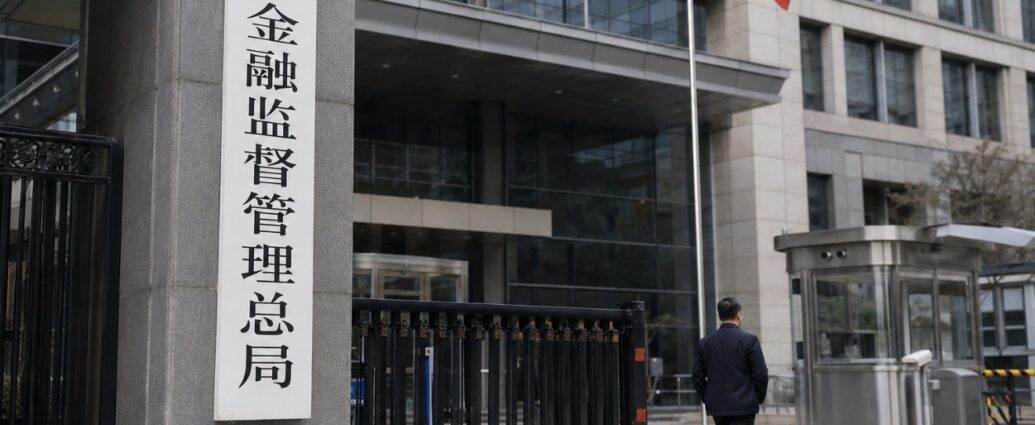
According to people familiar with the matter, China’s National Financial Regulatory Administration advised the country’s largest lenders to temporarily halt new loans to five refiners targeted by recent U.S. Treasury sanctions tied to Iranian crude purchases. Banks were also instructed to review their exposure and business relationships with the affected companies while awaiting further guidance from Beijing.
For now, Chinese banks have reportedly been told not to issue new yuan-denominated financing to the sanctioned firms, though regulators stopped short of ordering lenders to call in existing loans — a sign Beijing is attempting to contain financial disruption while avoiding a full-scale retreat.
Among the companies involved is Hengli Petrochemical (Dalian) Refinery Co., one of China’s largest private refiners and a major buyer of Iranian oil.
How the Crisis Escalated
The banking directive is the latest development in an intensifying conflict between Washington and Beijing over sanctions enforcement.
In recent months, China has taken the unusually aggressive step of formally instructing domestic companies not to comply with certain U.S. sanctions targeting Iranian oil transactions — a major departure from Beijing’s prior approach.
Historically, Chinese officials publicly criticized unilateral U.S. sanctions while quietly allowing major corporations and banks to reduce exposure in order to preserve access to the American financial system and avoid secondary sanctions.
Now that balance appears to be changing.
Beijing recently activated legal “blocking measures” introduced in 2021 that are specifically designed to shield Chinese companies from complying with foreign laws China considers illegitimate or harmful to national interests.
The order applies to several refiners tied to Iranian crude imports, including:
- Hengli Petrochemical (Dalian) Refinery Co.
- Shandong Jincheng Petrochemical Group
- Hebei Xinhai Chemical Group
- Shouguang Luqing Petrochemical
- Shandong Shengxing Chemical
The U.S. Treasury Department accused Hengli of helping generate hundreds of millions of dollars in revenue for Iran through crude purchases linked to Tehran’s military and sanctioned energy trade.
Chinese Banks Now Face an Impossible Choice
The situation has created a highly dangerous position for China’s financial institutions.
If Chinese banks comply with U.S. sanctions restrictions, they risk violating Beijing’s new blocking rules and potentially facing legal or regulatory consequences inside China.
But if banks continue financing sanctioned refiners in defiance of Washington, they risk triggering secondary U.S. sanctions that could threaten access to the U.S. dollar system — the backbone of global banking and international trade.
That threat is existential for large financial institutions.
Access to dollar clearing systems is essential for global banking operations, trade settlement, commodities financing, and international capital flows. Losing that access could severely disrupt even major state-backed Chinese lenders.
At the same time, China’s blocking order allows sanctioned refiners to potentially seek damages in Chinese courts against firms — including foreign banks or companies — that comply with U.S. sanctions.
Analysts at Eurasia Group described the activation of the blocking framework as a major escalation, warning that Beijing is demonstrating “a lower threshold for deploying its legal and regulatory toolkit to counter U.S. sanctions.”
Energy Security Is Driving Beijing’s Response
China’s response is rooted largely in energy dependence.
The country imports more than half its oil from the Middle East, and Iran has become one of its most important discounted crude suppliers. According to commodities tracking firm Kpler, China purchased more than 80% of Iran’s exported oil in 2025.
Much of that oil has flowed to China’s so-called “teapot refineries” — smaller independent refiners that account for roughly one-quarter of the country’s total refining capacity and often rely heavily on discounted Iranian crude to maintain profitability.
Chinese officials increasingly view U.S. sanctions expansion as a direct threat to national energy security.
Cui Fan, a professor and former adviser to China’s Commerce Ministry, argued in state-run media that Washington’s sanctions tactics are becoming increasingly aggressive and dangerous for China’s economy.
“The scope of these sanctions continues to expand, and the methods have become increasingly heavy-handed,” Cui wrote. “If such abuse is allowed to continue, it will disrupt the stability of China’s energy supply chain and jeopardize China’s energy security and development interests.”
Tens of Billions in Financing Exposure
The financial exposure involved is enormous.
Hengli Petrochemical, the publicly traded parent company tied to the sanctioned Dalian refinery, previously disclosed plans to secure approximately 235 billion yuan — roughly $34.4 billion — in banking credit for itself and affiliated entities this year alone.
Chinese lenders are now reportedly scrambling to assess how much exposure they have to sanctioned refiners and what future restrictions may mean for broader financing relationships.
The pause on new loans appears designed to buy regulators time while Beijing evaluates how aggressively Washington intends to enforce secondary sanctions.
A Potential U.S.-China Financial Flashpoint
The timing of the standoff is especially sensitive.
The confrontation is unfolding ahead of an anticipated meeting later this month between President Donald Trump and Chinese President Xi Jinping, raising the stakes significantly for both governments.
Chinese state media has already framed the blocking order as a historic shift in Beijing’s willingness to directly confront U.S. sanctions pressure.
A commentary published through the Communist Party-affiliated People’s Daily app described the move as “a pivotal step in the transition of China’s foreign-related legal weapon from institutional reserves to practical application.”
Analysts warn the situation could escalate far beyond the refining sector if the United States expands sanctions toward Chinese banks or large state-owned enterprises.
Eurasia Group warned that broader U.S. secondary sanctions targeting Chinese financial institutions would likely trigger “more forceful countermeasures” from Beijing.
For now, China’s banks are effectively being told to pause — not fully disengage.
But the longer the confrontation drags on, the harder it may become for lenders to maintain that balancing act between Washington and Beijing without eventually being forced to choose sides.
And if that happens, the conflict over Iranian oil could evolve into something far larger: a direct financial confrontation between the U.S. and Chinese banking systems themselves.
— JBizNews Desk