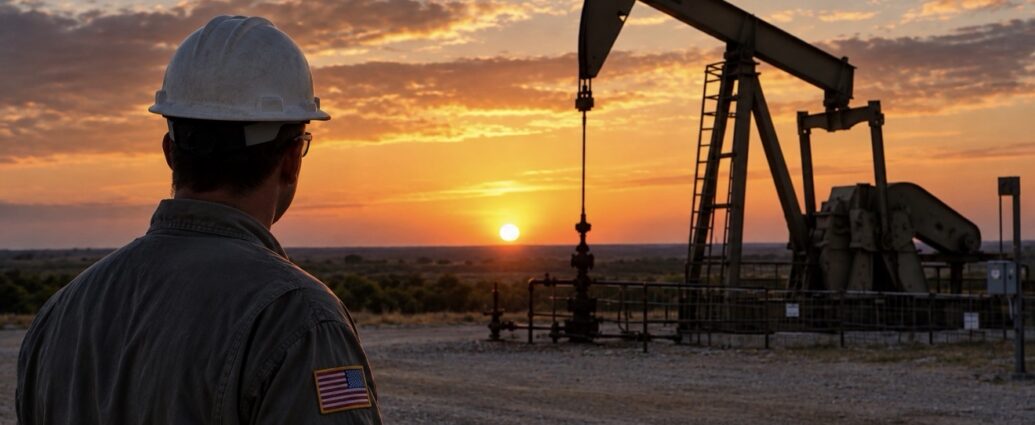
NEW YORK — Citadel is looking at doing something unusual for one of Wall Street’s largest hedge funds: owning the oil wells behind the commodities it trades.
The firm founded by Ken Griffin has been exploring acquisitions of U.S. shale-oil production assets, according to Reuters, as Citadel expands beyond trading energy contracts and deeper into the physical assets that produce oil and gas.
Citadel recently bid for WildFire Energy, a major operator in Texas’ Eagle Ford shale basin.
It did not win.
Magnolia Oil & Gas ultimately agreed to acquire WildFire in a transaction valued at approximately $4.06 billion.
But Citadel’s participation in the bidding process matters because it shows how seriously the firm is considering direct ownership of oil production.
The hedge fund has also held discussions with private-equity firms and other asset owners about additional oil-heavy properties.
That would represent another significant step in Citadel’s expansion into physical commodities.
The firm already entered natural-gas production through its acquisition of Paloma Natural Gas, which was renamed Apex Natural Gas, and has since expanded that operation through additional purchases.
Oil could be next.
Why Would a Hedge Fund Want Oil Wells?
Citadel is already one of the world’s largest commodity traders.
It makes money analyzing and trading movements in oil, natural gas, electricity and other markets.
Owning production gives it something different.
An oil well generates actual barrels.
Those barrels have direct exposure to changes in crude prices, transportation costs, regional supply shortages and geopolitical disruptions.
That can give a sophisticated trading operation another source of profit and potentially another way to manage risk.
It also provides something financial traders value enormously: direct information about what is happening in the physical market.
A company operating wells sees production costs, drilling economics, transportation constraints and customer demand firsthand.
That knowledge can help inform decisions across much larger financial positions.
Why Now?
The timing is particularly important.
Oil prices are again approaching $100 a barrel as conflict in the Middle East restricts shipping through the Strait of Hormuz and raises fears over global supplies.
Brent crude climbed above $99 Tuesday morning.
At the same time, American shale sits thousands of miles away from the Strait of Hormuz.
Oil produced in Texas, New Mexico and other U.S. basins does not need to pass through one of the world’s most vulnerable shipping chokepoints.
That makes domestic production increasingly attractive during periods of geopolitical instability.
A prolonged disruption in Middle Eastern supply could lift global oil prices while simultaneously increasing the strategic value of American barrels.
For an investor already trading that volatility, owning the physical production underneath it can become particularly attractive.
Wall Street Is Moving Into the Physical Energy Business
Citadel would not be alone.
Major commodity-trading companies have increasingly invested directly in oil fields, refineries, storage terminals, power generation and other physical infrastructure.
Vitol and Gunvor, among others, have pursued similar strategies.
The logic is straightforward.
Instead of making money only when the price of oil moves, a company can earn money from producing, transporting, storing and trading the commodity.
That creates multiple sources of profit from the same market.
It can also provide protection during periods when financial-market conditions change dramatically.
What It Means for U.S. Shale
For American oil producers, another deep-pocketed buyer entering the market could push more capital into shale acquisitions.
Many private-equity firms built portfolios of oil and gas properties with the expectation that larger companies would eventually buy them.
Traditional producers such as ExxonMobil, Chevron, ConocoPhillips and Diamondback Energy have already spent tens of billions consolidating major U.S. shale positions.
Now financial firms may increasingly compete for some of the same assets.
That could raise valuations for privately held producers and create another potential exit for investors who financed shale development.
It could also change who controls American energy production.
Oil wells that once belonged primarily to exploration companies and family operators are increasingly being absorbed by enormous publicly traded producers, private-equity funds and sophisticated trading organizations.
The Larger Shift
Citadel’s interest illustrates how the line between Wall Street and the physical economy is becoming increasingly blurred.
A hedge fund traditionally trades the price of a barrel.
An oil company produces the barrel.
A commodity merchant moves the barrel.
Citadel increasingly appears interested in doing more than one of those jobs.
And with oil near $100, global shipping under pressure and U.S. energy production becoming more strategically valuable, the timing may be particularly attractive.
Citadel did not win WildFire.
But the bid itself may tell us something more important.
One of Wall Street’s most powerful trading firms is no longer satisfied simply trading American oil. It is considering owning the wells that produce it.
JBizNews Desk | New York
© JBizNews.com All Rights Reserved. Reproduction or distribution without written permission is prohibited.