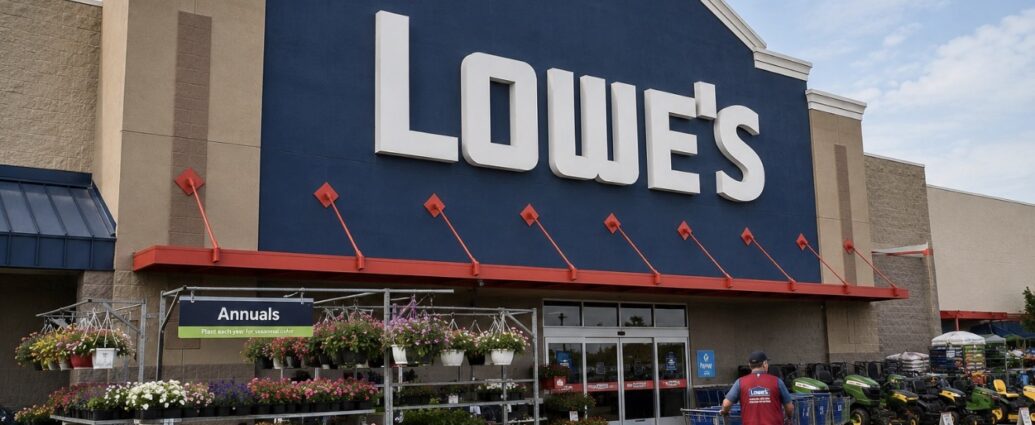
Lowe’s Companies received a major vote of confidence from Wall Street ahead of next week’s earnings report, with Citigroup upgrading the home-improvement retailer to Buy and signaling that analysts increasingly believe the multiyear housing-related downturn may finally be nearing a bottom.
Citi analyst Steven Zaccone raised Lowe’s rating from Neutral to Buy on Tuesday while maintaining a $285 price target, implying roughly 26% upside from the stock’s recent closing level.
The upgrade is more than a single-stock call. It is effectively a broader bet that America’s frozen housing and remodeling market is beginning to stabilize after nearly three years of elevated mortgage rates, weak transaction volume and cautious consumer spending.
“LOW should beat 1Q street estimates and continue to outperform the industry … in 2026,” Zaccone wrote in a note to clients. “The macro has risks of geopolitical tensions escalating, but we still believe the home improvement industry has bottomed and remain optimistic on the multi-year recovery.”
The timing matters.
Lowe’s is scheduled to report first-quarter results before the opening bell on May 20, with consensus expectations compiled by LSEG forecasting only modest profit growth. Citi’s call suggests those estimates may now be too conservative.
Shares of Lowe’s have fallen roughly 6% year to date, underperforming the broader market as investors worried that elevated mortgage rates, inflation tied to the Iran conflict and weakening consumer confidence would continue weighing on discretionary home-related spending.
The sector’s slowdown has been severe.
Existing-home sales remain near the weakest levels in roughly 30 years, while mortgage rates climbed back toward 6.45% this week following hotter-than-expected inflation reports. Categories including flooring, appliances, cabinetry, paint and lumber have all faced weaker demand as homeowners delay major renovation projects.
The competitive backdrop helps explain Citi’s positioning.
Home Depot, the larger of the two dominant U.S. home-improvement chains, spent the last several years aggressively expanding its professional contractor business through acquisitions including SRS Distribution and HD Supply.
Lowe’s, under Chief Executive Marvin Ellison, has simultaneously attempted to strengthen its own Pro business while still maintaining heavier exposure to do-it-yourself consumers — historically one of the company’s core strengths.
Citi’s thesis effectively argues that Lowe’s customer mix may now be better positioned for an eventual housing-market rebound driven by household formation, remodeling activity and new-home completions.
The macroeconomic picture remains mixed.
Mortgage rates continue hovering near cycle highs after inflation data this week reignited fears that the Federal Reserve may keep rates elevated longer than markets anticipated earlier this year. The National Association of Home Builders has remained in contraction territory for much of the last two years, while National Association of Realtors chief economist Lawrence Yun recently warned that spring 2026 home sales are unlikely to improve meaningfully from already depressed 2025 levels.
Yet several structural trends continue supporting the longer-term bullish case for home improvement spending.
Housing inventory has gradually risen for three consecutive years, even if supply remains below pre-pandemic norms. Builders including D.R. Horton, Lennar, NVR, PulteGroup and Toll Brothers continue flooding Sun Belt markets with new construction inventory, creating downstream demand for appliances, fixtures, flooring and finishing products sold through Lowe’s and Home Depot.
Meanwhile, America’s aging housing stock remains one of the industry’s strongest structural tailwinds.
The median U.S. home is now more than 40 years old, creating steady repair-and-remodel demand that remains relatively insulated from short-term housing turnover cycles.
Tax policy may also become a meaningful catalyst.
Recent legislation inside the One Big Beautiful Bill Act restored 100% bonus depreciation for certain capital expenditures and introduced new deductions tied to owner-occupied home improvements — changes analysts expect could accelerate remodeling activity into 2026 and 2027.
The earnings setup next week is especially important for investors because it offers a near-simultaneous read on the entire home-improvement industry.
Home Depot reports one day after Lowe’s, while companies including Sherwin-Williams, Whirlpool, Masco and Mohawk Industries have already delivered mixed commentary on contractor demand, appliances and flooring activity.
An unusual demographic trend is also quietly reshaping the sector.
Older homeowners — particularly baby boomers who control a disproportionate share of U.S. housing wealth and remodeling spending — are increasingly remaining active consumers later into retirement, helped partly by the widespread adoption of GLP-1 weight-loss medications from Eli Lilly and Novo Nordisk.
Retail consultants note that both Lowe’s and Home Depot have begun adjusting store layouts, cart sizes and navigation systems in locations serving older demographic clusters.
Still, the risks to Citi’s bullish call remain significant.
An escalation in the Iran conflict that pushes oil prices above $120 per barrel could sharply weaken consumer confidence and freeze large discretionary purchases. A Federal Reserve rate hike — once considered unthinkable this year but now carrying a small probability in futures markets — would likely push mortgage rates even higher.
Trade policy uncertainty also remains unresolved following this year’s Supreme Court decision limiting certain executive tariff powers.
For investors, Citi’s upgrade is ultimately best understood as a high-conviction call on the broader housing cycle rather than merely a recommendation on Lowe’s itself.
If the housing and remodeling downturn has truly bottomed, Lowe’s stands among the highest-quality retail beneficiaries. If it has not, next week’s earnings report may quickly expose that reality.
JBizNews Desk
© JBizNews.com. All rights reserved. This article is original reporting by JBizNews Desk. Unauthorized reproduction or redistribution is strictly prohibited.