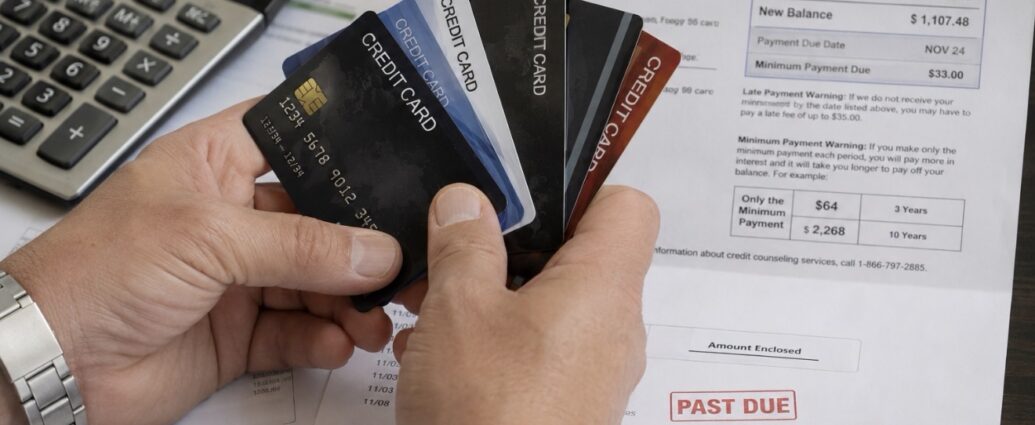
Americans continue carrying one of the largest credit card balances in history, and a growing number are falling behind on payments as high interest rates and rising living costs strain household budgets.
According to the Federal Reserve Bank of New York’s latest Household Debt and Credit Report, total U.S. credit card balances stood at approximately $1.25 trillion during the first quarter of 2026. While that was slightly below the record set during the previous quarter, balances remain nearly 6% higher than a year ago, highlighting the continued reliance on credit.
The more concerning trend is delinquency.
The share of credit card balances that are 90 days or more past due climbed to roughly 13%, the highest level in about 15 years.
Federal Reserve researchers noted that while overall household debt increased only modestly during the quarter, credit card repayment difficulties continue growing among financially stressed households.
Economists say the problem is becoming increasingly concentrated.
Rather than large numbers of new borrowers missing payments, many consumers who were already behind are falling even further behind.
According to Oxford Economics, the trend reflects mounting financial pressure on households facing persistently high costs for groceries, housing, utilities and other necessities.
Research from debt-management firm Achieve found that more than half of consumers carrying credit card balances now use their cards to pay for essential living expenses rather than discretionary purchases.
With average credit card interest rates exceeding 21%, many borrowers find it increasingly difficult to reduce balances once debt begins accumulating.
Financial analysts note that making only minimum monthly payments often keeps accounts current while allowing interest charges to continue growing.
Despite the rising delinquency rate, economists emphasize that today’s credit environment differs significantly from the period preceding the 2008 financial crisis.
Many households continue paying balances in full every month and never incur interest charges.
Researchers also note that while delinquent balances have increased, the number of delinquent accounts has remained comparatively stable, suggesting financial stress remains concentrated among a smaller portion of borrowers rather than spreading broadly across consumers.
Even so, higher gasoline prices, elevated grocery costs and persistent inflation continue placing additional pressure on already stretched household budgets.
Credit card performance is closely watched because it often provides one of the earliest indicators of changing consumer financial health.
Banks may respond to rising delinquencies by tightening lending standards, reducing available credit or increasing approval requirements for new borrowers.
That, in turn, can slow consumer spending throughout the broader economy.
Financial experts generally recommend paying more than the minimum payment whenever possible, focusing on the highest-interest balances first and exploring lower-interest balance-transfer options if appropriate.
For consumers, the report illustrates how elevated living costs continue affecting household finances despite a resilient overall economy.
For lenders and investors, rising credit card delinquencies remain an important measure of consumer financial stress heading into the second half of 2026.
This article is for informational purposes only and should not be considered financial advice.
JBizNews Desk | New York
© JBizNews.com All Rights Reserved. Reproduction or Distribution without Written Permission is Prohibited.