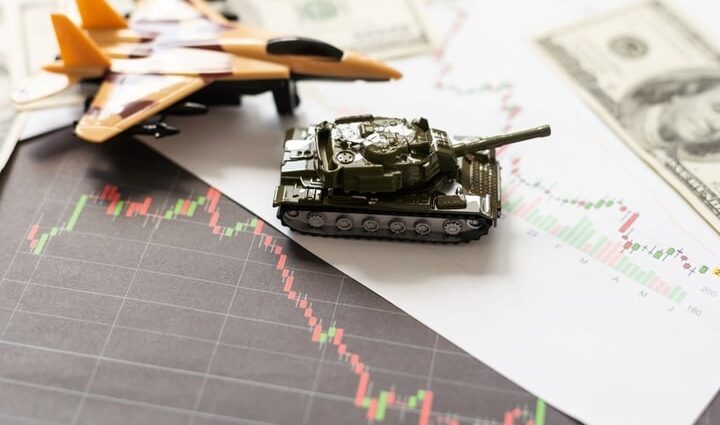
The latest conflict in the Middle East only reinforced a trend that gained momentum in 2025. Investors are leaning into a full-blown rearmament supercycle, bidding up defense names and pricing in years of steady government demand.
Yet, the International Monetary Fund (IMF) sees the issue, warning that the same spending boom could destabilize the support for those valuations in the first place.
“While the resulting defense buildups can boost economic activity in the short term—lifting consumption and investment, particularly in defense-related sectors—they also temporarily increase inflation and create significant medium-term challenges,” the IMF noted in the latest outlook.
Per their estimates, average fiscal deficits worsen by about 2.6 percentage points of GDP while public debt increases by around 7 percentage points within three years of the start of a build-up.
In wartime scenarios, the fiscal impact becomes more acute. Public debt can rise by around 14 percentage points of GDP, while social spending declines in real terms. Such fiscal shifts are powerful enough to change the entire cost structure of the economy.
The mechanism is straightforward, but the implications are not. Governments don’t fund rearmament out of thin air; they must borrow. And when sovereign borrowing ramps up, it competes directly with private capital demand. Interest rates rise, tightening financial conditions …





This post was originally published here