By JBizNews Desk
Delta Air Lines Chief Executive Ed Bastian revealed Monday that he initially used artificial intelligence to draft his commencement speech for Emory University — then abandoned the AI-generated version entirely after concluding it lacked “soul” and genuine human warmth.
The remarks quickly became one of the most talked-about executive comments on artificial intelligence this graduation season, arriving at a moment when corporate America is aggressively deploying AI across white-collar industries while simultaneously debating what human value remains irreplaceable.
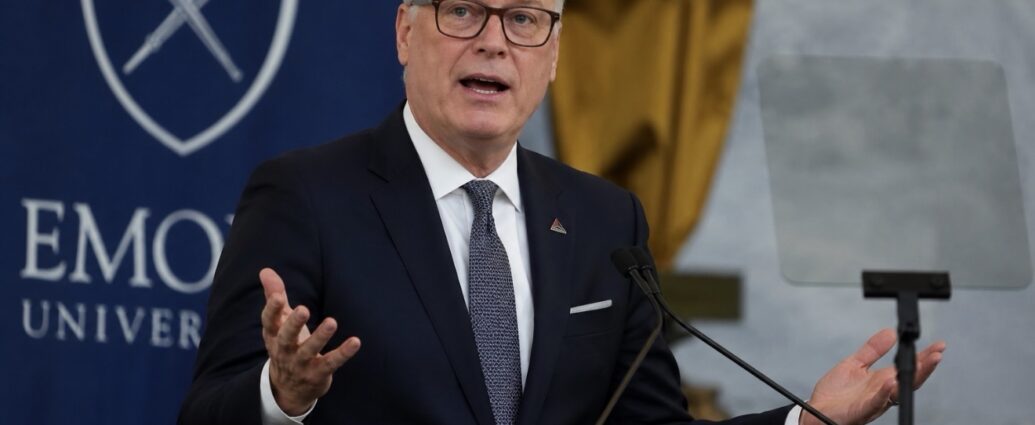
Speaking during Emory University’s 181st Commencement Ceremony in Atlanta, Bastian told graduates he tested AI out of curiosity while preparing his keynote address.
“I asked AI to prepare the address. And I was amazed at how quick and easy it was generated,” Bastian said. “But I also noticed the lack of soul nor warmth it conveyed. It was not my personal voice.”
The Delta chief executive said he ultimately discarded the AI-written draft and rewrote the speech himself using pencil and paper.
The moment landed with unusual resonance because the graduating Class of 2026 is entering a workforce increasingly shaped by AI-driven restructuring, automation, and hiring reductions across major industries including technology, consulting, finance, and media.
Companies including Microsoft, Meta Platforms, Salesforce, and GitLab have all recently cited AI adoption as a reason for flattening management structures, reducing headcount, or limiting entry-level hiring.
Bastian’s comments also carry added significance because they come from the leader of one of the world’s largest premium airlines — an industry where customer experience, operational judgment, and human interaction remain central to profitability.
Unlike software companies where AI primarily improves efficiency and margins, Delta’s business model still depends heavily on thousands of real-time human decisions made daily by pilots, gate agents, mechanics, flight attendants, and customer-service employees.
That people-first strategy has become a defining feature of Delta’s premium positioning under Bastian’s leadership.
The airline reported strong first-quarter 2026 results last month, including:
- $14.2 billion in adjusted revenue,
- record corporate sales,
- and continued growth in premium and loyalty revenue.
Revenue tied to Delta’s partnership with American Express surpassed $2 billion during the quarter alone.
Even amid rising jet fuel costs and broader travel-industry disruptions tied to the Iran conflict, Delta has continued outperforming many competitors by leaning heavily into premium service, loyalty programs, and customer experience differentiation.
Bastian’s comments suggest he believes AI may help optimize operations — but cannot fully replace the emotional and relational side of service businesses.
That distinction increasingly matters across the airline sector as carriers experiment with machine learning and generative AI tools in scheduling, pricing, customer support, and operational logistics.
Delta itself has already deployed AI across numerous internal systems and continues testing generative-AI applications for customer-service functions.
But Bastian’s remarks drew a clear philosophical boundary around what he believes technology can and cannot replicate.
The comments also align with how Bastian has publicly positioned Delta for years.
Unlike several airline rivals who often emphasize operational efficiency and network economics, Bastian has consistently framed Delta as a people-centered premium brand where culture and service quality drive long-term profitability.
That strategy has earned the airline repeated recognition on corporate reputation rankings, including Fortune’s World’s Most Admired Companies list and Bastian’s inclusion on the TIME100.
The remarks arrive during a complicated moment for the broader airline industry.
While demand for premium travel remains strong, carriers are simultaneously grappling with sharply higher fuel prices tied to the ongoing Iran conflict and disruptions surrounding the Strait of Hormuz.
Delta reported average jet fuel costs of approximately $2.62 per gallon during the first quarter, significantly above year-ago levels.
Higher fuel expenses place even greater importance on premium pricing power and customer loyalty — areas where human interaction and brand trust often matter most.
Bastian’s own career trajectory also gives his comments unusual credibility inside corporate America.
He joined Delta in 1998 after working at Price Waterhouse and PepsiCo, eventually becoming the airline’s Chief Financial Officer before taking over as CEO in 2016.
He later guided the company through some of the most difficult crises in aviation history, including the aftermath of 9/11, Delta’s bankruptcy restructuring, and the COVID-19 pandemic.
In many ways, his Emory speech reflected a broader debate now unfolding across the economy:
whether AI will merely enhance human work — or eventually replace it altogether.
Bastian’s answer appeared clear.
Artificial intelligence may generate faster drafts, automate workflows, and improve efficiency. But in industries built on trust, relationships, empathy, and service, he argued there remains a layer of human judgment and authenticity that machines still cannot duplicate.
For Delta, the challenge now becomes proving that belief can continue translating into premium revenue growth and competitive advantage in an increasingly AI-driven economy.
The next major test comes in July, when investors will closely watch whether Delta’s second-quarter results validate the premium-service strategy Bastian defended from the Emory podium this week.
JBizNews Desk
© JBizNews.com. All rights reserved.