The latest U.S. employment report contained a number that economists say could become one of the defining labor-market stories of President Donald Trump’s second term — and it had little to do with Wall Street’s headline reaction to April payroll growth.
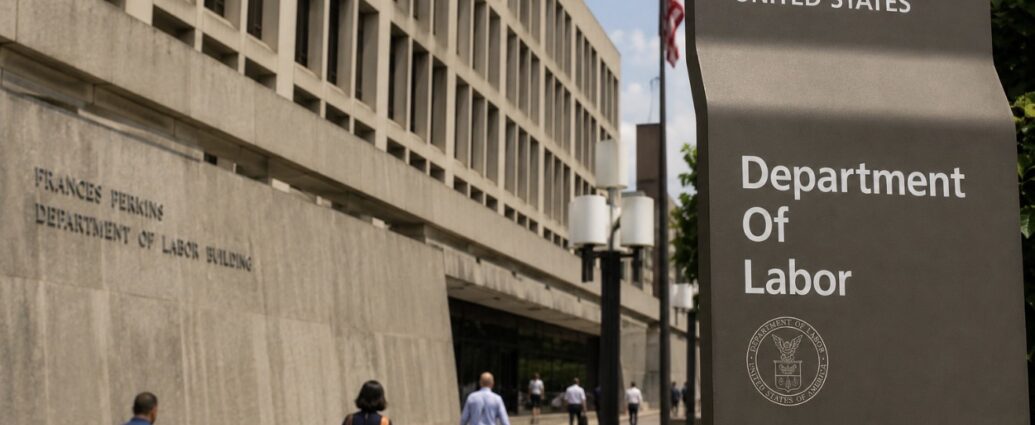
According to data released Friday by the U.S. Bureau of Labor Statistics (BLS), the federal government eliminated another 9,000 jobs in April, marking the fourth consecutive monthly decline in federal employment.
But the cumulative total is what stunned labor economists.
Since October 2024, the federal civilian workforce has contracted by approximately 348,000 positions, representing an estimated 11.5% reduction in federal employment. Analysts reviewing the BLS figures say the decline now stands as the largest peacetime contraction in the federal civilian workforce ever recorded over a comparable period.
The driving force behind the cuts is the Trump administration’s aggressive Department of Government Efficiency (DOGE) restructuring initiative — the centerpiece of the White House effort to dramatically shrink the size of the federal bureaucracy.
What began as a political promise has now evolved into a major macroeconomic force reshaping labor markets across the country.
The broader April employment report initially appeared strong on the surface.
The U.S. economy added 115,000 nonfarm payroll jobs, more than double the Dow Jones consensus estimate of 55,000, prompting administration officials to celebrate the report as evidence of continued economic resilience.
Acting Labor Secretary Keith Sonderling said the report proved “94% of Bloomberg economists wrong.”
Yet economists examining the underlying details painted a considerably more cautious picture.
The economy’s three-month rolling average of job creation has now fallen to roughly 48,000 jobs per month, one of the weakest sustained hiring trends since the pandemic recovery period ended.
Economists generally estimate that the U.S. economy requires between 100,000 and 150,000 new jobs monthly simply to absorb population growth and new labor-force entrants.
By comparison, monthly averages regularly exceeded 200,000 jobs throughout much of 2023 and 2024.
Several additional indicators inside the report reinforced concerns about softening labor conditions.
The number of Americans working part-time involuntarily — workers whose hours were reduced or who cannot secure full-time employment — surged by approximately 445,000 in a single month, climbing to nearly 4.9 million workers.
That represented one of the sharpest monthly increases in underemployment in years.
Meanwhile, the labor force participation rate slipped to 61.8%, its lowest level since October 2021.
That metric matters because workers who stop actively searching for employment are no longer counted as unemployed, allowing the headline unemployment rate to remain relatively stable even when labor-market conditions weaken beneath the surface.
The official unemployment rate held at 4.3%.
Wage growth also showed signs of cooling.
Average hourly earnings increased just 0.2% during April and 3.6% year-over-year, a pace many economists argue is insufficient to fully offset the combined pressures of tariff-driven inflation and elevated energy costs that have intensified since the start of the Iran conflict earlier this year.
Sector-level data revealed a highly uneven economy.
Healthcare added approximately 37,000 jobs, while transportation and warehousing gained 30,000 and retail trade added 22,000 positions.
At the same time, the information services sector lost another 13,000 jobs, continuing a longer-term decline tied increasingly to artificial intelligence-driven disruption.
Economists estimate that information services employment has declined by approximately 342,000 jobs since late 2022, with automation and AI deployment accelerating workforce displacement across technology, media, administrative, and digital support functions.
For many of the nearly 350,000 former federal employees impacted by the DOGE restructuring, the transition back into the private labor market has proven difficult.
A recent NBC News investigation interviewed former federal workers who described months of unsuccessful job searches, significant salary reductions, forced relocations, and financial instability after losing government positions.
One former employee reportedly stopped counting after submitting 599 job applications without receiving an offer.
The White House has defended the reductions as a core pillar of the administration’s broader efficiency and fiscal reform agenda.
Administration officials argue the restructuring has reduced payroll expenses, streamlined agencies, and improved accountability across federal operations.
Critics — including labor economists, former agency officials, and public-sector unions — argue the cuts have significantly weakened operational capacity across multiple federal departments.
Particular concern has focused on staffing reductions at the:
- Internal Revenue Service (IRS),
- Social Security Administration (SSA),
- Department of Veterans Affairs,
- and other agencies responsible for delivering core government services.
The broader economic implications are becoming increasingly difficult to ignore.
Federal employment historically functioned as one of the most stable components of the American labor market, particularly during periods of economic uncertainty.
The scale of the DOGE restructuring means the federal government is now actively contributing to labor-market weakness rather than stabilizing it.
And with economists increasingly warning about slowing hiring, weakening participation rates, rising underemployment, and growing AI-driven displacement, the federal workforce cuts are arriving at a particularly fragile moment for the broader economy.
What is no longer debated is the sheer magnitude of the downsizing.
At approximately 348,000 federal jobs eliminated in roughly eighteen months, the DOGE initiative has already become one of the largest workforce restructurings in modern American government history — and its long-term economic, political, and institutional consequences are only beginning to emerge.
JBizNews Desk
© JBizNews.com. All rights reserved. This article is original reporting by JBizNews Desk. Unauthorized reproduction or redistribution is strictly prohibited.