The Department of Government Efficiency’s (DOGE) cancellation last year of the majority of federal humanities grants, including to several Jewish projects, was unlawful and unconstitutional, a federal judge ruled Thursday.
In her 143-page ruling, US District Judge Colleen McMahon called out the agency created by US President Donald Trump specifically for its targeting of Jewish projects, including Holocaust research.
“At a time when the specter of antisemitism has reemerged from the shadows, for our Government to deem a project about Jewish women disfavored because it centered on ‘Jewish cultures’ and ‘female’ voices is deeply troubling,” wrote McMahon, who was appointed by President Bill Clinton in 1998. She was referring specifically to a canceled “project on Jewish women subjected to slave labor during the Holocaust.”
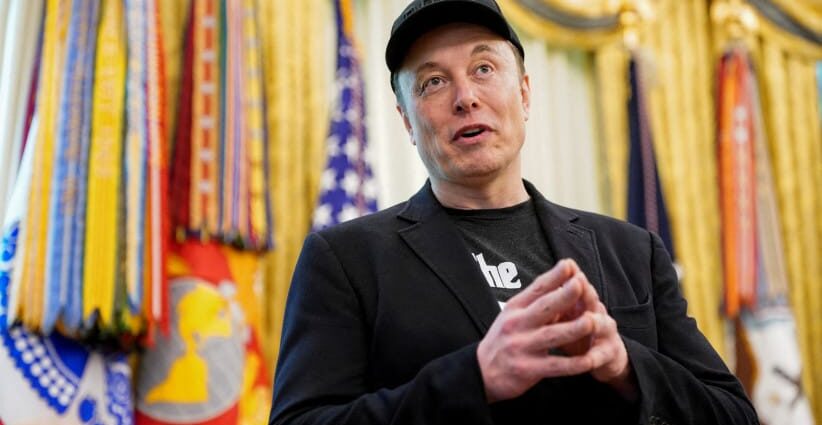
Appointees to DOGE, originally overseen by Elon Musk, swiftly overhauled multiple federal agencies in early 2025. That included the National Endowment for the Humanities, where DOGE personnel canceled a wide swath of grants by using the artificial-intelligence software ChatGPT to identify projects they deemed “DEI” – shorthand for diversity, equity, and inclusion.
A lawsuit brought by the Authors Guild and a consortium of scholarly groups found during court proceedings that many Jewish grants were classified as “DEI” under DOGE’s rubric. At the same time, the NEH followed up its widespread grant cancellation by awarding its largest grant ever, $10.4 million, to the Tikvah Fund, a politically conservative Jewish group.
DOGE cuts based on ‘viewpoint discrimination’
McMahon ruled that DOGE engaged in illegal “viewpoint discrimination.”
“Put simply, the Government terminated the grant because the grant sought to empower and amplify the voices of Jewish women who were victims of Nazi persecution,” she wrote. “The Government may have its reasons for disfavoring that perspective, but the First Amendment does not permit it to divest someone of a government benefit.”
Several other terminated Jewish grants were mentioned in the judge’s ruling, including projects to “recover and analyze ancient writings attributed to Moses but excluded from the canonical Hebrew Bible”; a short-fiction anthology by Jewish writers from the former Soviet Union; and multiple projects about Jewish women during the Holocaust. The ruling cited them alongside other cancelled grants focusing on Black Americans, Native Americans, and Asian Americans.
“A grant funding the study of the experience of Jewish women during the Holocaust is not wasteful because it concerns Jewish women,” McMahon wrote at one point. “Yet that is precisely how DOGE treated them – deeming grants wasteful because they related to Blacks, women, Jews, Asian Americans, and Indigenous people.”
At the same time, she noted that other grants for Jewish projects were not canceled, including one “proposing to study ‘Council of Jewish Federation records dating 1916 to 1999.’”
The ruling orders the NEH to reinstate the terminated grants.
The NEH did not immediately respond to a request for comment. In a statement to The Washington Post on Friday, the White House signaled that it planned to fight McMahon’s ruling.
“The district court’s ruling is egregiously wrong,” White House spokesperson Davis Ingle said in the statement. “It conflicts with clear Supreme Court precedent, and provides yet another example of liberal judges trying to reinstate wasteful federal spending at the expense of the American taxpayer. The Trump Administration expects to [be] vindicated as this litigation proceeds.”
The Authors Guild celebrated the ruling.
“We are gratified that justice was done,” Authors Guild president Mary Rasenberger said in a statement, “and we will be watching closely to make sure every one of these grants is restored.”