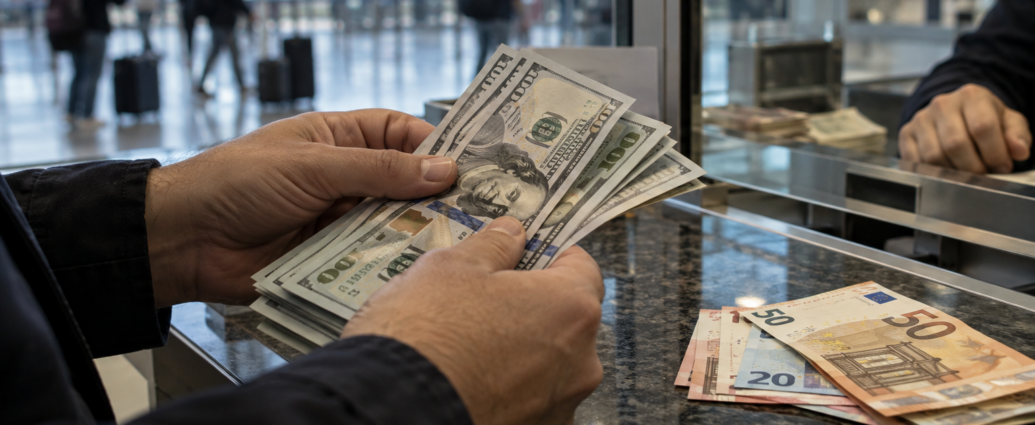
The U.S. dollar eased Friday as oil prices retreated, giving other currencies some breathing room after a period of energy-driven market pressure. For American businesses, the shift leaves a mixed picture: the dollar’s recent strength can reduce the cost of purchases priced in foreign currencies, while expensive energy continues to threaten transportation and production budgets.
The latest move interrupted the dollar’s advance rather than establishing a clear reversal. In its Friday currency outlook, ING said it still favored a slightly stronger dollar in the near term, citing fragile bond markets and expectations of further Federal Reserve tightening.
Sterling rose about 0.1% to $1.324 in European trading Friday, according to Reuters. Brent crude was down about 1% at $103.30 a barrel in the same report. Those were intraday prices, not closing figures.
Oil declined after President Donald Trump said the United States would not attack Iran before next month’s elections and described talks with Tehran as productive, Reuters reported. ING cautioned that oil markets were still pricing in geopolitical risk despite improved Gulf supply.
That matters because energy prices affect more than fuel bills. Higher oil costs can raise freight expenses and the cost of making and delivering goods. They also complicate the Fed’s effort to control inflation, potentially supporting higher U.S. interest rates and demand for dollar assets.
The policy backdrop remains firm. The Federal Reserve’s September 16 statement confirms that officials voted 12–0 to raise the benchmark federal funds rate by a quarter percentage point, to a range of 3.75% to 4%. The central bank cited elevated inflation and said the increase would help return inflation to its 2% target sooner.
Minutes released October 7 show that most participants considered another increase likely to be appropriate by year-end. They also stressed that future decisions would depend on incoming information. Another increase is therefore an expectation among officials, rather than a decision already made.
Higher U.S. interest rates can support the dollar by making dollar-denominated investments more attractive relative to alternatives. The exchange rate also depends on interest rates abroad, economic conditions and investors’ appetite for risk.
Europe presents a separate source of support for the dollar. Reuters reported Friday that concerns about France’s budget deficit had weighed on the euro. ING’s analysis likewise identified French fiscal risk as an obstacle to a sustained euro recovery, even as the currency regained some ground against the dollar.
For U.S. importers, currency strength can create savings when suppliers charge in euros or other foreign currencies. The benefit depends on the contract: a purchase already priced in dollars does not automatically become cheaper because the dollar rises. Currency hedges and advance orders can also delay the effect.
American exporters face the opposite pressure. A stronger dollar can make their products more expensive for overseas customers or reduce the dollar value of sales earned abroad. Companies must decide whether to absorb that effect in profit margins or adjust prices.
Households may gain purchasing power on overseas travel and foreign-currency purchases. Lower store prices are less certain, because retailers also face shipping costs, existing inventory and other expenses. A currency gain alone does not establish how much a particular shopper will save.
The next scheduled Fed decision comes October 27–28. Until then, inflation data, energy prices and conditions in global bond markets will help determine whether Friday’s dollar pullback grows into a broader retreat or proves temporary.
JBizNews Desk | Wall Street
© JBizNews.com. All rights reserved. This article is original reporting by JBizNews Desk. Unauthorized reproduction or redistribution is strictly prohibited.