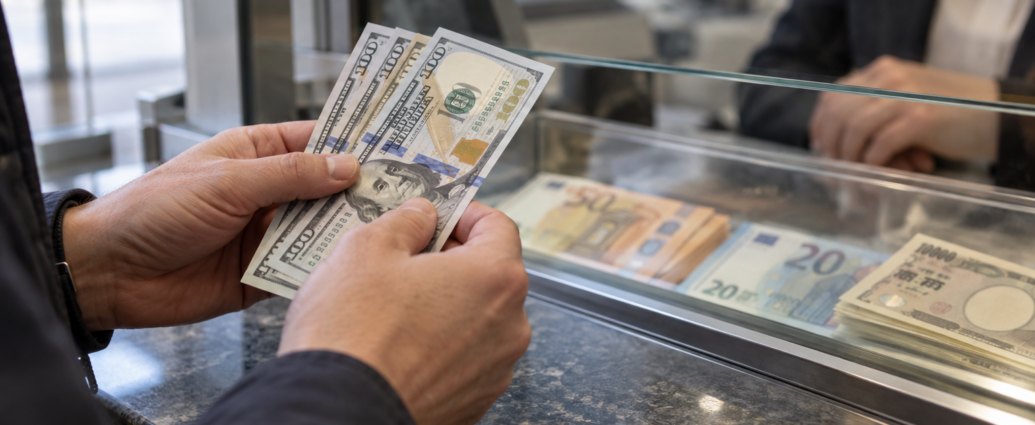
Dollar Hits Two-Month High As Fed Rate Outlook Supports Gains
The dollar strengthened to a two-month high Wednesday as expectations of further Federal Reserve interest-rate increases supported demand for the U.S. currency, potentially easing costs for importers while adding pressure on American companies selling overseas. The advance followed the Fed’s Sept. 16 decision to raise its benchmark rate to 3.75%–4%. (Profit by Pakistan Today)
The dollar index, which measures the currency against six major rivals, rose 0.16% to 100.71 in one Wednesday trading update carried by Reuters. The euro fell to $1.14282, its weakest level since late July, while sterling traded at $1.3316. Those figures represent an intraday snapshot, rather than closing prices. (Profit by Pakistan Today)
Behind the move is a widening focus on the returns investors can earn from holding dollar assets. When U.S. interest rates rise relative to rates elsewhere, American investments can become more attractive, encouraging purchases of dollars. The response depends on what markets already expected and how other central banks respond; a Fed increase does not automatically produce a stronger currency. (federalreserve.gov)
The Fed’s latest decision was unanimous, with all 12 voting members supporting a quarter-point increase. Its statement described solid economic growth, resilient domestic spending and elevated inflation.
“Today’s policy action will support a timelier return to the Committee’s 2 percent goal,” the committee said in its announcement. (Federal Reserve issues FOMC statement)
Officials’ September projections indicated another quarter-point increase by year-end, which would bring the target range to 4%–4.25%. That represents policymakers’ assessment of an appropriate path, not a binding commitment to act at a particular meeting.
The forecasts also showed why officials remain concerned. The median projection put inflation excluding food and energy at 3.4% for 2026, measured from the fourth quarter of last year to the fourth quarter of this year. Overall inflation was projected at 3.7%. Both figures remain above the central bank’s 2% objective. (federalreserve.gov)
For businesses buying goods overseas, dollar strength can provide some relief. A U.S. importer paying suppliers in euros needs fewer dollars to settle the same euro-denominated invoice when the euro weakens.
The benefit does not necessarily reach store shelves immediately. Many international contracts are priced in dollars, and foreign suppliers may keep their dollar prices unchanged. Federal Reserve research has found that exchange-rate movements pass through only partially to U.S. import prices. (Federal Reserve Board)
Travelers can see the effect more directly when paying expenses in local currency. As an illustration, a €1,000 hotel bill costs $1,150 at an exchange rate of $1.15 per euro. At approximately $1.143, the same bill costs about $1,143 before conversion fees—a saving of roughly $7. A stronger dollar helps, but a modest currency move produces a modest saving.
Exporters face the opposite calculation. When American products are priced in dollars, buyers abroad must spend more of their own currency to purchase them. Manufacturers and agricultural producers can face pressure to lower prices or accept weaker demand. Fed analysis identifies reduced export competitiveness as a principal way dollar appreciation affects the U.S. economy. (Federal Reserve Board)
The international consequences also extend to borrowing. Businesses abroad that earn revenue in local currency but owe debt in dollars can see repayment burdens increase as their currencies weaken. That pressure can restrain investment and spending even outside the United States. (federalreserve.gov)
Oil remains a complication for the rate outlook. Wednesday’s currency reporting showed the dollar drawing support from tightening expectations even as crude prices eased. Sustained energy-price relief could soften inflation pressure, but traders were still weighing uncertainty surrounding the Middle East conflict. (Business Recorder)
The next test is whether incoming inflation and employment figures justify the additional tightening investors anticipate. Stronger-than-expected price data could reinforce support for the dollar. Softer readings could weaken that support, particularly if other central banks maintain higher rates than markets expect. The dollar’s next move will depend on changes in those expectations, not simply on the fact that the Fed has already raised rates.
JBizNews Desk | Wall Street
© JBizNews.com All Rights Reserved. Reproduction or distribution without written permission is prohibited.