MARKETS | CURRENCIES & FEDERAL RESERVE
October 14, 2026 | New York
The U.S. dollar surged Wednesday after hotter-than-expected inflation data raised the likelihood of another Federal Reserve interest-rate increase, sending Treasury yields higher and putting renewed pressure on stocks, businesses and borrowers.
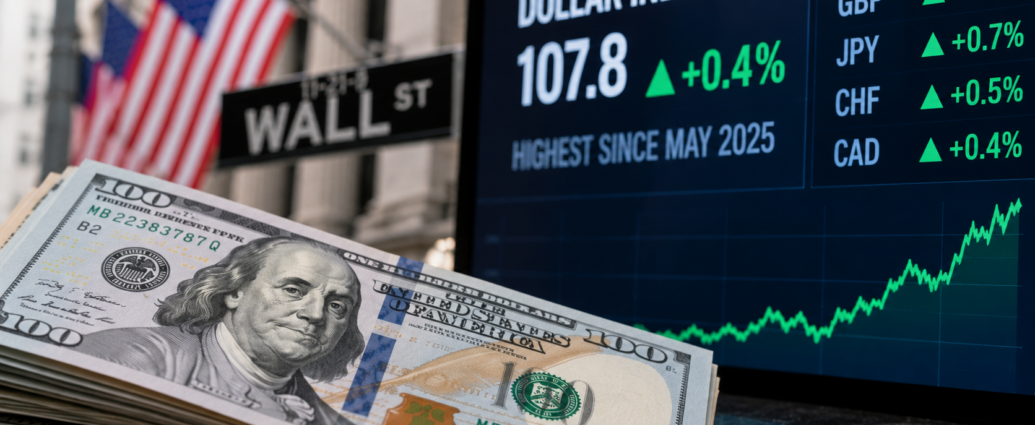
The dollar index advanced nearly 0.4%, reaching levels not seen since spring 2025, as investors reacted to government figures showing consumer prices increased 3.7% in September from a year earlier, above economists’ expectations of 3.6%.
The stronger dollar reflects a major shift in Wall Street’s expectations. Investors who had hoped inflation was coming under control are now confronting the possibility that the Federal Reserve may need to keep borrowing costs elevated or raise them further.
Inflation Forces Wall Street to Reconsider
The Labor Department reported that consumer prices climbed 0.6% in September, driven partly by a sharp increase in energy costs.
Gasoline prices increased 9.1% from August and more than 34% from a year earlier, adding pressure on households and businesses already struggling with higher transportation and operating expenses.
Core inflation, which excludes food and energy, rose 0.3% for the month and 2.6% annually.
The figures reinforced concerns that inflationary pressures remain persistent, even beyond volatile energy markets.
Following the report, financial markets increased the estimated probability of a Federal Reserve rate hike at the October 28 meeting to approximately 45%, from roughly 20% beforehand.
That is a significant adjustment in expectations in a matter of hours.
Why Higher Interest Rates Strengthen the Dollar
Higher U.S. interest rates generally make dollar-denominated investments more attractive because investors can earn stronger returns on Treasury securities and other interest-bearing assets.
As international investors move money into those investments, demand for dollars increases.
The yield on the two-year Treasury note, which is particularly sensitive to Federal Reserve policy expectations, climbed sharply after the inflation report. The benchmark 10-year Treasury yield also advanced above 5.3%.
The dollar’s appreciation against other major currencies could have far-reaching consequences for international commerce.
Winners and Losers From a Stronger Dollar
For American importers, a stronger dollar can be beneficial. Businesses purchasing merchandise, raw materials and equipment from overseas may find that their dollars buy more foreign goods.
Consumers traveling internationally may also benefit from greater purchasing power.
But the impact is less favorable for American exporters.
A stronger dollar makes U.S.-produced goods more expensive for foreign customers, potentially weakening international demand for American manufacturing, agricultural products and other exports.
Multinational corporations also face challenges when overseas revenues are converted back into dollars, reducing the reported value of earnings generated abroad.
Emerging-market economies with dollar-denominated debt can face additional pressure as repayment costs increase in local-currency terms.
Borrowing Costs Remain a Major Concern
The currency rally is closely tied to another development affecting businesses and consumers: rising Treasury yields.
Higher government bond yields can push up borrowing costs across the economy, including business financing, commercial real estate loans and mortgages.
For smaller businesses, that could mean more expensive credit lines and reduced flexibility to finance inventory, hire workers or expand operations.
For consumers, higher interest rates can further strain household budgets, particularly when combined with rising gasoline and everyday living expenses.
What Comes Next
The Federal Reserve’s next policy meeting, scheduled for October 27–28, has become an increasingly important event for financial markets.
Investors will be watching whether policymakers view September’s inflation figures as a temporary consequence of higher energy prices or evidence of broader price pressures requiring additional monetary tightening.
The distinction could determine whether the dollar extends its rally and whether borrowing costs climb further.
For now, the stronger dollar sends a clear message: Investors are preparing for the possibility that America’s battle against inflation will require higher interest rates for longer than previously anticipated.
JBizNews Desk | New York
© 2026 JBizNews. All Rights Reserved.