San Francisco company becomes the eighth U.S. operator cleared under Part 135, but a nationwide service is still a long way off
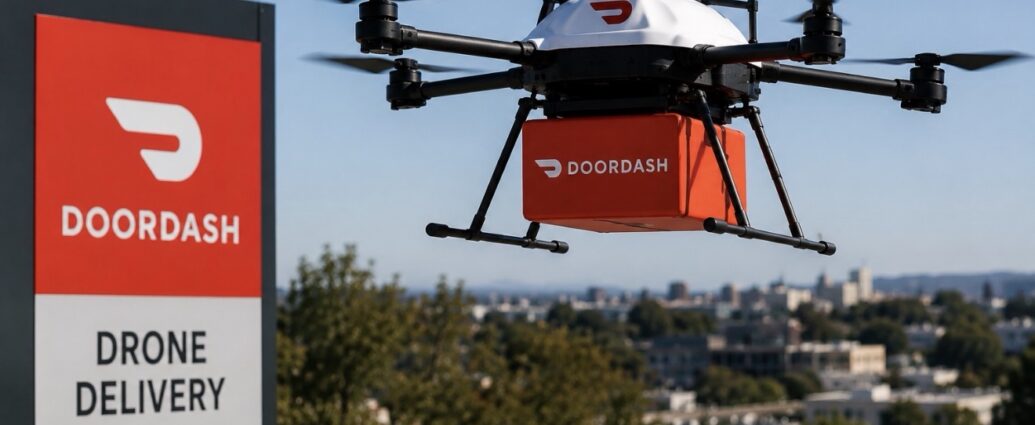
DoorDash Inc. announced Wednesday that it has earned Part 135 air carrier certification from the Federal Aviation Administration and is launching DoorDash Air, a drone delivery program built in-house at its robotics unit, DoorDash Labs.
The certification authorizes the company to operate as an air carrier and run commercial drone deliveries in the United States. DoorDash said the FAA process involves a five-stage evaluation covering aircraft airworthiness, maintenance programs and safety procedures, and that it is the eighth drone operator to hold the certificate.
In regulatory terms, the certificate makes DoorDash an airline: its own aircraft, its own operations manual, and its own liability for every flight.
What is actually cleared, and what is not
The announcement is a licensing milestone, not a service launch. DoorDash did not give a timeline for when its aircraft would enter operations, and any early deployment would likely be limited pilot programs over short distances with the drone in the operator’s line of sight.
Longer autonomous flights require separate FAA approval for Beyond Visual Line of Sight operations — a clearance Amazon, Alphabet’s Wing and Zipline have obtained in recent years. Reporting on DoorDash’s current BVLOS standing is not consistent: one account notes Bloomberg reported the FAA’s own listing shows DoorDash cleared for beyond visual line of sight, while also pointing out that a Part 135 holder cannot operate in a geographic area unless its operations specifications name that area. Either way, the practical constraint is the same — approvals come location by location.
DoorDash indicated it would publish city-level rollout detail later in 2026.
Why DoorDash built its own aircraft
The company has been running drone deliveries through partners for years. Its relationship with Wing dates to 2022, beginning in Australia and expanding into parts of the Dallas-Fort Worth market by 2024. DoorDash said it will keep its existing partnerships with Wing and Flytrex.
What changed is the ambition to own the stack. Harrison Shih, who heads DoorDash Air, said the company wants drone delivery to work for any merchant anywhere, and is building the ground infrastructure, the aircraft and the handoff systems together. That includes real-time inventory systems and handoff mechanisms designed for drive-throughs, rooftops and merchant back doors.
The economics are in the mid-range order. DoorDash said more than 20 percent of its orders last year covered trips of three to five miles, and those deliveries typically took nearly 25 percent longer to complete than shorter runs because of the difficulty finding someone willing to take the job.
That is the whole business case in one statistic. The three-to-five-mile order is profitable in principle and unattractive to a courier in practice. A drone does not weigh the trip against the fare.
Part of a wider automation push
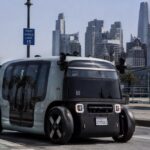
DoorDash Air came out of the same unit that produced Dot, the autonomous sidewalk delivery robot introduced in September 2025. Dot is now operating in the Phoenix suburbs of Tempe, Mesa, Gilbert and Chandler, and in Fremont, California. DoorDash, the largest food-delivery company in the country, is moving more orders toward robots as a way of cutting delivery times.
The company was explicit that humans will continue handling most orders.
What it means for restaurants and retailers
For merchants in the tri-state area, nothing changes in the near term. Dense urban airspace is the hardest environment for drone delivery to clear, and the early rollouts will almost certainly go to suburban and exurban markets with room to fly and fewer airspace restrictions. Any operator near a major airport corridor faces additional constraints regardless of what the national certificate says.
The medium-term question is cost structure. If DoorDash can serve a four-mile order with an aircraft rather than a driver, the delivery fee arithmetic on that order changes, and so does the commission conversation with restaurants. Merchants negotiating platform terms should be tracking whether automation savings get passed through or absorbed.
There is also a labor dimension. The three-to-five-mile order is currently work someone gets paid to do. DoorDash’s own framing is that those jobs are hard to fill, which is a defensible position — but the same trips are income for couriers who take them.
The realistic read is that Wednesday’s announcement buys DoorDash a legal chassis and years of location-specific paperwork. What it has secured is the right to compete with Amazon and Wing on their own terms, using hardware it controls.
JBizNews Desk | San Francisco
© JBizNews.com All Rights Reserved. Reproduction or distribution without written permission is prohibited.