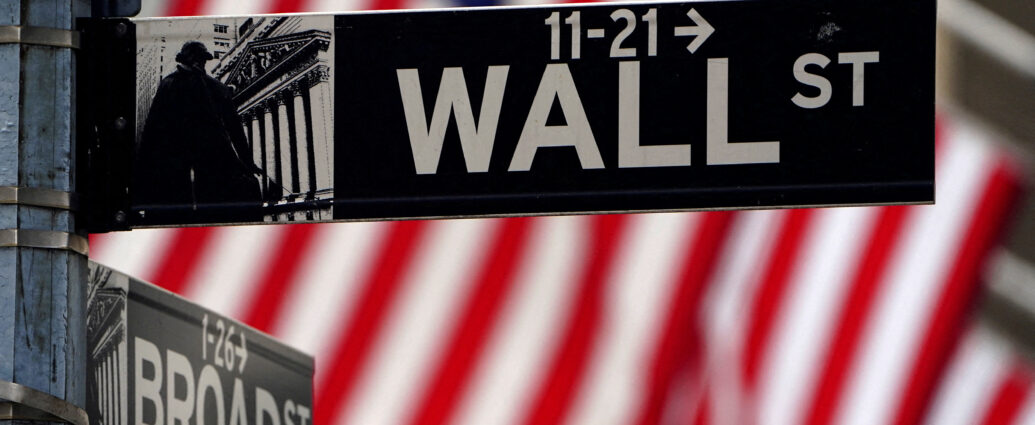
Wall Street took its heaviest beating in more than a year Wednesday after the Federal Reserve left interest rates unchanged and the bond market responded by pushing long-term borrowing costs to levels not seen since before the financial crisis.
The Dow Jones Industrial Average closed down 1,153.18 points, or 2.19%, at 51,594.14 — its worst single-session decline since April 2025. The S&P 500 fell 1.52% to 7,316.15, and the Nasdaq Composite dropped 1.74% to 24,442.94. The selloff wiped out the Dow’s three-day winning streak, which had carried the blue-chip index to 52,747.32 at Tuesday’s close.
The decision itself was not the surprise. The split behind it was. The central bank voted to hold rates steady, with three members dissenting in favor of a hike — an unusually wide fracture for a committee that has kept its benchmark in a 3.50%–3.75% range while inflation pressure from the war has built through the summer. Chairman Kevin Warsh has spent recent weeks signaling that the Fed wants more evidence on how sustained energy costs feed into consumer prices before it moves.
Bond traders read the hold as the Fed falling behind. The 10-year Treasury yield jumped seven basis points to above 4.67%, while the 30-year yield surged 10 basis points past 5.2%, its highest level since 2007. That matters well beyond trading desks: the long end of the curve sets the tone for mortgage rates, commercial real estate financing and the cost of rolling over corporate debt. For small and mid-sized businesses already squeezed on freight and energy, a 30-year yield above 5.2% means credit gets more expensive regardless of what the Fed does at its September meeting.
Market Movers
The semiconductor rout that has defined the past week deepened again. South Korea’s Kospi triggered a circuit breaker for the second consecutive day after plunging 8%, halting trading for 20 minutes. SK Hynix slid nearly 13% and Samsung Electronics fell about 8% — SK Hynix dropping more than 10% after missing analyst estimates despite posting record quarterly profit and revenue. The message investors took from a record quarter that still disappointed: memory demand may be peaking just as capacity comes online.
Detroit provided the day’s clearest bright spot. Ford Motor reported second-quarter adjusted earnings of 42 cents per share against expectations of 35 cents, with core profit climbing nearly 20% to $2.5 billion as strong U.S. demand absorbed tariff costs. The automaker raised its 2026 operating profit outlook to $10 billion–$11 billion from a prior range of $8.5 billion–$10.5 billion. Shares climbed 5.6% in premarket trading on the news. A domestic manufacturer raising guidance in this environment is a genuine data point on the health of the American consumer.
Mondelez International also beat, posting adjusted earnings of 73 cents per share versus 68 cents expected on revenue of $9.36 billion, and now expects organic net revenue growth of at least 2%.
The week’s real test is still ahead. Microsoft, Meta Platforms, Amazon and Apple all report in the next 48 hours, and every one of them will be pressed on AI capital spending. Apple briefly crossed a $5 trillion market capitalization Tuesday for the first time, a day after overtaking Nvidia as the most valuable public company.
Commodities
Energy reversed hard. West Texas Intermediate rose 6.20% to $84.18 a barrel, up 21.12% over the past month. Brent climbed more than 4% to near $88, clawing back part of a 16% three-session collapse that ranked as its steepest such decline since 2020.
The trigger was military, not economic. The U.S. military said it intercepted a surprise Iranian attack targeting American troops stationed across the Middle East, while Iran-backed militias in Iraq launched drones at oil facilities in Saudi Arabia’s Eastern Province for a second straight day, with damage still being assessed. American Petroleum Institute data showing crude inventories down 3.3 million barrels last week added to the tightness.
Gold barely budged despite the escalation. The metal edged up 0.37% to $4,043.25 an ounce, leaving it up 23.47% from a year ago. Safe-haven buying was offset by the prospect of higher rates, which raise the cost of holding an asset that pays nothing.
Traders now put roughly 80% odds on a rate hike in September. If oil holds above $84 into August, that probability hardens — and the long bond has already started pricing it in.
JBizNews Desk | Wall Street
© JBizNews.com All Rights Reserved. Reproduction or distribution without written permission is prohibited.