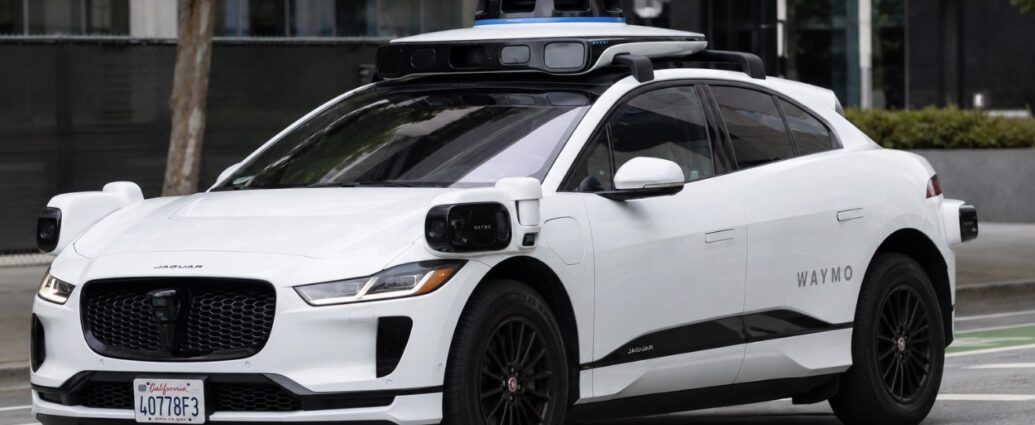
WSB-TV Channel 2 Action News reported Thursday that residents of a northwest Atlanta neighborhood say dozens of empty autonomous vehicles operated by Waymo have been streaming into their dead-end streets at daybreak, circling for hours with no passengers aboard and raising fresh questions about how robotaxi fleets behave in residential areas. In a report by Channel 2’s Steve Gehlbach, neighbors on Battleview Drive said as many as 50 driverless cars passed through their cul-de-sac between 6 a.m. and 7 a.m. on a single recent morning.
The pattern began about two months ago, residents told the station, but intensified sharply in recent weeks as larger clusters of the autonomous Jaguar I-PACE vehicles began looping through residential streets. “It’s almost every little cul-de-sac in our area, so I think it’s a problem,” one neighbor said. Another told the station the family woke up to a steady procession of driverless cars at sunrise: “I think yesterday morning, we had 50 cars that came through between 6 and 7.” Residents said they want the vehicles confined to main traffic arteries unless they are actively picking up or dropping off a rider.
The Atlanta robotaxis are operated by Waymo, the autonomous-driving subsidiary of Alphabet Inc., and are dispatched exclusively through the Uber app in the metro area under a partnership the two companies launched on June 24, 2025. The service covers roughly 65 square miles spanning Buckhead to Lakewood Heights and operates a fleet of fully electric Jaguar I-PACE SUVs equipped with the Waymo Driver autonomous system. Nicole Gavel, head of business development and strategic partnerships at Waymo, said at launch that Atlantans would gain access to “the same safety, comfort, and convenience” the company has rolled out in San Francisco and Austin. Sarfraz Maredia, who oversees autonomous mobility and delivery at Uber Technologies Inc., has positioned the tie-up as central to the ride-hailing company’s strategy of scaling driverless trips without owning the fleet.
What residents are seeing on Battleview Drive is the underside of that scaling effort. Empty autonomous cars routinely “deadhead” — driving without passengers to reposition between trips, recharge or stage near anticipated demand. Routing algorithms optimized for system-wide efficiency can funnel large numbers of vehicles into pockets of a service map at the same time, with little regard for the local character of the streets they are using. Battleview Drive appears to have become one of those pockets.
In a statement provided to WSB-TV, Waymo said it has already adjusted the behavior. “At Waymo, we are committed to being good neighbors. We take community feedback seriously and have already addressed this routing behavior,” the company said, adding that its autonomous service completes more than 500,000 weekly trips nationwide and is designed to reduce traffic injuries. The company said it remains “focused on providing a seamless, respectful, and safe experience for riders and residents alike.”
Residents said earlier outreach went unanswered. Several told the station they had contacted Waymo directly, their representative on the Atlanta City Council and the Georgia Department of Transportation, but saw no change before the local broadcast aired. One homeowner placed a neon-green “Step2Kid” children-at-play sign at the entrance to the cul-de-sac in an effort to deter the driverless vehicles. The result was not a solution but a small spectacle: the sign confused the cars rather than redirecting them, and eight Waymos at one point bunched together as they tried to figure out how to turn around. Channel 2 saw only one Waymo circling the area during a mid-morning visit, and a human safety operator was in the driver’s seat.
For families on the street, the concern is less about novelty than about basic neighborhood safety. “We have small kids, we have animals and pets, we’ve got kids getting on the bus in the morning, and it just doesn’t feel safe to have that traffic,” one resident said. The pre-dawn timing of the surges coincides with the window in which school buses begin their rounds in much of the Atlanta area.
The Atlanta episode is not the first time the company’s Atlanta fleet has drawn local attention. In April, three Waymo robotaxis brought traffic to a standstill at an Atlanta intersection with a blinking red light. The company is also navigating a recall of 3,791 vehicles tied to a software issue that caused some autonomous cars to drive into flooded streets, according to regulatory filings.
For Alphabet and Uber, the Battleview Drive complaints arrive at a sensitive moment in the buildout of driverless services. Both companies have leaned heavily on the message that robotaxis improve street safety. Whether they can also deliver on the quieter promise of being a good neighbor — staying off small residential streets when no one needs a ride — is now becoming part of the test.
— JBizNews Desk
© JBizNews.com. All rights reserved. This article is original reporting by JBizNews Desk. Unauthorized reproduction or redistribution is strictly prohibited.