Another person who returned to Israel from the Democratic Republic of Congo was hospitalized in isolation at Sheba Medical Center on Sunday, after developing symptoms, though health authorities say the risk to the public remains low.
This is the second suspected case in Israel in a few days, after another traveler who returned from the DRC was hospitalized in isolation at Rambam Medical Center due to a fever and headache. The Health Ministry is currently refusing to reveal whether they were infected, but according to estimates, at least the first hospitalized person is probably not infected.
The Health Ministry said that at present, these are only two suspected cases, and that no confirmed case of Ebola has been diagnosed in Israel. In a briefing held by the ministry for reporters, it was stated that there are no additional suspects known to the health system.
However, the ministry did not say whether the laboratory tests of the two hospitalized patients have already been completed, whether preliminary results have been received, or when a final answer will be given regarding the question of whether they were infected with the virus.
The second case was discovered after the traveler returned to Israel two days ago from the DRC, where there is a widespread outbreak of Ebola.
Medical authorities are investigating contacts with suspected Ebola patients
After developing symptoms, he sought medical treatment and was transferred to Sheba, where he is being treated in an isolation room in accordance with procedures established for dealing with high-risk infectious diseases.
His exact medical condition was not disclosed.
In parallel with the medical examinations, a separate epidemiological investigation is being conducted for each of the two cases. As part of the investigations, the flight and travel routes of the two people are being examined, the places they have been since landing in Israel, the people they met, and the possibility that they were exposed to the same source of infection in the DRC.
The ministry is also examining whether there is any connection between the two passengers.
The Health Ministry clarified that anyone who is defined as a relevant contact will receive direct contact from public health officials and instructions according to the level of exposure. Anyone who has not received a contact from the ministry is not required at this stage to enter isolation, be tested, or take any special action.
The first case was discovered after a man who returned to Israel from DRC developed a fever and headache. He was transferred to Rambam, which has been designated a center for receiving suspected cases of this type, and was hospitalized in a negative-pressure room separate from the regular emergency room. In this case too, an investigation has been opened to locate passengers, family members and other people who may have come into contact with him after the symptoms appeared.
The current Ebola outbreak in the DRC and Uganda is caused by the Bundibugyo virus, a strain of Ebola virus. According to the US Centers for Disease Control, as of June 17, 896 confirmed cases and 232 deaths had been reported in the DRC.
The European Centre for Disease Control said the outbreak continues to affect the DRC and Uganda, while the risk to the general population in European and other Western countries remains low.
Ebola not airborne, government may request temporary travel ban
The Ebola virus is not usually transmitted through the air like measles, influenza or coronavirus. Transmission occurs mainly through direct contact of broken skin or mucous membranes with blood, vomit, diarrhea, saliva, semen, or other body fluids of a sick and symptomatic person, as well as through needles, clothing, bedding, and objects contaminated with secretions.
An infected person is not considered contagious before the onset of symptoms, so during the epidemiological investigation, the time when the fever, headache, or gastrointestinal symptoms began is of particular importance.
The incubation period of the disease usually lasts between two and 21 days. Initial symptoms include fever, severe fatigue, headache, muscle aches, and sore throat. Vomiting, diarrhea, abdominal pain, impaired kidney and liver function, and, in some cases, bleeding may occur. Bleeding does not occur in all patients, so its absence does not rule out the disease.
The Health Ministry has advised travelers who have returned from the DRC or Uganda and develop a fever or unusual symptoms within 21 days of their return to stay home, avoid contact with others, and immediately call the ministry’s hotline at 5400*.
At the beginning of the call, the country of residence and the date of return should be stated. Do not go to a clinic or emergency room independently without prior coordination, to allow the staff to protect themselves and prepare an entry and isolation route.
In recent days, the Health Ministry has asked the Population and Immigration Authority to consider a temporary restriction on the entry of foreigners who have been in the DRC, Uganda, South Sudan, Rwanda or Kenya in the 21 days prior to their arrival. At this time, this is a request that is being considered and not a restriction that has come into effect, and there has been no change in the guidelines for the public.
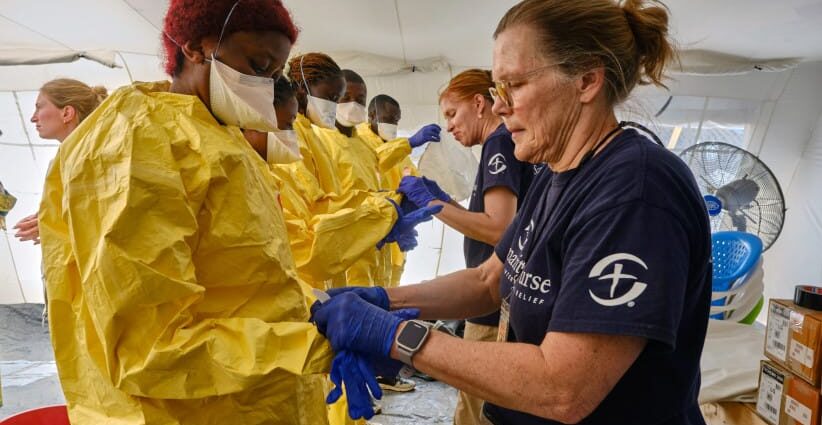
The five hospitals included in the national preparedness received dedicated protective equipment and were required to prepare isolation rooms and teams that could accommodate suspected cases. The guidelines include reducing the number of staff members who come into contact with the patient, documenting everyone who enters the room, wearing full protective gear, and adhering to the order in which protective equipment is put on and taken off, a stage where exposure could occur if the action is not carried out properly.