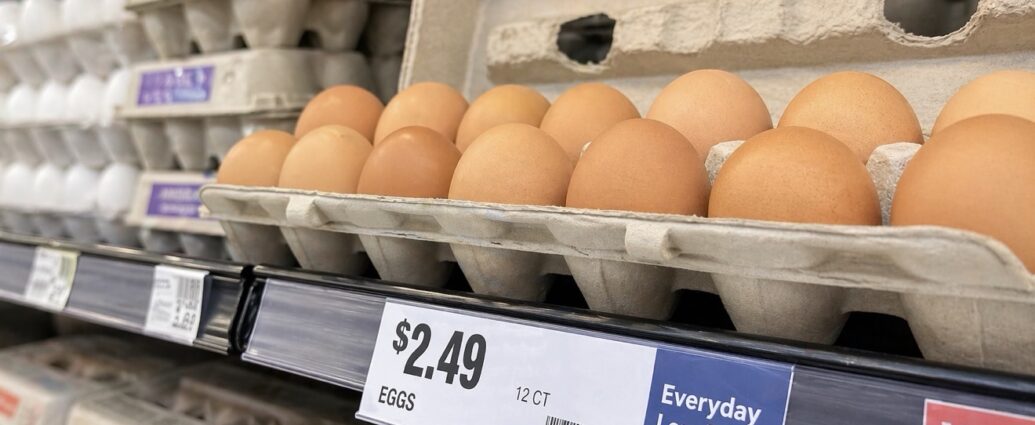
WASHINGTON, D.C. — U.S. egg prices have stabilized at roughly $2.25 to $2.50 per dozen nationwide, a sharp reversal from the historic spikes seen during the height of the avian influenza crisis, as flock repopulation accelerates, federal agencies report improving supply conditions, and industry leaders say the market has largely rebalanced — though risks remain.
The U.S. Department of Agriculture’s Agricultural Marketing Service (AMS) said in its latest Egg Markets Overview that wholesale prices have continued to decline, with some loose egg prices trading below $1 per dozen in select channels. The agency cited “light to moderate demand and mostly adequate to ample supplies” as key drivers behind the sustained drop, signaling a market that has shifted from shortage to relative surplus in a matter of months.
U.S. Secretary of Agriculture Brooke Rollins, who has made food affordability a central theme of her tenure, said the turnaround reflects both producer resilience and federal support. “America’s egg farmers stepped up in a major way, and our focus has been on ensuring they have the tools to rebuild quickly and safely,” Rollins said in recent public remarks, pointing to expanded biosecurity measures and support programs aimed at stabilizing poultry operations following widespread losses.
The USDA’s Economic Research Service (ERS) underscored the scale of the correction, projecting a significant year-over-year decline in farm-level egg prices in 2026 after the extreme volatility of the prior year. The agency said production is recovering after highly pathogenic avian influenza (HPAI) wiped out tens of millions of egg-laying hens, driving prices to record highs in 2024 and early 2025.
Mark Jekanowski, Chair of USDA’s World Agricultural Outlook Board, previously warned that recovery would depend heavily on avoiding new outbreaks. “Assuming no additional significant HPAI events, production is expected to continue improving,” Jekanowski said in USDA outlook discussions — a scenario that appears to be playing out, though USDA data shows millions of birds have still been affected in 2026, highlighting the fragility of the recovery.
From the industry side, Emily Metz, President and CEO of the American Egg Board, said supply conditions have improved faster than many anticipated. “There’s never been a better time to buy eggs,” Metz said in a recent interview, crediting farmers’ investments in biosecurity and operational resilience. She added that close coordination with USDA helped maintain confidence during the peak of the crisis.
Government inflation data confirms the shift. The Bureau of Labor Statistics (BLS) reported that eggs have become one of the most significant contributors to easing food-at-home inflation in recent months. Economists note the category’s rapid swing — from a leading driver of grocery price increases to a source of relief — illustrates how quickly agricultural markets can reset once supply constraints are addressed.
Mark Zandi, Chief Economist at Moody’s Analytics, said the magnitude of the decline has not received proportional attention. “When prices surge, it dominates the narrative. When they fall this quickly, it tends to go largely unnoticed — even though consumers feel the benefit directly,” Zandi said, pointing to eggs as a case study in post-shock normalization.
Retail dynamics are also shifting. USDA data shows promotional activity increasing across major grocery chains, with some discount and overstock channels offering eggs at sharply reduced prices — in isolated cases dropping below 70 cents per dozen as retailers work through excess inventory. Analysts caution these prices are not representative of the national average but reflect localized discounting strategies.
Despite the improvement, economists and policy observers say the role of federal intervention — including producer support, disease containment coordination, and supply chain stabilization — has received limited public acknowledgment. That gap, they note, reflects a broader pattern in economic discourse where price increases are quickly politicized, while declines are less frequently attributed.
Looking ahead, USDA officials say egg prices are expected to remain relatively stable, barring new disruptions. The key risk remains avian influenza, which continues to pose a threat to flock stability. At the same time, analysts say the industry faces a secondary challenge: rebuilding consumer demand after many buyers shifted to substitutes during the period of elevated prices.
For now, however, the stabilization of egg prices marks one of the clearest examples of a rapid inflation reversal in the U.S. economy — even if it is happening with far less attention than the surge that preceded it.
JBizNews Desk