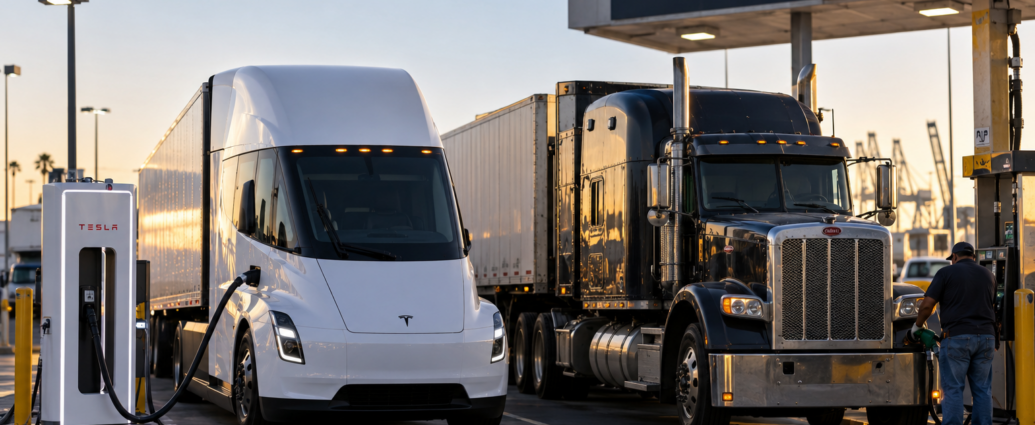
SACRAMENTO, Calif., Oct. 8, 2026 — Diesel prices in California have climbed above $8 a gallon, placing enormous financial pressure on trucking companies. Yet despite record fuel costs, electric semi-trucks remain too expensive for many operators, raising questions about how quickly the transportation industry can move away from diesel.
California’s average diesel price stood at $8.35 per gallon Thursday, according to AAA, compared with $5.16 a year earlier. The state reached a record $8.44 per gallon on September 22, highlighting the steep increase in transportation costs facing businesses and consumers.
Higher diesel prices should make electric trucks more attractive because electricity generally costs less than diesel fuel. However, the purchase price of electric semis, charging expenses and operational limitations continue to outweigh potential savings for many fleet operators.
Research from the International Council on Clean Transportation found that the median price of a model-year 2024 battery-electric heavy-duty tractor in the United States was approximately $379,800, about two and a half times the price of a comparable diesel truck.
The price difference is particularly challenging for smaller trucking companies, which must finance expensive equipment while managing insurance, maintenance, labor and fluctuating freight demand.
Charging infrastructure presents another obstacle. Unlike diesel trucks, which can refuel in minutes at established truck stops, electric semis require access to specialized high-powered chargers. Charging can take considerably longer, potentially reducing the number of deliveries a truck can complete each day.
Battery weight can also affect how much freight an electric truck carries, depending on its configuration and applicable weight limits.
These challenges are especially visible at California’s busiest ports.
According to an October 8 report by The Wall Street Journal, fewer than 700 of approximately 17,000 trucks serving the ports of Los Angeles and Long Beach are zero-emission vehicles. Trucking operators have reported difficulty competing with diesel-powered fleets even as fuel prices reach historic highs.
The ports are considering a financial assistance program that would provide operators of zero-emission trucks $60 per container pickup or delivery, with payments capped at $36,000 per truck annually over three years. The proposal still requires approval.
The potential subsidy reflects a growing concern among transportation officials: Without additional financial support, companies that invested early in electric trucks may struggle to remain competitive.
California has already spent heavily on programs designed to encourage cleaner commercial vehicles, but high purchase prices continue to slow adoption.
On September 20, Gov. Gavin Newsom signed Senate Bill 1213, legislation intended to increase pricing transparency in the zero-emission truck market.
Beginning in 2027, manufacturers seeking eligibility for certain California incentive programs must provide vehicle pricing information, including suggested retail prices and purchase-order details.
The measure is designed to help regulators determine whether public incentives are effectively lowering costs for trucking companies rather than simply supporting higher vehicle prices.
The urgency surrounding the transition is growing as diesel markets remain under pressure.
The U.S. Energy Information Administration raised its oil price forecasts this week, citing declining global inventories and disruptions connected to the conflict involving Iran.
The agency expects U.S. retail diesel prices to remain above $6 per gallon during October before gradually declining toward an average of approximately $4.50 per gallon in 2027.
That outlook creates another complication for electric trucks. If diesel prices decline substantially, the potential fuel savings from switching to electricity could shrink, making it harder for operators to recover the higher purchase cost of electric vehicles.
For consumers, the consequences extend well beyond the trucking industry.
Diesel-powered trucks transport groceries, household products, construction materials, clothing and other essential goods throughout the country. When fuel costs rise, transportation companies often pass part of those expenses to customers through higher freight rates and fuel surcharges.
Those increases can eventually affect retail prices, adding pressure to household budgets already strained by elevated living costs.
Reuters reported October 1 that record diesel prices were increasing the cost of moving goods throughout the economy, with transportation expenses affecting products purchased by households and businesses.
Electric trucks could eventually help reduce exposure to volatile fuel markets, particularly for fleets operating predictable routes with reliable charging access. But the transition requires more than cheaper electricity. Manufacturers must bring down vehicle prices, charging infrastructure must expand, and trucking companies need confidence that electric equipment can operate profitably.
California’s experience illustrates the challenge facing the broader American trucking industry. Even with diesel costing more than $8 a gallon, lower energy expenses alone have not been enough to persuade many businesses to abandon conventional trucks.
Until electric semis become more affordable and practical to operate, diesel is likely to remain the dominant choice for many trucking companies, leaving businesses and consumers exposed to future fuel price increases.
JBizNews Desk | Sacramento, Calif.
© JBizNews.com All Rights Reserved. Reproduction or distribution without written permission is prohibited.