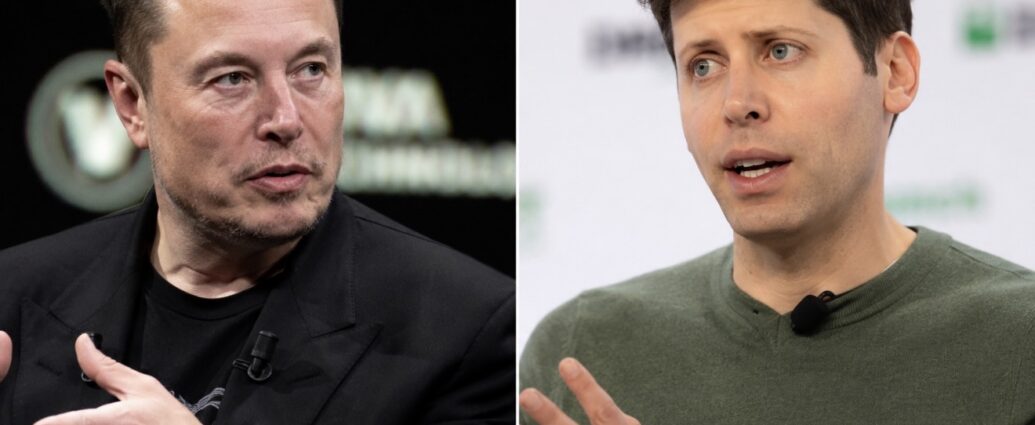
Apple sued OpenAI on Friday in the U.S. District Court for the Northern District of California, accusing the artificial-intelligence company of orchestrating a systematic theft of hardware trade secrets to accelerate its push into consumer devices. Within a day, the lawsuit had reignited the long-running public feud between Elon Musk and OpenAI Chief Executive Sam Altman, with the two exchanging fresh barbs on X.
In its complaint, Apple alleges that OpenAI relied on former Apple employees, recruiting efforts and supplier relationships to obtain confidential information involving unreleased products, engineering specifications and supply-chain vendors. The suit names former Apple engineers Tang Tan and Chang Liu, both now employed by OpenAI’s hardware division.
According to the filing, Liu, who joined OpenAI earlier this year, retained a company laptop, exploited an internal authentication vulnerability to obtain confidential documents and encouraged departing employees to copy files without triggering security systems. Apple describes OpenAI’s hardware operation as “rotten to its core” and says it warned the company in a February letter before filing suit. The company is seeking monetary damages, court injunctions and other legal relief. OpenAI has denied the allegations, saying it has no interest in competitors’ trade secrets.
The case arrives at a pivotal time for both companies. Apple is preparing a leadership transition later this year while continuing development of its next generation of AI products. OpenAI, meanwhile, is reportedly preparing for a future public offering that could value the company at more than $1 trillion, although executives have indicated the timing remains uncertain. A successful trade-secret claim targeting its hardware division could complicate those ambitions.
The lawsuit centers on OpenAI’s expanding hardware strategy following its partnership with legendary former Apple designer Jony Ive, whose startup io Products was acquired to help develop a new generation of AI-powered consumer devices. Ive is not named in the lawsuit.
While the legal battle drew headlines, the public confrontation between Musk and Altman quickly became the bigger story.
Posting on X, Musk revived his criticism of Altman, referring to him as “Scam Altman” and accusing him of abandoning OpenAI’s original nonprofit mission while now facing accusations involving Apple’s technology. Musk also resurfaced Altman’s earlier congressional testimony regarding his ownership interest in OpenAI, using the lawsuit to intensify his broader criticism of the company’s leadership.
Altman responded directly, dismissing Musk’s attacks as evidence that OpenAI’s newest models were gaining momentum. He argued that Musk had become increasingly focused on attacking competitors instead of advancing his own products and also mocked Musk’s vision for large-scale AI infrastructure projects.
The exchange comes as both companies release new flagship AI models within days of one another. OpenAI recently introduced GPT-5.6 Sol, while xAI launched Grok 4.5, intensifying competition across enterprise software, consumer AI and developer tools.
The rivalry now carries enormous financial implications. Musk’s xAI and OpenAI are among the world’s most closely watched artificial-intelligence companies, with investors closely tracking each product launch, legal dispute and executive statement. As AI competition expands beyond software into dedicated hardware, the stakes continue rising.
Beyond the personal feud, the lawsuit highlights how fiercely technology companies are protecting intellectual property in the race to build AI-powered devices. Apple’s complaint notes that hundreds of former employees now work at OpenAI, framing the dispute as a battle over talent, confidential engineering knowledge and the future of consumer hardware.
For OpenAI, already defending multiple copyright lawsuits over AI training data, the new case introduces another legal challenge just as investors evaluate its long-term prospects. Apple has not indicated whether the litigation will affect its existing relationship with OpenAI or future AI integrations, leaving one of the industry’s most significant partnerships under a cloud of uncertainty.
Whether the courtroom battle or the war of words ultimately has the greater impact remains to be seen. What is already clear is that the competition to dominate artificial intelligence has become as personal as it is technological, with two of the industry’s most influential leaders once again taking their fight into public view.
JBizNews Desk | San Francisco
© JBizNews.com All Rights Reserved.