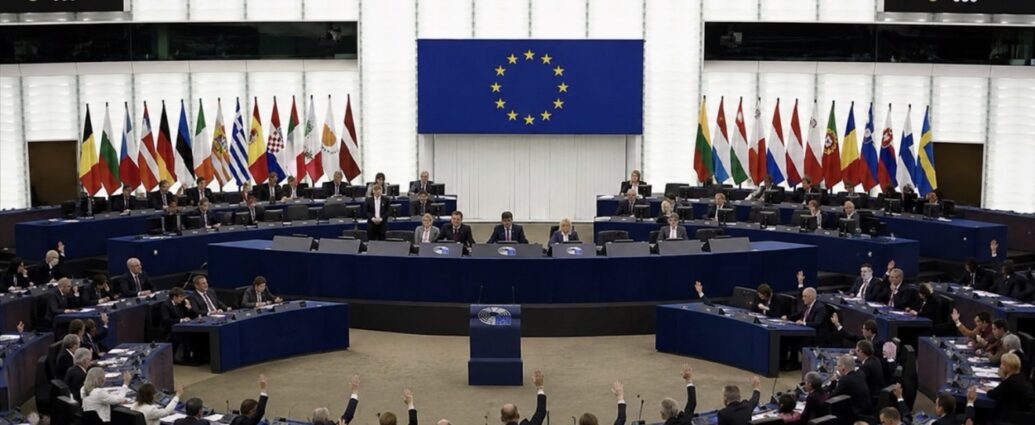
The European Parliament gave its final approval Tuesday to a long-delayed trade agreement with the United States, voting 440 to 151 with 50 abstentions and clearing the last major hurdle just weeks before a deadline set by President Donald Trump that would have sharply raised tariffs on European cars.
The vote locks in the framework that Trump and European Commission President Ursula von der Leyen struck nearly a year ago in Turnberry, Scotland. Under the deal, the United States applies a tariff of up to 15% on most goods coming from Europe, while the European Union removes many of the duties it charges on American industrial products. It is meant to settle a dispute that had been hanging over the world’s largest trading relationship.
What pushed lawmakers to act now was the calendar. Trump had given the bloc until July 4 to ratify the agreement, warning that he would otherwise raise tariffs to much higher levels. He had specifically threatened to lift duties on cars and trucks built in Europe to 25%, a move that would have hit the continent’s automakers hard and raised prices for the American shoppers who buy their vehicles. Tuesday’s vote takes that threat off the table, at least for now.
Getting here was not smooth. EU lawmakers had twice frozen the deal over the past several months. They paused it in January after Trump floated the idea of taking control of Greenland, a Danish territory, and again in February after a U.S. court struck down a large part of his tariff program, leaving Europe unsure what it was even agreeing to. Many members of parliament have called the agreement lopsided, arguing it gives Washington more than it gives Brussels, and they attached safeguards that would let the EU suspend the tariff cuts if the United States does not hold up its end.
The tension has not gone away. Tuesday’s approval came just days after Trump issued yet another tariff threat, this time aimed at France over its rules governing digital companies. That timing was a reminder that even a ratified deal remains fragile as long as tariffs are being used as a tool of pressure.
Why does an agreement negotiated in Brussels matter to people in the United States? Because the amounts involved are enormous. Roughly $1.8 trillion in goods and services move across the Atlantic in both directions every year, touching everything from German sedans and French wine to American machinery, software and farm products. When tariffs rise, those costs tend to land on businesses and, eventually, on the prices consumers pay. A 25% tax on imported European cars would have rippled through dealerships, repair shops and the broader auto market on both sides of the ocean.
For carmakers, the vote is a clear relief. European manufacturers such as BMW, Mercedes-Benz and Volkswagen sell large numbers of vehicles in the United States and build many of them at American plants as well. A jump to 25% would have scrambled their pricing and their factory plans. The 15% rate is still well above the roughly 2.5% they paid before the dispute began, but it gives them something businesses value above almost everything else: a number they can count on.
Not everything is settled. The safeguards the parliament attached still need sign-off from the EU’s member states before the tariff reductions on American goods fully take effect. Steel and aluminum remain subject to a separate 50% tariff that the two sides have yet to resolve. And the broader relationship will stay on edge as long as new threats keep surfacing.
Still, Tuesday marked a genuine turning point. After a year of brinkmanship, missed deadlines and frozen votes, the deal that has loomed over transatlantic trade finally has the approval it needed to move forward. For companies that have spent months unable to plan, that certainty may matter as much as the tariff rate itself.
The focus now shifts to whether Washington keeps the peace or reaches for the next threat.
Washington — JBizNews Desk
© JBizNews.com All Rights Reserved. Reproduction or distribution without written permission is prohibited.